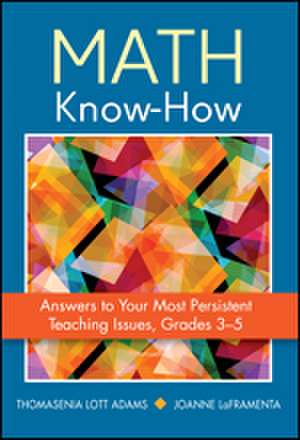
Math Know-How: Answers to Your Most Persistent Teaching Issues, Grades 3-5
Autor Thomasenia L. Adams, Joanne J. LaFramentaen Limba Engleză Electronic book text – 9 dec 2013
Preț: 168.04 lei
Puncte Express: 252
Indisponibil temporar
Doresc să fiu notificat când acest titlu va fi disponibil:
Se trimite...
Specificații
ISBN-13: 9781452282596
ISBN-10: 1452282595
Pagini: 208
Dimensiuni: 178 x 254 mm
Ediția:1
Editura: SAGE Publications
Colecția Corwin
Locul publicării:Thousand Oaks, United States
ISBN-10: 1452282595
Pagini: 208
Dimensiuni: 178 x 254 mm
Ediția:1
Editura: SAGE Publications
Colecția Corwin
Locul publicării:Thousand Oaks, United States
Recenzii
"Math
Know-Howis
a
useful
resource
that
underlines
best
practices
for
effective
mathematics
instruction.
In
a
responsive
way,
the
authors
made
a
necessary
contribution
to
help
teachers
understand
how
to
help
develop
students'
mathematics
thinking.
The
book
will
be
helpful
to
new
and
experienced
elementary
teachers
of
mathematics."
"As we shift from our individual state standards to Common Core State Standards for mathematics, this book will be a valuable resource in establishing strategies and instructional techniques to better equip teachers for the overwhelming transition for teaching mathematics with a new way of thinking. As a master teacher, it will be a resource that I will turn to for mentoring teachers."
"This resource is a compendium of research-based ideas, tools, and insights that provide teachers, as ever-emerging professionals, the ammunition needed to formulate and implement strategies for success in the mathematics classroom. The material is presented in such a way as to offer pragmatic overviews in digestible chapters that paint a mosaic of the multitude of issues that teachers must face for effective and efficient learning environments. The author engages the reader in reflective questioning – avoiding the notion that effective teaching “just happens” – and instead, providing a view that this is a profession that demands study and dedicated and informed effort to assist students in understanding the richness and beauty that can be found in mathematics."
"As we shift from our individual state standards to Common Core State Standards for mathematics, this book will be a valuable resource in establishing strategies and instructional techniques to better equip teachers for the overwhelming transition for teaching mathematics with a new way of thinking. As a master teacher, it will be a resource that I will turn to for mentoring teachers."
"This resource is a compendium of research-based ideas, tools, and insights that provide teachers, as ever-emerging professionals, the ammunition needed to formulate and implement strategies for success in the mathematics classroom. The material is presented in such a way as to offer pragmatic overviews in digestible chapters that paint a mosaic of the multitude of issues that teachers must face for effective and efficient learning environments. The author engages the reader in reflective questioning – avoiding the notion that effective teaching “just happens” – and instead, providing a view that this is a profession that demands study and dedicated and informed effort to assist students in understanding the richness and beauty that can be found in mathematics."
Cuprins
Preface
Acknowledgments
About the Authors
1. Common Core State Standards for Mathematics: Mathematics Content and Mathematical Practices
Creating the Common Core State Standards for Mathematics
Theoretical Basis of the Common Core State Standards for Mathematics
Structure of the Common Core State Standards for Mathematics
Two Brief Notes
Summary
Questions and Tasks for Reflection
2. Making Mathematics Teaching Decisions
Learning: The Primary Purpose of School and the Primary Goal of Teaching
The Nature of Learning
Formative Assessment: Discovering the Prior Knowledge
Types of Formative Assessment Practices
Making the Decisions of Teaching
Summary
Questions and Tasks for Reflection
3. Using the Pacing Guide Effectively
Pacing Guides for Mathematics Instruction
Role of the Mathematics Pacing Guide
How Do Mathematics Standards Influence the Pacing Guide?
Pacing and Mastery
Summary
Questions and Tasks for Reflection
4. Approach to Planning Mathematics Instruction
Perspective: Mathematics Content
Perspective: Models of Instruction
4-A Way to Mathematical Success
Overarching Instructional Strategies
Summary
Questions and Tasks for Reflection
5. Facilitating Differentiated Instruction
Introduction to Differentiated Instruction
Specific Points About Differentiated Instruction
Summary
Questions and Tasks for Reflection
6. Teaching and Learning Mathematics With Manipulatives
Young Students Learn Best When Mathematics Is Linked to a Real-World Context
Selection of Manipulatives
Use of Manipulatives
Tools in the Practice Standards
Summary
Questions and Tasks for Reflection
7. Appropriate Use of Technology
Technology in the Classrooms
Technology for the Learner
Effective Implementation in the Classroom
Evaluating the Use of the Technology
Technology for the Teacher
Summary
Questions and Tasks for Reflection
8. Reflecting on the Teaching Practice of Mathematics
What Is Reflection on Teaching?
Connecting Anticipations and Results
Measuring the Outcomes
The Formal Reflection Process
Summary
Questions and Tasks for Reflection
9. Understanding the Learner
The Expectations From the Common Core State Standards Initiative (CCSSI)
The Special Case of Gloria Jean Merriex
Culturally Responsive Teaching
Summary
Questions and Tasks for Reflection
10. Mathematics Assessment 101
Introduction
Summative Assessment
Authentic Assessment
Summary
Questions and Tasks for Reflection
11. Conclusion
All Eyes on Mathematics Education
Appendix: Resources for Teachers
References
Index
Acknowledgments
About the Authors
1. Common Core State Standards for Mathematics: Mathematics Content and Mathematical Practices
Creating the Common Core State Standards for Mathematics
Theoretical Basis of the Common Core State Standards for Mathematics
Structure of the Common Core State Standards for Mathematics
Two Brief Notes
Summary
Questions and Tasks for Reflection
2. Making Mathematics Teaching Decisions
Learning: The Primary Purpose of School and the Primary Goal of Teaching
The Nature of Learning
Formative Assessment: Discovering the Prior Knowledge
Types of Formative Assessment Practices
Making the Decisions of Teaching
Summary
Questions and Tasks for Reflection
3. Using the Pacing Guide Effectively
Pacing Guides for Mathematics Instruction
Role of the Mathematics Pacing Guide
How Do Mathematics Standards Influence the Pacing Guide?
Pacing and Mastery
Summary
Questions and Tasks for Reflection
4. Approach to Planning Mathematics Instruction
Perspective: Mathematics Content
Perspective: Models of Instruction
4-A Way to Mathematical Success
Overarching Instructional Strategies
Summary
Questions and Tasks for Reflection
5. Facilitating Differentiated Instruction
Introduction to Differentiated Instruction
Specific Points About Differentiated Instruction
Summary
Questions and Tasks for Reflection
6. Teaching and Learning Mathematics With Manipulatives
Young Students Learn Best When Mathematics Is Linked to a Real-World Context
Selection of Manipulatives
Use of Manipulatives
Tools in the Practice Standards
Summary
Questions and Tasks for Reflection
7. Appropriate Use of Technology
Technology in the Classrooms
Technology for the Learner
Effective Implementation in the Classroom
Evaluating the Use of the Technology
Technology for the Teacher
Summary
Questions and Tasks for Reflection
8. Reflecting on the Teaching Practice of Mathematics
What Is Reflection on Teaching?
Connecting Anticipations and Results
Measuring the Outcomes
The Formal Reflection Process
Summary
Questions and Tasks for Reflection
9. Understanding the Learner
The Expectations From the Common Core State Standards Initiative (CCSSI)
The Special Case of Gloria Jean Merriex
Culturally Responsive Teaching
Summary
Questions and Tasks for Reflection
10. Mathematics Assessment 101
Introduction
Summative Assessment
Authentic Assessment
Summary
Questions and Tasks for Reflection
11. Conclusion
All Eyes on Mathematics Education
Appendix: Resources for Teachers
References
Index
Descriere
This
practical
book
equips
teachers
with
the
knowledge
they
need
to
bring
maths
to
life
in
the
classroom.