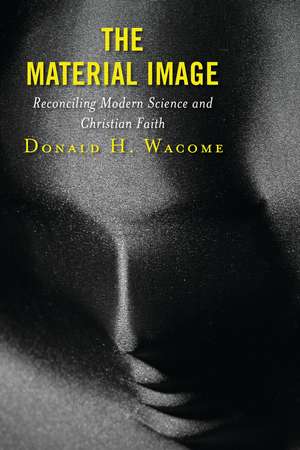
The Material Image: Reconciling Modern Science and Christian Faith
Autor Donald H. Wacomeen Limba Engleză Hardback – 29 sep 2020
Preț: 665.41 lei
Preț vechi: 1003.97 lei
-34%
Puncte Express: 998
Preț estimativ în valută:
117.76€ • 137.63$ • 102.24£
117.76€ • 137.63$ • 102.24£
Carte tipărită la comandă
Livrare economică 20 februarie-06 martie
Preluare comenzi: 021 569.72.76
Specificații
ISBN-13: 9781978703902
ISBN-10: 1978703902
Pagini: 382
Dimensiuni: 163 x 240 x 32 mm
Greutate: 0.7 kg
Editura: Bloomsbury Publishing
Colecția Fortress Academic
Locul publicării:New York, United States
ISBN-10: 1978703902
Pagini: 382
Dimensiuni: 163 x 240 x 32 mm
Greutate: 0.7 kg
Editura: Bloomsbury Publishing
Colecția Fortress Academic
Locul publicării:New York, United States
Cuprins
Chapter 1. Christianity, Naturalism, and Science
Chapter 2. Knowledge
Chapter 3. Miracles
Chapter 4. Origins
Chapter 5. Mind
Chapter 6. Freedom
Chapter 7. Morality
Chapter 8. Religion
Chapter 9. Resurrection
Chapter 2. Knowledge
Chapter 3. Miracles
Chapter 4. Origins
Chapter 5. Mind
Chapter 6. Freedom
Chapter 7. Morality
Chapter 8. Religion
Chapter 9. Resurrection
Recenzii
This book is a must-read for all who wonder about the future of vital, classical Christian faith in the face of challenges from contemporary science, especially concerning the nature of human beings. Donald H. Wacome's welcome approach to reconciling science and Christian faith combines humility and forthrightness, and is imbued with the sort of practical wisdom urgently needed, and too often lacking, in these discussions.
Many partisans of science are convinced that any alliance with religion will amount to a blot on the family escutcheon. Friends of religion, on the other hand, may worry that theology is being asked to make too many concessions to her aggressive partner. Readers of Wacome's book will inevitably be caught up in these quarrels, and will learn a lot in the process. Recommended for all who are concerned about the religion-science interface.
Many partisans of science are convinced that any alliance with religion will amount to a blot on the family escutcheon. Friends of religion, on the other hand, may worry that theology is being asked to make too many concessions to her aggressive partner. Readers of Wacome's book will inevitably be caught up in these quarrels, and will learn a lot in the process. Recommended for all who are concerned about the religion-science interface.