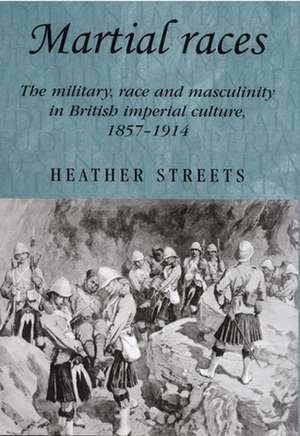
Martial races: Studies in Imperialism, cartea 54
Autor Heather Streetsen Limba Engleză Paperback – 2 dec 2010
Din seria Studies in Imperialism
-
 Preț: 281.01 lei
-
 Preț: 225.71 lei
-
 Preț: 153.89 lei
- 23%
 Preț: 749.74 lei
- 23%
 Preț: 612.28 lei
- 19%
 Preț: 678.28 lei
- 23%
 Preț: 749.07 lei
- 23%
 Preț: 581.05 lei
- 23%
 Preț: 581.24 lei
-
 Preț: 335.15 lei
-
 Preț: 284.24 lei
-
 Preț: 174.64 lei
-
 Preț: 328.70 lei
-
 Preț: 282.43 lei
- 23%
 Preț: 766.12 lei
- 23%
 Preț: 636.81 lei
- 23%
 Preț: 765.63 lei
- 23%
 Preț: 695.93 lei
- 23%
 Preț: 700.63 lei
- 5%
 Preț: 856.88 lei
-
 Preț: 279.62 lei
-
 Preț: 237.21 lei
-
 Preț: 263.98 lei
-
 Preț: 234.43 lei
-
 Preț: 291.43 lei
- 34%
 Preț: 155.44 lei
-
 Preț: 412.84 lei
-
 Preț: 366.04 lei
- 23%
 Preț: 752.11 lei
-
 Preț: 300.11 lei
-
 Preț: 300.57 lei
- 23%
 Preț: 752.90 lei
-
 Preț: 302.46 lei
-
 Preț: 291.23 lei
-
 Preț: 236.66 lei
- 23%
 Preț: 748.87 lei
- 23%
 Preț: 745.46 lei
-
 Preț: 353.01 lei
- 23%
 Preț: 752.56 lei
-
 Preț: 294.58 lei
Preț: 234.88 lei
Puncte Express: 352
Carte disponibilă
Livrare economică 17 noiembrie-01 decembrie
Livrare express 03-07 noiembrie pentru 29.56 lei
Livrare prin curier în România Termenul estimat este afișat lângă disponibilitate.
Transport gratuit de la 400.00 lei Plată online sau ramburs, în funcție de opțiunile comenzii.
Retur gratuit în 14 zile Comandă securizată și suport în română.
Specificații
ISBN-13: 9780719069635
ISBN-10: 0719069637
Pagini: 254
Ilustrații: black & white illustrations
Dimensiuni: 156 x 234 x 14 mm
Greutate: 0.39 kg
Editura: MANCHESTER UNIVERSITY PRESS
Colecția Studies in Imperialism
Seria Studies in Imperialism
ISBN-10: 0719069637
Pagini: 254
Ilustrații: black & white illustrations
Dimensiuni: 156 x 234 x 14 mm
Greutate: 0.39 kg
Editura: MANCHESTER UNIVERSITY PRESS
Colecția Studies in Imperialism
Seria Studies in Imperialism
Notă biografică
Heather Streets is Assistant Professor of British and British Imperial History at Washington State University
Cuprins
Introduction 1. The transformation of the British and Indian Armies in the Rebellion of 1857 2. 'Side by side in generous rivalry': Highlanders, Sikhs and Gurkhas in the Rebellion 3. A 'question on which the safety of the Empire depends': the European threat, recruiting, and the development of martial race ideology after 1870 4. 'A power which a man should try to manage for himself': military influence and martial race discourse in British popular culture 5. Martial races: the Inter-imperial uses of a racially gendered language 6. Representation versus experience: life as a martial race soldier Conclusion Bibliography Index