
Martha Graham's Cold War: The Dance of American Diplomacy
Autor Victoria Phillipsen Limba Engleză Hardback – 27 feb 2020
Preț: 296.30 lei
Preț vechi: 336.39 lei
-12%
Puncte Express: 444
Carte tipărită la comandă
Livrare economică 20-25 noiembrie
Livrare prin curier în România Termenul estimat este afișat lângă disponibilitate.
Transport gratuit de la 400.00 lei Plată online sau ramburs, în funcție de opțiunile comenzii.
Retur gratuit în 14 zile Comandă securizată și suport în română.
Specificații
ISBN-13: 9780190610364
ISBN-10: 0190610360
Pagini: 468
Ilustrații: 38 photographs
Dimensiuni: 239 x 165 x 38 mm
Greutate: 0.89 kg
Editura: Oxford University Press
Colecția OUP USA
Locul publicării:New York, United States
ISBN-10: 0190610360
Pagini: 468
Ilustrații: 38 photographs
Dimensiuni: 239 x 165 x 38 mm
Greutate: 0.89 kg
Editura: Oxford University Press
Colecția OUP USA
Locul publicării:New York, United States
V-ar putea interesa
-
 The Free WorldLouis MenandPreț: 110.05 lei
 -
 The Meaning Of TangoChristine DennistonPreț: 70.42 lei
 -
 Balanchine Finds His America: A Tale of Love Lost and Ballet RebornElizabeth Kendall-15%Preț: 147.70 lei174.54 lei
 -
 Ted Shawn: His Life, Writings, and DancesPaul A. Scolieri-9%Preț: 342.78 lei376.48 lei
 -
 Wild GraceSara VealePreț: 189.31 lei
 -
 The PlaybookJames ShapiroPreț: 92.57 lei
 -
 The Myth of American IdealismNoam ChomskyPreț: 89.30 lei
 -
 The Dehumanization of Art and Other Essays on Art, Culture, and LiteratureJosé Ortega Y. GassetPreț: 90.47 lei
 -
 Martha Graham Dance Company 100 YearsDeborah Ory-23%Preț: 396.57 lei515.08 lei
 -
 Preț: 363.89 lei
 -
 Don't Think, DearAlice RobbPreț: 78.70 lei
 -
 Errand Into the MazeDeborah JowittPreț: 130.45 lei
 -
 -32%Preț: 551.86 lei816.77 lei
 -
 WarBob Woodward-18%Preț: 77.73 lei94.67 leiRecomandat
 -
 -25%Preț: 171.74 lei229.73 lei
 -
 The Ecstasy of BeingJoseph Campbell-20%Preț: 103.63 lei128.78 lei
 -
 Global Art, the Cold WarJohn J Curley-29%Preț: 164.10 lei231.67 lei
 -
 -19%Preț: 127.52 lei156.61 lei
 -
 -19%Preț: 56.78 lei70.46 lei
 -
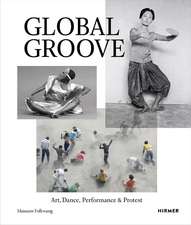 Global Groove: Art, Dance, Performance & ProtestMuseum Folkwang-17%Preț: 290.40 lei348.60 lei
Recenzii
Then there were the Cold War modernists. As Victoria Phillips demonstrates in her gracefully written, analytically powerful of study of modernism in dance, Martha Graham's Cold War, the U.S. government promoted modern dance as pro-Western Cold War propaganda, supposedly symbolizing the values of democracy, freedom and individualism.
The strength of this superbly researched book lies in the voice it gives to the many diplomats, journalists, and cultural figures with first-hand knowledge of Martha Graham's four decades of cultural diplomacy. Grounded in interviews and primary documents, this is practitioner-oriented diplomatic history at its best.
Meticulously researched and impassioned, Martha Graham's Cold War is essential reading for scholars of cultural diplomacy, the Cold War, and the history of dance.
This fascinating study shows how Martha Graham wedded the art of modern dance to America's Cold War 'cultural offensive.' In a highly readable and well researched narrative, it contributes to scholarship on mid-century modernism, gender and race in Cold War politics, and the strategic and personal dilemmas presented by propaganda campaigns based on supposedly apolitical cultural messaging. Scholars and general readers alike will appreciate how Victoria Phillips focuses on the era's most innovative dancer to craft her rich history of the Cold War. Highly recommended!
While the book focuses on a single performer, the analysis of Graham serves to brilliantly reveal some essential questions about the complexities, contradictions, and meaning of US cultural diplomacy during the Cold War.
Martha Graham's Cold War is a book not to be missed.
An ambitious...book that will interest history buffs and dance aficionados.
Phillips' book makes an important contribution by studying a prolific choreographer in detail and developing a well-documented, thorough account of her relationship with politics.
The strength of this superbly researched book lies in the voice it gives to the many diplomats, journalists, and cultural figures with first-hand knowledge of Martha Graham's four decades of cultural diplomacy. Grounded in interviews and primary documents, this is practitioner-oriented diplomatic history at its best.
Meticulously researched and impassioned, Martha Graham's Cold War is essential reading for scholars of cultural diplomacy, the Cold War, and the history of dance.
This fascinating study shows how Martha Graham wedded the art of modern dance to America's Cold War 'cultural offensive.' In a highly readable and well researched narrative, it contributes to scholarship on mid-century modernism, gender and race in Cold War politics, and the strategic and personal dilemmas presented by propaganda campaigns based on supposedly apolitical cultural messaging. Scholars and general readers alike will appreciate how Victoria Phillips focuses on the era's most innovative dancer to craft her rich history of the Cold War. Highly recommended!
While the book focuses on a single performer, the analysis of Graham serves to brilliantly reveal some essential questions about the complexities, contradictions, and meaning of US cultural diplomacy during the Cold War.
Martha Graham's Cold War is a book not to be missed.
An ambitious...book that will interest history buffs and dance aficionados.
Phillips' book makes an important contribution by studying a prolific choreographer in detail and developing a well-documented, thorough account of her relationship with politics.
Notă biografică
Victoria Phillips specializes in Cold War history, cultural diplomacy, and international relations. Her articles have appeared in such varied publications as the New York Times, American Communist History, Dance Chronicle, and Dance Research Journal. She has curated several exhibits on dance and politics in Europe and Washington, DC. Before her academic career, she was a dancer and then a portfolio manager on Wall Street. Her papers are held at the Library of Congress as the Victoria Phillips Collection.