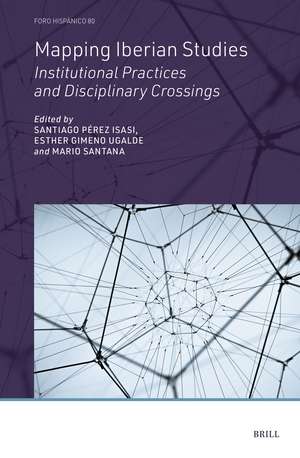
Mapping Iberian Studies: Institutional Practices and Disciplinary Crossings: Foro Hispánico, cartea 80
Santiago Pérez Isasi, Esther Gimeno Ugalde, Mario Santanaen Limba Engleză Hardback – 16 iul 2026




Preț: 693.17 lei
Preț vechi: 845.33 lei
-18%
Puncte Express: 1040
Carte disponibilă
Livrare economică 19-24 noiembrie
Livrare prin curier în România Termenul estimat este afișat lângă disponibilitate.
Transport gratuit pentru acest produs Plată online sau ramburs, în funcție de opțiunile comenzii.
Retur gratuit în 14 zile Comandă securizată și suport în română.
Specificații
ISBN-13: 9789004762282
ISBN-10: 9004762280
Pagini: 372
Dimensiuni: 155 x 235 mm
Greutate: 0.69 kg
Editura: Brill
Colecția Brill
Seria Foro Hispánico
ISBN-10: 9004762280
Pagini: 372
Dimensiuni: 155 x 235 mm
Greutate: 0.69 kg
Editura: Brill
Colecția Brill
Seria Foro Hispánico
Notă biografică
Santiago Pérez Isasi is Assistant Lecturer at the School of Arts and Humanities at the University of Lisbon, Director of the Programme for Comparative Studies and Vice-Director of the Centre for Comparative Studies at this institution. His main areas of research include Iberian Studies, literary historiography, and Digital Humanities.
Esther Gimeno Ugalde is Assistant Professor in Translation Studies at Pompeu Fabra University. Her main research areas include Translation Studies and Iberian Studies. She currently serves as Secretary of the Association of Contemporary IberianStudies and leads the IberTranslatio research group at the Centre for Comparative Studies at the University of Lisbon.
Mario Santana is Associate Professor of Spanish Literature at the University of Chicago, where he is also the faculty coordinator for the Basque and Catalan Studies programs. His teaching and research focus on contemporary Iberian literatures, with an emphasis on narrative, translation, and visual culture.
Esther Gimeno Ugalde is Assistant Professor in Translation Studies at Pompeu Fabra University. Her main research areas include Translation Studies and Iberian Studies. She currently serves as Secretary of the Association of Contemporary IberianStudies and leads the IberTranslatio research group at the Centre for Comparative Studies at the University of Lisbon.
Mario Santana is Associate Professor of Spanish Literature at the University of Chicago, where he is also the faculty coordinator for the Basque and Catalan Studies programs. His teaching and research focus on contemporary Iberian literatures, with an emphasis on narrative, translation, and visual culture.
Cuprins
List of Figures
Notes on Contributors
Introduction: Mapping Iberian Studies—towards a Cartography of the Field
Santiago Pérez Isasi, Esther Gimeno Ugalde and Mario Santana
Part 1 Cartographies of Iberian Studies: Traditions, Locations, and Practices
1 Iberian Studies in Portugal: the Long Path towards Consolidation
Santiago Pérez Isasi
2 Iberian Studies in Italy: between Tradition and Renewal
Katiuscia Darici
3 The Evolving Discipline of Iberian Studies in Great Britain and Ireland
Stuart Davis
4 Iberian Studies in Twenty-First Century France
Darío Varela Fernández
5 Iberian and Latin American Studies in Hungarian Higher Education
Dóra Faix
6 Implementing Iberian Studies in Denmark: Challenges and Opportunities
Ana Vera and Sacramento Roselló-Martínez
7 The Emergence of Iberian Studies in Chemnitz, Germany
Teresa Pinheiro
8 Romance Studies and Iberian Comparativism at the Faculty of Philology of the Complutense University of Madrid
Juan M. Ribera Llopis
9 Iberian Studies in the Golden State: the UC Comparative Iberian Studies Working Group
Robert Patrick Newcomb and Silvia Bermúdez
Part 2 Interdisciplinary Perspectives and Debates
10 The Quarrelling Descendants of Hispanism: Iberian, Latin American, and Transatlantic Studies as Rivals and Allies
Sebastiaan Faber
11 Iberian Studies to the South
Marcelo Topuzian
12 The Rise of Translation in Iberian Literary Studies
Mario Santana
13 Reflections on the Place of Basque Studies in Iberian Studies
Jon Kortazar
14 Galician Studies and Iberian Studies: Potential and Dilemmas
Cristina Martínez Tejero
15 Is There a Place for Iberian Studies in Catalonia?
Bernat Padró Nieto
16 The Place of Medieval and Early Modern Literature in Iberian Studies: the Catalan Case
Albert Lloret
17 “Africa Begins at the Pyrenees”: Iberia and the Mediterranean or Why Paradigms and Intellectual and Cultural Genealogies Matter
Núria Silleras-Fernández
18 Autochthonous, Transoceanic, or Global: Island Literatures and the Territorial Boundaries of Iberian Studies
Mercè Picornell
19 Global Literary Studies and Contemporary Iberian Narratives: Hotel Transformation as a Case Study in Sebastià Perelló’s La mar rodona
Marta Puxan-Oliva
Afterword: Current Challenges for Iberian Studies
Santiago Pérez Isasi, Esther Gimeno Ugalde and Mario Santana
Index
Notes on Contributors
Introduction: Mapping Iberian Studies—towards a Cartography of the Field
Santiago Pérez Isasi, Esther Gimeno Ugalde and Mario Santana
Part 1 Cartographies of Iberian Studies: Traditions, Locations, and Practices
1 Iberian Studies in Portugal: the Long Path towards Consolidation
Santiago Pérez Isasi
2 Iberian Studies in Italy: between Tradition and Renewal
Katiuscia Darici
3 The Evolving Discipline of Iberian Studies in Great Britain and Ireland
Stuart Davis
4 Iberian Studies in Twenty-First Century France
Darío Varela Fernández
5 Iberian and Latin American Studies in Hungarian Higher Education
Dóra Faix
6 Implementing Iberian Studies in Denmark: Challenges and Opportunities
Ana Vera and Sacramento Roselló-Martínez
7 The Emergence of Iberian Studies in Chemnitz, Germany
Teresa Pinheiro
8 Romance Studies and Iberian Comparativism at the Faculty of Philology of the Complutense University of Madrid
Juan M. Ribera Llopis
9 Iberian Studies in the Golden State: the UC Comparative Iberian Studies Working Group
Robert Patrick Newcomb and Silvia Bermúdez
Part 2 Interdisciplinary Perspectives and Debates
10 The Quarrelling Descendants of Hispanism: Iberian, Latin American, and Transatlantic Studies as Rivals and Allies
Sebastiaan Faber
11 Iberian Studies to the South
Marcelo Topuzian
12 The Rise of Translation in Iberian Literary Studies
Mario Santana
13 Reflections on the Place of Basque Studies in Iberian Studies
Jon Kortazar
14 Galician Studies and Iberian Studies: Potential and Dilemmas
Cristina Martínez Tejero
15 Is There a Place for Iberian Studies in Catalonia?
Bernat Padró Nieto
16 The Place of Medieval and Early Modern Literature in Iberian Studies: the Catalan Case
Albert Lloret
17 “Africa Begins at the Pyrenees”: Iberia and the Mediterranean or Why Paradigms and Intellectual and Cultural Genealogies Matter
Núria Silleras-Fernández
18 Autochthonous, Transoceanic, or Global: Island Literatures and the Territorial Boundaries of Iberian Studies
Mercè Picornell
19 Global Literary Studies and Contemporary Iberian Narratives: Hotel Transformation as a Case Study in Sebastià Perelló’s La mar rodona
Marta Puxan-Oliva
Afterword: Current Challenges for Iberian Studies
Santiago Pérez Isasi, Esther Gimeno Ugalde and Mario Santana
Index