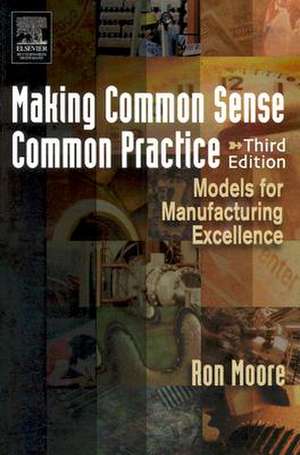
Making Common Sense Common Practice
Autor Ron Mooreen Limba Engleză Paperback – mai 2004
Urgența optimizării proceselor industriale nu a fost niciodată mai critică decât în climatul competitiv actual, unde eficiența operațională determină direct supraviețuirea pe piață. Putem afirma că Making Common Sense Common Practice de Ron Moore nu este doar un manual de management, ci un plan de execuție imediată pentru atingerea performanței de clasă mondială. Într-o eră a volatilității, transformarea „bunului simț” în „practică comună” devine diferențiatorul strategic între liderii de piață și organizațiile stagnante. Găsim în această lucrare o structură riguroasă care ghidează cititorul prin întregul ecosistem al unei unități de producție. Autorul nu se limitează la teorii abstracte; el utilizează studiul de caz Beta International pentru a ancora fiecare concept — de la designul fabricii și achiziții, până la implementarea sistemelor informatice de management al mentenanței (CMMS) și utilizarea eficientă a contractorilor. Reținem progresia logică a cărții, care pornește de la strategii de marketing integrate în producție și culminează cu leadership-ul și structura organizațională, oferind o viziune de 360 de grade asupra excelenței. Dacă Case Studies in Maintenance and Reliability: A Wealth of Best Practices v-a oferit cadrul teoretic și exemple punctuale, această carte oferă instrumentele practice și modelul stabil de creștere necesar pentru o implementare sistemică. Spre deosebire de alte lucrări ale lui Ron Moore, precum Advent sau If in Later Years, care explorează latura spirituală sau poetică a autorului, acest volum reprezintă nucleul expertizei sale tehnice și manageriale, fiind rezultatul deceniilor de analiză a succeselor și eșecurilor din industria globală. Ediția a treia aduce un plus de valoare prin capitolele dedicate inovației și managementului schimbării, elemente vitale pentru orice manager de producție care vizează maximizarea utilizării activelor și creșterea cotei de piață.
Preț: 422.36 lei
Carte disponibilă
Livrare economică 17-31 octombrie
Livrare express 03-09 octombrie pentru 55.67 lei
Specificații
ISBN-10: 0750678216
Pagini: 506
Ilustrații: 1, black & white illustrations
Dimensiuni: 225 x 150 x 28 mm
Greutate: 0.82 kg
Ediția:3. Auflage
Editura: Elsevier Inc
V-ar putea interesa
-
 Preț: 128.52 lei
 -
 The Practitioner's Guide To Product ManagementJock Busuttil-27%Preț: 86.64 lei119.49 lei
 -
 Improving Changeover PerformanceS. CulleyPreț: 469.35 lei
 -
 Made to ServeTimothy BainesPreț: 346.70 lei
 -
 Preț: 144.16 lei
 -
 Visual Six SIGMAIan CoxPreț: 461.79 lei
 -
 Lean RFS (Repetitive Flexible Supply): Putting the Pieces TogetherIan Fraser Glenday-8%Preț: 475.14 lei516.45 lei
Public țintă
VPs of Operations for Manufacturing companies, Manufacturing Managers, Maintenance Managers and Engineers world wideDe ce să citești această carte
Această carte este esențială pentru managerii de producție și inginerii care doresc să elimine blocajele operaționale. Veți învăța cum să transformați mentenanța dintr-un centru de cost într-un motor de profit, utilizând modele de succes testate în fabrici de top. Este ghidul pragmatic de care aveți nevoie pentru a implementa strategii de fiabilitate și leadership care produc rezultate măsurabile în uptime și reducerea cheltuielilor.
Descriere scurtă
* Third edition features updating plus new sections on innovation, change management, and leadership
* Presents proven models for achieving world-class performance based on real-life case histories
* Highly readable, concrete style brings the key points to life through a case study of a fictitious organization, Beta International, which runs throughout the book, based on real case histories
Cuprins
Recenzii
The book is written in an interesting style, combining in-depth insights where necessary and more succinct, bullet-style approaches, where appropriate.
Ron Moore has used life-like (though not real) cases as a core theme that runs through each of the chapters and this device works well. It brings cohesion and integration to the range of topic areas.”
— Steve Brown, School of Business and Economics, University of Exeter, UK, April 2006