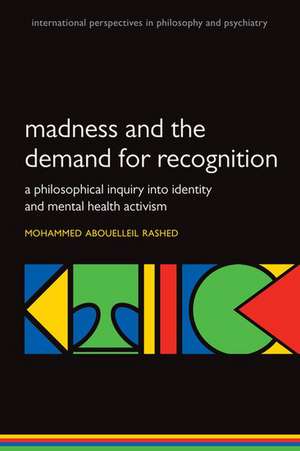
Madness and the demand for recognition: A philosophical inquiry into identity and mental health activism: International Perspectives in Philosophy and Psychiatry
Autor Mohammed Abouelleil Rasheden Limba Engleză Paperback – 7 feb 2019
Prin lucrarea Madness and the demand for recognition, Mohammed Abouelleil Rashed oferă clinicianului și cercetătorului un instrument critic pentru a naviga transformările contemporane în percepția sănătății mintale. Subliniem faptul că volumul nu este doar o analiză teoretică, ci o investigație clinică și filozofică asupra modului în care pacienții își revendică identitatea în afara nomenclaturii psihiatrice tradiționale. Găsim în această carte o examinare riguroasă a mișcărilor Mad Pride, care contestă viziunea implicită a nebuniei ca simplă disfuncție biologică sau psihologică. Merită menționat că autorul nu evită dificultățile conceptuale: el analizează dacă fenomene clinice precum delirul sau fenomenele de pasivitate pot fi reconciliate cu structurile necesare recunoașterii sociale și formării unei identități coerente. Această abordare permite specialistului să înțeleagă cererile de recunoaștere ale pacienților nu doar ca simptome, ci ca poziții politice și identitare. Volumul reprezintă un manual de referință comparabil cu Mad Matters, dar actualizat conform dezbaterilor din 2019 privind justiția epistemică în sănătatea mintală. Spre deosebire de Mad Studies Reader, care colectează voci diverse ale supraviețuitorilor, Rashed construiește un cadru filozofic sistematic pentru a justifica și a răspunde acestor provocări radicale la adresa psihiatriei moderne. Structura narativă este una clinică, precisă, oferind o perspectivă necesară asupra modului în care societatea și sistemul medical trebuie să evolueze în dialog cu cei pe care îi tratează.



Preț: 384.02 lei
Preț vechi: 404.23 lei
-5%
Carte tipărită la comandă
Livrare economică 11-17 iunie
Specificații
ISBN-10: 0198786867
Pagini: 292
Dimensiuni: 162 x 235 x 16 mm
Greutate: 0.45 kg
Editura: OUP OXFORD
Colecția OUP Oxford
Seria International Perspectives in Philosophy and Psychiatry
Locul publicării:Oxford, United Kingdom
De ce să citești această carte
Această carte este esențială pentru psihiatrii și psihologii care doresc să înțeleagă fundamentele etice și politice ale mișcărilor de auto-reprezentare ale pacienților. Cititorul câștigă o înțelegere profundă a modului în care terminologia medicală influențează identitatea personală. Este un argument solid pentru o practică clinică mai reflexivă, care recunoaște validitatea experienței trăite a pacientului dincolo de diagnosticul DSM sau ICD.
Despre autor
Mohammed Abouelleil Rashed este un cercetător proeminent în domeniul filozofiei psihiatriei, activitatea sa fiind dedicată explorării intersecțiilor dintre etică, identitate și sănătate mintală. Contribuția sa în cadrul seriei International Perspectives in Philosophy and Psychiatry reflectă o expertiză academică solidă, combinată cu o sensibilitate deosebită față de literatura activistă și Mad studies. Lucrările sale sunt recunoscute pentru rigoarea cu care analizează revendicările sociale ale persoanelor cu experiențe psihiatrice, propunând cadre teoretice care facilitează dialogul între instituțiile medicale și comunitățile de activiști.
Descriere
Recenzii
Rashed's Madness and the Demand for Recognition is the first book that, in terms of the theory of recognition, is devoted to the central question of social psychiatry: how - outside of a medical-psychiatric framework - can we deal with demands for social and cultural recognition by people with psychiatric experience ... The book is written clearly and precisely and, despite its academic character, is very easy to read.