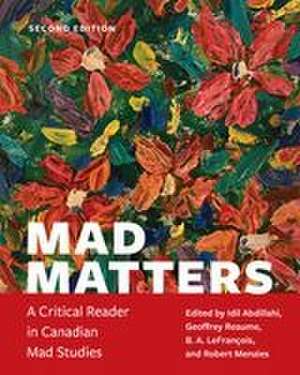
Mad Matters
Editat de Bren A. LeFrancois, Geoffrey Reaume, Idil Abdillahi, Robert Menziesen Limba Engleză Paperback – 30 sep 2026
Preț: 443.46 lei
Preț vechi: 482.02 lei
-8% Precomandă
Puncte Express: 665
Carte nepublicată încă
Livrare prin curier în România Precomanda se expediază când titlul devine disponibil.
Transport gratuit pentru acest produs Plată online sau ramburs, în funcție de opțiunile comenzii.
Retur gratuit în 14 zile Comandă securizată și suport în română.
Doresc să fiu notificat când acest titlu va fi disponibil:
Se trimite...
Specificații
ISBN-13: 9781773385495
ISBN-10: 1773385496
Pagini: 500
Dimensiuni: 254 x 203 mm
Ediția:Second Edition
Editura: Canadian Scholars
ISBN-10: 1773385496
Pagini: 500
Dimensiuni: 254 x 203 mm
Ediția:Second Edition
Editura: Canadian Scholars
Notă biografică
Idil Abdillahi is an Associate Professor in the School of Disability Studies, cross-appointed to the School of Social Work at Toronto Metropolitan University. Broadly, her work focuses on Black life, livability, carcerality, and refusal. She is the author or co-author of several texts, including Black Women Under State: Surveillance, Poverty, & the Violence of Social Assistance (2022) and BlackLife: Post BLM and The Struggle for Freedom (2019).
Bren A. LeFrançois is a University Research Professor at Memorial University of Newfoundland and Labrador. Their research focuses on Mad Studies, the psychiatrization of children, and critical children's rights as well as the intersections of sanism, queerness, social activism, anarchist practices, and critical methodologies. Bren has taught courses in social work theory, critical mental health, child and youth practice, ethics, community development, and qualitative research.
Geoffrey Reaume is Associate Professor in the Critical Disability Studies graduate program at York University where he teaches Mad Peoples' History and Disability History. He is a co-founder of the Psychiatric Survivor Archives of Toronto and created the first university credit course on Mad People's History, which he has been teaching since 2000. He has published work on this topic for over thirty years.
Robert Menzies is Professor Emeritus, Sociology, at Simon Fraser University and was the initiator of the first edition of Mad Matters (2013).
Bren A. LeFrançois is a University Research Professor at Memorial University of Newfoundland and Labrador. Their research focuses on Mad Studies, the psychiatrization of children, and critical children's rights as well as the intersections of sanism, queerness, social activism, anarchist practices, and critical methodologies. Bren has taught courses in social work theory, critical mental health, child and youth practice, ethics, community development, and qualitative research.
Geoffrey Reaume is Associate Professor in the Critical Disability Studies graduate program at York University where he teaches Mad Peoples' History and Disability History. He is a co-founder of the Psychiatric Survivor Archives of Toronto and created the first university credit course on Mad People's History, which he has been teaching since 2000. He has published work on this topic for over thirty years.
Robert Menzies is Professor Emeritus, Sociology, at Simon Fraser University and was the initiator of the first edition of Mad Matters (2013).
Cuprins
Foreword to Second Edition
Introducing Mad Studies: The Introductory Chapter to the First Edition
PART I: MAD PEOPLE'S HISTORY, RACISM, AND COLONIALISM
Chapter 1: Reinforcing Mad Studies: An Introduction to this Second Edition of Mad Matters
Chapter 2: Mad Activists, Race, Gender, and Sexual Orientation in Ontario, 1970s–2000
Poetic Interruption i: Abolition
Chapter 3: Remarkable Women in 19th Century Asylums
Chapter 4: Indigeneity, Madness, and Spirit Injury: #LandBack4Ceremony
Poetic Interruption ii: Like Father Like Son
Chapter 5: What's Wrong with Black Folk? Trauma, Black Psychiatrized Madness, and the State's Response
PART II: MAD COMMUNITY AND MAD ENGAGEMENTS
Chapter 6: What Makes Us a Community? Reflections on Building Solidarity and Anti-Sanist Praxis
Chapter 7: A Rose by Any Other Name: Naming and the Battle Against Psychiatry
Poetic Interruption iii: Psychiatric Protocol: Borderline Personality Disorder
Chapter 8: Incurable Pride: The Indigenous Tradition of Being Unimprovable
Poetic Interruption iv: Healing is Medicine
Chapter 9: The Failed Promise of Recovery: Neoliberal Distortions and Coercive Practices
Chapter 10: Wither Indigenizing the Mad Movement? Theorizing the Social Relations of Race and Madness through Conviviality
PART III: CRITIQUES OF PSYCHIATRY IN PRACTICE
Chapter 11: Locating Myself in Canadian Mad Studies and the World of Mad Narratives
Chapter 12: Raced, Classed, and Gendered-Denials of Being: Psychiatrization as Epistemic Violence
Chapter 13: Still "Breaking Open the Bone": Revisiting Storying, Sanism, and Mad Grief
Poetic Interruption v: untitled
Chapter 14: The Tragic Farce of "Community Mental Health Care"
Chapter 15: Toward Mad Trans Liberation: The Necessity of Mad-Queer-Trans Lens
PART IV: MADDENING LAW, POLICY, ETHICS, AND MEDIA
Chapter 16: Madness on Trial: Justice as Epistemic Violence
Poetic Interruption vi: electroconvulsive therapy is the gold standard
Chapter 17: From Criminalizing to Pathologizing "Troubled Youth" in The Review of the Roots of Youth Violence
Chapter 18: Maddening Mental Health Nursing: A Mad-Engaged Critical Discourse Analysis
Poetic Interruption vii: Mood Lenses
Chapter 19: Economies of the "Prison Mental Health Crisis" in Newfoundland and Labrador: Mad Making in/a Carceral Infrastructure
Poetic Interruption viii: Lost
Chapter 20: Boundary Dwelling as Disruptive Praxis: Social Work with an Unruly, Mad, Decolonial Ethic
Chapter 21: Pitching Mad: News Media and the Psychiatric Survivor Perspective
PART V: SOCIAL JUSTICE, RESISTANCE AND MAD FUTURITIES
Chapter 22: Maddening Early Childhood Education and Care: Disrupting Normalcy, Unsettling Violent Pasts, and Promoting Mad Futurities
Poetic Interruption ix: F33.3 severe and recurrent
Chapter 23: Madness between Mourning and Melancholia: Loss and the Case for Psychoanalysis
Poetic Interruption x: Mad Terrain
Chapter 24: The Fatmisia and Sanism with the Digital Mental Health Landscape
Chapter 25: Mad Nation? Thinking through Race, Class, and Mad Identity Politics
Poetic Interruption xi: psycho
Chapter 26: Loneliness Matters for Mad Studies: Ethics of Abandonment, Loneliness, and Repair in the University
Chapter 27: Criply, Madly, Deeply: Salty Cultures of the Left Behind
List of Contributors
Index
Introducing Mad Studies: The Introductory Chapter to the First Edition
PART I: MAD PEOPLE'S HISTORY, RACISM, AND COLONIALISM
Chapter 1: Reinforcing Mad Studies: An Introduction to this Second Edition of Mad Matters
Chapter 2: Mad Activists, Race, Gender, and Sexual Orientation in Ontario, 1970s–2000
Poetic Interruption i: Abolition
Chapter 3: Remarkable Women in 19th Century Asylums
Chapter 4: Indigeneity, Madness, and Spirit Injury: #LandBack4Ceremony
Poetic Interruption ii: Like Father Like Son
Chapter 5: What's Wrong with Black Folk? Trauma, Black Psychiatrized Madness, and the State's Response
PART II: MAD COMMUNITY AND MAD ENGAGEMENTS
Chapter 6: What Makes Us a Community? Reflections on Building Solidarity and Anti-Sanist Praxis
Chapter 7: A Rose by Any Other Name: Naming and the Battle Against Psychiatry
Poetic Interruption iii: Psychiatric Protocol: Borderline Personality Disorder
Chapter 8: Incurable Pride: The Indigenous Tradition of Being Unimprovable
Poetic Interruption iv: Healing is Medicine
Chapter 9: The Failed Promise of Recovery: Neoliberal Distortions and Coercive Practices
Chapter 10: Wither Indigenizing the Mad Movement? Theorizing the Social Relations of Race and Madness through Conviviality
PART III: CRITIQUES OF PSYCHIATRY IN PRACTICE
Chapter 11: Locating Myself in Canadian Mad Studies and the World of Mad Narratives
Chapter 12: Raced, Classed, and Gendered-Denials of Being: Psychiatrization as Epistemic Violence
Chapter 13: Still "Breaking Open the Bone": Revisiting Storying, Sanism, and Mad Grief
Poetic Interruption v: untitled
Chapter 14: The Tragic Farce of "Community Mental Health Care"
Chapter 15: Toward Mad Trans Liberation: The Necessity of Mad-Queer-Trans Lens
PART IV: MADDENING LAW, POLICY, ETHICS, AND MEDIA
Chapter 16: Madness on Trial: Justice as Epistemic Violence
Poetic Interruption vi: electroconvulsive therapy is the gold standard
Chapter 17: From Criminalizing to Pathologizing "Troubled Youth" in The Review of the Roots of Youth Violence
Chapter 18: Maddening Mental Health Nursing: A Mad-Engaged Critical Discourse Analysis
Poetic Interruption vii: Mood Lenses
Chapter 19: Economies of the "Prison Mental Health Crisis" in Newfoundland and Labrador: Mad Making in/a Carceral Infrastructure
Poetic Interruption viii: Lost
Chapter 20: Boundary Dwelling as Disruptive Praxis: Social Work with an Unruly, Mad, Decolonial Ethic
Chapter 21: Pitching Mad: News Media and the Psychiatric Survivor Perspective
PART V: SOCIAL JUSTICE, RESISTANCE AND MAD FUTURITIES
Chapter 22: Maddening Early Childhood Education and Care: Disrupting Normalcy, Unsettling Violent Pasts, and Promoting Mad Futurities
Poetic Interruption ix: F33.3 severe and recurrent
Chapter 23: Madness between Mourning and Melancholia: Loss and the Case for Psychoanalysis
Poetic Interruption x: Mad Terrain
Chapter 24: The Fatmisia and Sanism with the Digital Mental Health Landscape
Chapter 25: Mad Nation? Thinking through Race, Class, and Mad Identity Politics
Poetic Interruption xi: psycho
Chapter 26: Loneliness Matters for Mad Studies: Ethics of Abandonment, Loneliness, and Repair in the University
Chapter 27: Criply, Madly, Deeply: Salty Cultures of the Left Behind
List of Contributors
Index