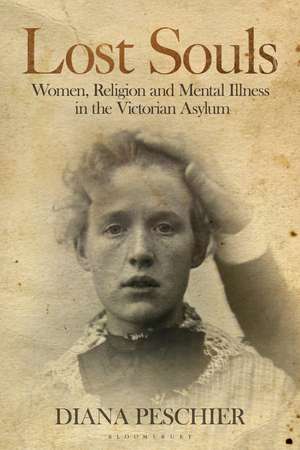
Lost Souls: Women, Religion and Mental Illness in the Victorian Asylum
Autor Diana Peschieren Limba Engleză Hardback – 28 noi 2019
Preț: 709.97 lei
Preț vechi: 1053.69 lei
-33%
Puncte Express: 1065
Carte tipărită la comandă
Livrare economică 01-15 decembrie
Livrare prin curier în România Termenul estimat este afișat lângă disponibilitate.
Transport gratuit pentru acest produs Plată online sau ramburs, în funcție de opțiunile comenzii.
Retur gratuit în 14 zile Comandă securizată și suport în română.
Specificații
ISBN-13: 9781788318075
ISBN-10: 1788318072
Pagini: 224
Dimensiuni: 156 x 234 x 21 mm
Greutate: 0.54 kg
Editura: Bloomsbury Publishing
Colecția Bloomsbury Academic
Locul publicării:London, United Kingdom
ISBN-10: 1788318072
Pagini: 224
Dimensiuni: 156 x 234 x 21 mm
Greutate: 0.54 kg
Editura: Bloomsbury Publishing
Colecția Bloomsbury Academic
Locul publicării:London, United Kingdom
Cuprins
Chapter One: Introduction: The Sin of Eve and Dangerous Emotions
Chapter Two: Wives, Mothers and Abuse of Women in the Asylum
Chapter Three: Women with Religious Excitement
Chapter Four: Evangelical Sunday School Teaching: Lessons for Girls
Chapter Five: Physical Illness
Chapter Six: Asylums and Madness Mirrored in Nineteenth-Century Literature
Chapter Seven: Male Asylum Patients
Epilogue
Bibliography and Sources
Chapter Two: Wives, Mothers and Abuse of Women in the Asylum
Chapter Three: Women with Religious Excitement
Chapter Four: Evangelical Sunday School Teaching: Lessons for Girls
Chapter Five: Physical Illness
Chapter Six: Asylums and Madness Mirrored in Nineteenth-Century Literature
Chapter Seven: Male Asylum Patients
Epilogue
Bibliography and Sources
Recenzii
The diverse texts Peschier examines in Lost Souls compose a rich, understudied resource that will continue to yield valuable insights into religion's formative role in historical frameworks of cognitive difference in Western contexts and prehistories of what disability scholars and activists have called neurodiversity.
The book is testimony to the gendered nature of diagnosis and treatment in Victorian asylums and provides fascinating insights into the lives of the women discussed. It should inspire historians of family and community to investigate the lives of those women admitted to Victorian asylums, and provides context to their experiences.
This is a fascinating exposition of female madness and how it manifested itself in religious expression in the Victorian era. Peschier's extensive research provides us with a unique insight into the gendered treatment of these beleaguered women.
The book is testimony to the gendered nature of diagnosis and treatment in Victorian asylums and provides fascinating insights into the lives of the women discussed. It should inspire historians of family and community to investigate the lives of those women admitted to Victorian asylums, and provides context to their experiences.
This is a fascinating exposition of female madness and how it manifested itself in religious expression in the Victorian era. Peschier's extensive research provides us with a unique insight into the gendered treatment of these beleaguered women.