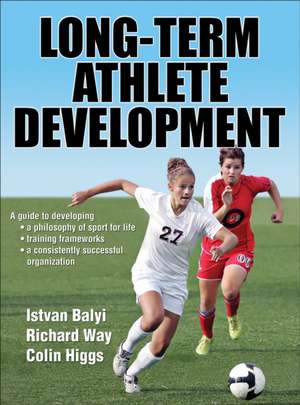
Long-Term Athlete Development
Autor Colin Higgs, Istvan Balyi, Richard Wayen Limba Engleză Hardback – 4 sep 2013
În analiza resurselor dedicate performanței sportive, Long-Term Athlete Development se distinge ca fiind fundamentul teoretic și practic al modelului LTAD. Subliniem faptul că autorii Istvan Balyi, Richard Way și Colin Higgs nu propun doar o metodologie de antrenament, ci o paradigmă integrată a fiziologiei și dezvoltării umane aplicată în sport. Ne-a atras atenția rigoarea cu care este tratată „alfabetizarea fizică” (physical literacy), considerată pilonul central în tranziția de la abilități de mișcare fundamentale la competiția de elită. Structura volumului este una progresivă, debutând cu fundamentele filozofice „Sport for Life” și continuând cu factorii critici de dezvoltare. Capitolul dedicat specializării oferă o perspectivă clinică asupra riscurilor specializării timpurii, corelând maturizarea biologică cu antrenabilitatea. Considerăm esențială includerea secțiunilor despre sportivii cu dizabilități cognitive și fizice, un aspect adesea marginalizat în literatura de specialitate. Clinicienii și preparatorii fizici care folosesc Development of the Youth Athlete de Neil Armstrong ca referință pentru bazele fiziologice vor găsi în acest titlu puntea necesară către implementarea administrativă și organizațională a acestor date. Spre deosebire de The Athletic Skills Model, care se concentrează pe educația holistică a mișcării, Long-Term Athlete Development oferă un plan de management sportiv pe întreaga durată a vieții. Textul integrează 113 elemente vizuale (ilustrații și fotografii alb-negru) pentru a clarifica perioadele optime de antrenabilitate, transformând cercetarea academică în instrumente de lucru pentru antrenori și administratori sportivi.
Preț: 440.23 lei
Preț vechi: 463.39 lei
-5%
Carte disponibilă
Livrare economică 17 noiembrie-01 decembrie
Livrare express 03-07 noiembrie pentru 57.87 lei
Specificații
ISBN-10: 0736092188
Pagini: 296
Ilustrații: 70 black & white illustrations, 43 black & white halftones
Dimensiuni: 215 x 287 x 27 mm
Greutate: 1.03 kg
Ediția:New
Editura: HUMAN KINETICS
V-ar putea interesa
-
 -15%Preț: 515.79 lei606.81 lei
 -
 The New Toughness Training for SportsJames E LoehrPreț: 97.57 lei
 -
 -17%Preț: 65.90 lei79.63 lei
 -
 -25%Preț: 107.02 lei142.80 lei
 -
 Preț: 175.32 lei
 -
 Coaching Better Every SeasonWade GilbertPreț: 173.23 lei
 -
 PeriodizationCarlo Buzzichelli-8%Preț: 484.73 lei526.87 lei
 -
 The Warm-UpIan JeffreysPreț: 202.48 lei
 -
 FurtherBilly BillinghamPreț: 156.15 lei
 -
 Preț: 476.20 lei
 -
 Preț: 256.88 lei
 -
 -18%Preț: 105.56 lei128.98 lei
 -
 -16%Preț: 130.95 lei155.06 lei
 -
 Growth, Maturation, Physical Activity, and SportRobert M. Malina-9%Preț: 774.46 lei851.05 lei
 -
 Training and Conditioning Young AthletesTudor O. BompaPreț: 251.73 lei
 -
 Preț: 448.14 lei
 -
 Lifelong Motor DevelopmentDr. Carl P Gabbard-27%Preț: 731.63 lei999.51 lei
De ce să citești această carte
Această lucrare este indispensabilă pentru antrenorii și managerii sportivi care doresc să construiască programe sustenabile de performanță. Cititorul câștigă o înțelegere clară a modului în care vârsta biologică influențează răspunsul la antrenament, evitând astfel plafonarea sau accidentările premature. Este singura resursă care explică aplicat cele șapte etape ale modelului LTAD, oferind un avantaj strategic în identificarea și cultivarea talentului pe termen lung.
Cuprins
Chapter 1. Long-Term Athlete Deveopment Model
Beginnings of LTAD
LTAD Model Explained
Sport for Life Philosophy
Framework for Working Together
Guide for Participating in Sport and Physical Activity
Tool for Change
Summary
Questions for Reflection
References
To Learn More
Chapter 2. Athletes With Disabilities
Sport for People With Disabilities
LTAD Stages for Athletes With Disabilities
Special Considerations
Supporting Athletes With Disabilities
Summary
Questions for Reflection
References
To Learn More
Part II. Key Factors in Long-Term Athlete Development
Chapter 3. Physical Literacy
Physical Literacy Definitions
Physical Literacy Development in Children
Appropriate Skill Development in Children
Summary
Questions for Reflection
References
To Learn More
Chapter 4. Specialization
Specialization Defined
Negative Consequences of Specializing Too Early
Positive Effects of Specialization at the Optimal Time
Optimal Time to Specialize
Specialization Groups
Sport-Specific Specialization Athlete Development Models
Summary
Questions for Reflection
References
To Learn More
Chapter 5. Age
Age Categories
Relative Age
Developmental Age
Measuring and Monitoring Growth
Summary
Questions for Reflection
References
To Learn More
Chapter 6. Trainability
Sensitive Periods of Trainability
Trainability of Stamina
Trainability of Strength
Trainability of Speed
Trainability of Skill
Trainability of Suppleness
Training and Competition During Puberty
Summary
Questions for Reflection
References
To Learn More
Chapter 7. Intellectual, Emotional, and Moral Development
Capacities
Interplay of Intellectual, Emotional and Moral Development
Physical Development
Intellectual Development
Emotional Development
Moral Development
Influence of Intellectual, Emotional, and Moral Development on LTAD
Learning Styles
Summary
Questions for Reflection
References
To Learn More
Chapter 8. Excellence Takes Time
Importance of Practice in Excellence
Importance of Multisport Participation and Free Play
Importance of the Physical, Cognitive, and Emotional Domains to Excellence
Perils of Premature Selection
Keys to Achieving Necessary Training Hours
Summary
Questions for Reflection
References
To Learn More
Chapter 9. Periodization
Periodization and LTAD
Components of Periodization
10-Step Approach to Creating an Annual Plan
Implementing the 10 Steps of an Annual Cycle
Summary
Questions for Reflection
References
To Learn More
Chapter 10. Competition
Competition and LTAD
Issues in Competition
Making Good Decisions
Training-to-Competition Ratios Through the Stages
Summary
Questions for Reflection
References
To Learn More
Chapter 11. Sport System Alignment and Integration
System Alignment From an Individual Perspective
System Alignment From a Sport Organization Perspective
System Alignment From a Sector Perspective
LTAD and S4L Implications for Policy Development
Summary
Questions for Reflection
References
To Learn More
Chapter 12. Continuous Improvement
Technology Changes
Paradigm Changes
Influencing Change
Actions for Continuous Improvement
Summary
Questions for Reflection
References
To Learn More
Part III. Stages of Long-Term Athlete Development
Chapter 13. Active Start
Active Start Importance
Physical Activity and the Brain
Critical and Sensitive Periods
Maturity and Body Movements
Appropriate Activities and Programs
Summary
Questions for Reflection
References
To Learn More
Chapter 14. Fundamentals
Evolution of Skills
Fundamental Movement Skills
Locomotor Skills in Varied Environments
Attaining All of the Fundamental Movement Skills
Learning and Teaching Fundamental Movement Skills
Key Training and Performance Characteristics
Summary
Questions for Reflection
References
To Learn More
Chapter 15. Learn to Train
Learn to Train Basics
Key Training and Performance Characteristics
Summary
Questions for Reflection
References
To Learn More
Chapter 16. Train to Train
Train to Train Basics
Key Training and Performance Characteristics
Summary
Questions for Reflection
References
To Learn More
Chapter 17. Train to Compete
Train to Compete Basics
Key Training and Performance Characteristics
Summary
Questions for Reflection
Summary
To Learn More
Chapter 18. Train to Win
Train to Win Basics
Key Training and Performance Characteristics
Summary
Questions for Reflection
Summary
To Learn More
Chapter 19. Active for Life
Active for Life Basics
Importance of Active for Life
Competitive for Life Basics
Fit for Life Basics
Sport and Physical Activity Leaders
Summary
Questions for Reflection
References
To Learn More
Descriere
Notă biografică
As one of the architects of the long-term athlete development model, Balyi has served as an LTAD advisor for 50 sports in 7 countries and facilitated the use of LTAD for more than 20 countries. Balyi has worked with 17 Canadian national teams as a high-performance consultant and been responsible for athletic development planning and periodization for multiple Olympic medalists. In addition, Balyi has taught planning, periodization, and LTAD modules in Australia, Bahrain, Chile, England, Ireland, New Zealand, Northern Ireland, Portugal, Scotland, Singapore, South Africa, the United Sates, the Netherlands, and Wales.
Balyi resides in Victoria, British Columbia, where he enjoys reading, listening to music, and cooking.
Richard Way, MBA, is Canadian Sport for Life's Senior Leader and is an expert on long-term athlete development. He is also a principal of Citius Performance Corporation and serves on the faculty of the Institute for Global Studies at the University of Delaware.
Way developed the LTAD model along with Istvan Balyi and has served as a long-term athlete development advisor for 30 sports in 4 countries. He has also facilitated the use of LTAD in over 50 countries.
As a chartered professional coach, Way represented Canada as a luge racer and coach for over 10 years. Way holds a Medal of Honor for Exceptional Contributions to the Development of the International Luge Sport awarded by the Federation Internationale de Luge de Course (FIL). He received his advanced diploma in coaching in 2005 from the National Coaching Institute.
Way is president of the International Sport for Life Society. He was also the director of sport for Vancouver's successful 2010 Bid Corporation. Way enjoys spending time with his children in community sports, traveling, and playing soccer and hockey. He resides in Victoria, British Columbia.
Colin Higgs, PhD, is a sport consultant and expert in long-term athlete development. He has worked with many national governments and nongovernmental sport and disability sport organizations in North America, the Caribbean, southern Africa, and central Asia.
As a consultant, Higgs is currently involved in the redevelopment of the Caribbean Coaching Certification Program and the design, development, and implementation of a youth sport program in the Caribbean to reduce the incidence and impact of HIV/ AIDS. Higgs is working to transform the Canadian sport system with the goals of decreased negative medical consequences of physical inactivity and increased international sport performance for Canada's athletes.
Higgs is a frequent presenter at international conferences and has authored more than 60 publications on physical literary, long-term athlete development, and coaching with special emphasis on individuals with disabilities.
In 2013 Higgs was the inaugural recipient of the International Paralympic Committee's Sport Science Awards and also received the Queen's 60th Jubilee Medal for community service to Canada in support of reducing physical inactivity. He is a professor emeritus at Memorial University of Newfoundland in Canada. Higgs resides in Sydenham, Ontario, Canada.