Cantitate/Preț
Produs

Living with the Gods

Autor Neil Macgregor
en Limba Engleză Paperback – 10 sep 2019

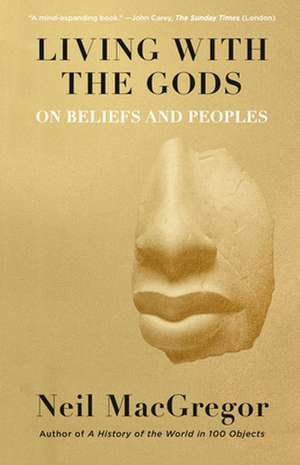
Structura volumului Living with the Gods reflectă o metodologie consacrată de Neil Macgregor în proiectele sale anterioare: utilizarea culturii materiale pentru a descifra mecanismele complexe ale civilizației umane. Organizat nu ca o istorie liniară a doctrinelor religioase, ci ca o explorare panoramică a ultimilor 40.000 de ani, materialul este construit în jurul unor obiecte, locuri și ritualuri specifice care au definit identitatea colectivă. Descoperim aici o abordare care transcende teologia, concentrându-se pe modul în care credințele și ideologiile funcționează ca forțe politice și sociale, modelând relația dintre individ și stat. Remarcăm faptul că acest volum, publicat de Penguin Books, extinde temele abordate în A History of the World in 100 Objects. Dacă în lucrarea precedentă accentul cădea pe evoluția tehnologică și culturală generală, aici Neil Macgregor izolează dimensiunea sacrului și a sacrului laic. Cititorii familiarizați cu Emerging Geographies of Belief de Catherine Brace vor aprecia modul în care Macgregor transformă analiza academică a spațiului și credinței într-o narațiune accesibilă, dar riguroasă, ancorată în dovezi arheologice și istorice concrete. Tonul este unul analitic și echilibrat, evitând pledoaria pentru credință în favoarea unei înțelegeri a funcției sociale a religiei. Această ediție în limba engleză, legată în format hardback, integrează perspectivele oferite de seria documentară BBC Radio 4, oferind o sinteză între cercetarea de muzeu și discursul public contemporan. Este o lucrare despre poveștile care ne definesc, oferind un context istoric vital pentru înțelegerea diviziunilor și solidarităților din lumea de astăzi.

Citește tot Restrânge

Preț: 14712 lei

Puncte Express: 221

Carte indisponibilă temporar

Doresc să fiu notificat când acest titlu va fi disponibil:

Specificații

ISBN-13: 9780525563273
ISBN-10: 052556327X
Pagini: 512
Dimensiuni: 149 x 228 x 41 mm
Greutate: 1.06 kg
Editura: Knopf Doubleday Publishing Group

De ce să citești această carte

Recomandăm această carte oricărui cititor interesat de antropologie, istorie sau sociologie. Neil Macgregor oferă un instrument de înțelegere a modului în care identitățile naționale și comunitare sunt construite pe fundamente de credință. Veți câștiga o perspectivă nouă asupra obiectelor din muzee, văzându-le nu doar ca piese de artă, ci ca martori ai modului în care umanitatea a ales să conviețuiască sub autoritatea divinului sau a ideologiilor comune.


Despre autor

Neil Macgregor este un istoric de artă și fost director al British Museum (2002–2015), recunoscut la nivel internațional pentru capacitatea sa de a comunica istoria complexă a lumii prin intermediul obiectelor. Cariera sa este marcată de colaborări strânse cu BBC, unde a realizat serii de succes care au redefinit formatul documentarului istoric. Printre lucrările sale de referință se numără A History of the World in 100 Objects și Germany, ambele demonstrând talentul său de a sintetiza volume uriașe de date culturale în narațiuni coerente și fascinante. Expertiza sa în gestionarea colecțiilor naționale și viziunea sa asupra rolului muzeului în societatea modernă transpare în fiecare pagină a operei sale.


Descriere scurtă

In the same format as his best-selling books A History of the World in 100 Objects and Germany: Memories of a Nation--the acclaimed art historian now gives us a magnificent new book that explores the relationship between faith and society. Until fairly recently, religion as a major influence on the nature of individual societies around the world seemed to be on the wane. Now, far from being marginalized, the relationship between faith and society has moved to the center of politics and global conversation. Neil MacGregor's new book traces the ways in which different societies have understood and articulated their places in the cosmic scheme. It examines mankind's beliefs not from the perspective of institutional religions but according to how shared narratives have shaped societies--and what happens when different narratives run up against each other. As he did in A History of the World in 100 Objects and Germany: Memories of a Nation, MacGregor brilliantly combines objects, places, and ideas to examine and, ultimately, illuminate these pressing contemporary concerns.

Notă biografică

NEIL MacGREGOR was director of the National Gallery, London, from 1987 to 2002 and of the British Museum from 2002 to 2015. His previous books include A History of the World in 100 Objects, Shakespeare's Restless World, and Germany: Memories of a Nation, between them translated into more than a dozen languages. In 2010, he was made a member of the Order of Merit, the UK's highest civil honor. He is now chair of the steering committee of the Humboldt Forum in Berlin.

Recenzii

Neil MacGregor is pre-eminently a teacher. He possesses the teacher's two vital gifts, which are the ability to distinguish things that are interesting from things that are not, and the capacity to change the second category into the first ... a mind-expanding book
The David Attenborough of things that don't move ... Think of it as his Blue Planet
He shows how human beings have always used religion and objects as a way to understand the world around us, from finding some accommodation with light, water and the seasons, to attempting to find some approach towards death. ... Anyone wishing to deepen, if not change their life, will certainly benefit from this remarkable book
Superbly illustrated, with objects and people and places that range far beyond the museum doors, to almost every corner of the world
This scholarly, elegantly written book is a reminder of how seldom, when visiting a museum, most of us take the time to inquire into what lies behind the objects we look at. Living with the Gods is a celebration of curiosity
Our eyes are opened to ways of being human that are unlike anything we could ever experience for ourselves ... Not only is the ancient past made accessible, our present reality is also made strangely questionable
The strength of the book is its thoughtful and sometimes provocative reflections on religion and religiosity through this exceptional range of artefacts