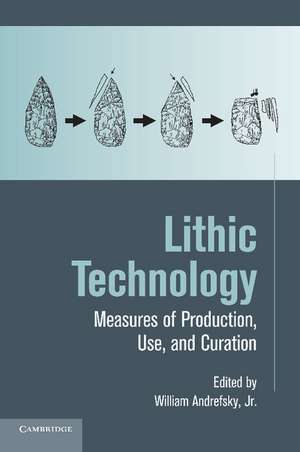
Lithic Technology
Editat de Jr William Andrefskyen Limba Engleză Paperback – 9 oct 2014
Evoluția arheologiei preistorice în ultimele decenii reflectă o tranziție clară de la simpla descriere tipologică a artefactelor către o înțelegere sistemică a modului în care tehnologia este integrată în strategiile de subzistență și utilizare a teritoriului. Subliniem faptul că această lucrare, editată de Jr William Andrefsky, reprezintă un punct de inflexiune în studiul industriei litice, propunând o metodologie riguroasă pentru măsurarea „istoriei de viață” a uneltelor de piatră. Reținem că volumul nu se limitează la morfologie, ci explorează modul în care efortul de producție și procesele de întreținere sunt influențate de disponibilitatea materiilor prime și de cerințele funcționale. Această lucrare acoperă aceeași arie tematică precum Lithic Technological Systems and Evolutionary Theory, dar cu o abordare mai aplicată pe măsurarea concretă a indicilor de retușare și pe secvențele de reducere, spre deosebire de accentul teoretic-evolutiv al titlului menționat. În contextul operei editorului, Lithic Technology funcționează ca o extensie specializată a manualului său fundamental, Lithics. Dacă lucrarea anterioară stabilea principiile de bază ale înregistrării și analizei datelor, volumul de față aplică aceste instrumente pe seturi de date diverse, de la siturile mousteriene de la Combe Grenal până la contextul neolitic. Structura este organizată logic, începând cu o revizuire teoretică a conceptului de organizare tehnologică, urmată de studii tehnice despre indicii de reducere unifacială și bifacială. Merită menționat capitolul dedicat dilemei dintre săgeți și sulițe, unde indicii de retușare sunt folosiți ca determinanți funcționali. Progresia textului ghidează cititorul de la mecanica debitajului la interpretări comportamentale complexe, oferind un cadru analitic esențial pentru orice cercetare modernă în arheologia litică.
Preț: 440.06 lei
Carte tipărită la comandă
Livrare economică 05-19 decembrie
Specificații
ISBN-10: 1107646634
Pagini: 360
Dimensiuni: 152 x 229 x 20 mm
Greutate: 0.52 kg
Editura: Cambridge University Press
Locul publicării:New York, United States
V-ar putea interesa
-
 Ancient Middle NigerRoderick J. McintoshPreț: 244.90 lei
 -
 The Rise of Bronze Age SocietyKristian Kristiansen-11%Preț: 498.51 lei560.13 lei
 -
 The First AfricansLawrence BarhamPreț: 381.25 lei
 -
 The Palaeolithic Settlement of AsiaRobin DennellPreț: 465.96 lei
 -
 LithicsJr William Andrefsky-11%Preț: 472.50 lei530.90 lei
 -
 Archaeology of the CaribbeanSamuel M. WilsonPreț: 210.98 lei
 -
 Origins and RevolutionsClive GamblePreț: 342.57 lei
 -
 The Prehistory Of The MindProf Steven Mithen-26%Preț: 80.14 lei108.19 lei
 -
 The Urals and Western Siberia in the Bronze and Iron AgesLudmila KoryakovaPreț: 370.06 lei
 -
 The Dream Culture of the NeanderthalsStan GoochPreț: 99.57 lei
De ce să citești această carte
Această lucrare este esențială pentru studenții avansați și arheologii profesioniști care doresc să depășească simpla clasificare a obiectelor din piatră. Cititorul câștigă acces la metode cuantificabile de analiză a uzurii și retușării, putând astfel reconstrui deciziile economice și logistice ale societăților trecute. Este un instrument metodologic prețios care transformă artefactul static într-o sursă dinamică de date despre comportamentul uman preistoric.
Descriere scurtă
Cuprins
Recenzii
Review of the hardback: 'Lithic Technology succeeds in its goal of combining unique temporal and cultural examples to demonstrate a link between technological organization theory and the reconstruction of lithic retouched tool life histories … It should be required reading for any upper division undergraduate or graduate lithics class where its chapters can be discussed, debated and used as reference points for future research. Lithic Technology is also highly recommended for anyone interested in reading about diverse analytical measures for retouched lithic tools and theoretical arguments regarding lithic production trajectories currently debated by lithicists around the globe.' PaleoAnthropology