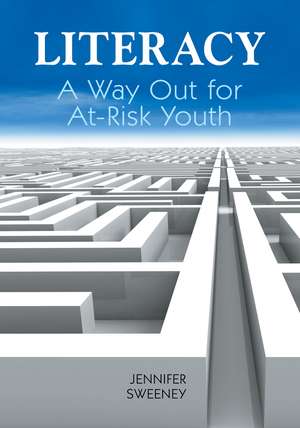
Literacy: A Way Out for At-Risk Youth
Autor Jennifer Sweeneyen Limba Engleză Paperback – 19 dec 2011
The facts regarding juvenile corrections are grim. In California alone, 13,000 youth are housed as wards of the state. Rearrest rates for young people in detention and correction facilities range from 77 to 90 percent. The good news is youth corrections librarianship has the potential to improve the situation.
This book fills a gap in the literature on corrections librarianship, which is focused almost solely on adult prisons. Programs for juvenile offenders require significantly more emphasis on education and rehabilitation than adults. There is also greater urgency in delivering needed services to youth offenders. Literacy: A Way Out for At-Risk Youth provides librarians in juvenile detention facilities with tools to face their unique challenges, such as collaborating with corrections staff and encouraging youth to maintain their connection to the library after release. The author's recommendations for reader's advisory, collection development, and other services are geared toward helping teens cope with their problems and develop better decision making skills.
Preț: 235.44 lei
Preț vechi: 365.31 lei
-36%
Puncte Express: 353
Preț estimativ în valută:
41.68€ • 48.54$ • 36.21£
41.68€ • 48.54$ • 36.21£
Carte tipărită la comandă
Livrare economică 23 februarie-09 martie
Preluare comenzi: 021 569.72.76
Specificații
ISBN-13: 9781598846744
ISBN-10: 1598846744
Pagini: 156
Dimensiuni: 178 x 254 x 8 mm
Greutate: 0.28 kg
Editura: Bloomsbury Publishing
Colecția Libraries Unlimited
Locul publicării:New York, United States
ISBN-10: 1598846744
Pagini: 156
Dimensiuni: 178 x 254 x 8 mm
Greutate: 0.28 kg
Editura: Bloomsbury Publishing
Colecția Libraries Unlimited
Locul publicării:New York, United States
V-ar putea interesa
-
 -24%Preț: 393.92 lei516.57 lei
 -
 Preț: 248.68 lei
 -
 Shopping and CrimeJ. BamfieldPreț: 380.82 lei
 -
 -31%Preț: 165.66 lei239.33 lei
 -
 -23%Preț: 428.22 lei556.12 lei
 -
 Preț: 400.06 lei
 -
 -23%Preț: 495.04 lei642.91 lei
 -
 Youth Justice and Social WorkJane PickfordPreț: 368.43 lei
 -
 Youth Offending and Youth JusticeMonica Barry-27%Preț: 202.34 lei278.23 lei
 -
 A New Response to Youth CrimeDavid SmithPreț: 434.89 lei
 -
 Preț: 417.42 lei
 -
 Assessment in youth justiceKerry BakerPreț: 237.57 lei
 -
 Preț: 206.95 lei
 -
 BurglaryRob MawbyPreț: 375.57 lei
 -
 The Lost BoyzJustin RollinsPreț: 137.64 lei
Cuprins
Preface
Acknowledgments
Introduction
Why This Book
What's in the Book
Notes on the Research
1. "A Perpetual Tug of War": Conflicting Paradigms in Juvenile Detention
A Brief History of Juvenile Detention in the United States
The Houses of Refuge
Industrial Schools, Training Schools, and Reformatories
Twentieth-century Juvenile Detention
Camps, Ranches, and Community-based Corrections
1970s and 1980s: From Reformation to Punishment
A Brief History of Education in Detention
Libraries in Juvenile Detention
2. The Juvenile Justice Process Today
First Contact: Law Enforcement
Juvenile Court Intake
Adjudication
Disposition
Types of Facilities
3. Information Needs of Youth in Detention
Who Are Your Users? Demographics of Youth in Detention Today
Age of Juveniles in Detention
Race and Ethnicity
Status Offenders Versus Delinquent Offenders
Custody Rate
Mental Health, Substance Abuse, and Other Issues
Information Needs of Teens
Cognitive and Behavioral Issues Associated with Juvenile Delinquency
4. Information Services for Youth in Detention
The Trend Toward Balanced and Restorative Justice
A Special Kind of Reader's Advisory
Cognitive-behavioral Therapy
Engagement: Building Relationships and Trust with Youth
Free Voluntary Reading (or, How Detention Libraries Boost Literacy)
Getting Them Started: Creating a Culture of Reading
5. Detention Library Service Models
The School Library
The Public Library
Living Unit Collections
Outreach
Other Support for Library Services: State Institutional Library Consultants
Trends in Detention Facility Design and Construction
Security Policies Affecting Access to Libraries and Library Materials
Library Service Agreements
Computing in Detention
Organizing Materials for Access
6. Model Programs and Services
Book Talks and Book Discussion
Speakers and Performers
Creative Writing Programs
Arts Programs
Reentry Programs
Reading to Children and Parenting
Practical Matters
Information Literacy Instruction: Keep It Simple
The Art of Programming
Model Programs
Changing Lives Through Literature
Read to Succeed
Write to Read
Writing for Our Lives
Second Chance Books
Free Minds
Digital Storytelling
Reading Fathers
Born to Read and Read to Me
Great Transitions Program: Struggle, Achieve, Change
A.R.T.C. (Achieving Recovery Through Creativity)
7. Strange but True: Inside the World of Detention Library Collection Development
Censorship: What's Prohibited and Why
Striking a Balance
Understanding the Environment
The Bad Words Debate: Defending the Collection
Be Proactive: Communicate!
Building Collections for These Teens: Some Nuts and Bolts
8. From Conflict to Cooperation: Making It Work in Detention
Parallel Challenges in Social Work
Administrative Complexities
Communication Issues
Differing Expectations
Relationships with Teachers
Creating a Culture of Reading
9. Conclusion: The Future Role of Librarians Serving Teens in Detention
Appendix A: Model Policies
Appendix B: Resources
References
Index
Acknowledgments
Introduction
Why This Book
What's in the Book
Notes on the Research
1. "A Perpetual Tug of War": Conflicting Paradigms in Juvenile Detention
A Brief History of Juvenile Detention in the United States
The Houses of Refuge
Industrial Schools, Training Schools, and Reformatories
Twentieth-century Juvenile Detention
Camps, Ranches, and Community-based Corrections
1970s and 1980s: From Reformation to Punishment
A Brief History of Education in Detention
Libraries in Juvenile Detention
2. The Juvenile Justice Process Today
First Contact: Law Enforcement
Juvenile Court Intake
Adjudication
Disposition
Types of Facilities
3. Information Needs of Youth in Detention
Who Are Your Users? Demographics of Youth in Detention Today
Age of Juveniles in Detention
Race and Ethnicity
Status Offenders Versus Delinquent Offenders
Custody Rate
Mental Health, Substance Abuse, and Other Issues
Information Needs of Teens
Cognitive and Behavioral Issues Associated with Juvenile Delinquency
4. Information Services for Youth in Detention
The Trend Toward Balanced and Restorative Justice
A Special Kind of Reader's Advisory
Cognitive-behavioral Therapy
Engagement: Building Relationships and Trust with Youth
Free Voluntary Reading (or, How Detention Libraries Boost Literacy)
Getting Them Started: Creating a Culture of Reading
5. Detention Library Service Models
The School Library
The Public Library
Living Unit Collections
Outreach
Other Support for Library Services: State Institutional Library Consultants
Trends in Detention Facility Design and Construction
Security Policies Affecting Access to Libraries and Library Materials
Library Service Agreements
Computing in Detention
Organizing Materials for Access
6. Model Programs and Services
Book Talks and Book Discussion
Speakers and Performers
Creative Writing Programs
Arts Programs
Reentry Programs
Reading to Children and Parenting
Practical Matters
Information Literacy Instruction: Keep It Simple
The Art of Programming
Model Programs
Changing Lives Through Literature
Read to Succeed
Write to Read
Writing for Our Lives
Second Chance Books
Free Minds
Digital Storytelling
Reading Fathers
Born to Read and Read to Me
Great Transitions Program: Struggle, Achieve, Change
A.R.T.C. (Achieving Recovery Through Creativity)
7. Strange but True: Inside the World of Detention Library Collection Development
Censorship: What's Prohibited and Why
Striking a Balance
Understanding the Environment
The Bad Words Debate: Defending the Collection
Be Proactive: Communicate!
Building Collections for These Teens: Some Nuts and Bolts
8. From Conflict to Cooperation: Making It Work in Detention
Parallel Challenges in Social Work
Administrative Complexities
Communication Issues
Differing Expectations
Relationships with Teachers
Creating a Culture of Reading
9. Conclusion: The Future Role of Librarians Serving Teens in Detention
Appendix A: Model Policies
Appendix B: Resources
References
Index
Recenzii
This book is a welcome addition to any juvenile criminal justice collection, as well as any library school collection where patrons might be interested in learning about the life and work of a juvenile detention center librarian.
Not intended to be a how-to manual or guide, this book is still a welcome addition to any juvenile-criminal-justice collection as well as any library-school collection where patrons might be interested in learning about the life and work of a juvenile-detention-center librarian.
Not intended to be a how-to manual or guide, this book is still a welcome addition to any juvenile-criminal-justice collection as well as any library-school collection where patrons might be interested in learning about the life and work of a juvenile-detention-center librarian.