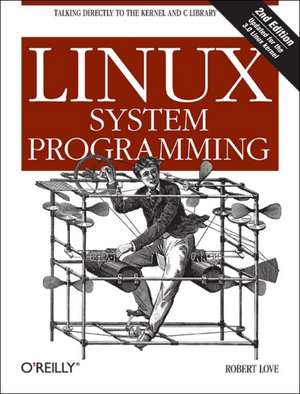
Linux System Programming
Autor Robert Loveen Limba Engleză Paperback – 2 iul 2013
Considerăm că a doua ediție a Linux System Programming reprezintă un instrument indispensabil pentru inginerii care doresc să interacționeze direct cu serviciile nucleului Linux și bibliotecile de sistem fundamentale. Scrisă de Robert Love, un cunoscut contributor al nucleului, această lucrare nu se rezumă la o simplă documentare a funcțiilor, ci oferă o perspectivă tehnică asupra modului în care se scrie cod performant și optimizat pentru mediul Linux. Recomandăm acest volum în special pentru claritatea cu care autorul delimitează standardele POSIX de extensiile specifice arhitecturii Linux, permițând dezvoltatorilor să aleagă între portabilitate și performanță maximă. Structura este una aplicată, pornind de la operațiuni de bază I/O și gestiunea fișierelor, până la concepte avansate precum maparea memoriei și semnalele de sistem. Un punct forte al acestei ediții este capitolul dedicat programării multithreaded, unde conceptele de Pthreads sunt explicate în contextul planificatorului de sarcini din Linux. Dacă The Linux Programming Interface de Michael Kerrisk v-a oferit cadrul teoretic exhaustiv și o referință enciclopedică, această carte oferă instrumentele practice și viziunea internă a unui programator de nucleu pentru a implementa soluții eficiente. Față de Beginning Linux Programming, care este orientat către inițiere, volumul lui Love intră adânc în mecanismele de gestiune a proceselor în timp real și a ceasurilor POSIX, fiind o resursă de nivel intermediar și avansat. Fiecare secțiune este susținută de exemple de cod în limbajul C, ilustrând utilizarea corectă a apelurilor de sistem pentru alocarea memoriei sau gestionarea priorităților proceselor. Este, în esență, un manual de referință care transformă teoria sistemelor de operare în aplicații practice solide, optimizate pentru ecosistemul Linux actual.
Preț: 350.21 lei
Preț vechi: 437.75 lei
-20%
Carte disponibilă
Livrare economică 07-21 noiembrie
Livrare express 24-30 octombrie pentru 63.54 lei
Specificații
ISBN-10: 1449339530
Pagini: 400
Ilustrații: black & white illustrations
Dimensiuni: 179 x 231 x 27 mm
Greutate: 0.79 kg
Ediția:2. Auflage
Editura: O'Reilly
V-ar putea interesa
-
 -20%Preț: 330.38 lei412.98 lei
 -
 Linux Bible, Tenth EditionC Negus-20%Preț: 351.39 lei439.24 lei
 -
 Linux All-in-One For Dummies, 7th EditionRichard Blum-20%Preț: 188.41 lei235.52 lei
 -
 CompTIA Linux+ Study GuideRichard Blum-19%Preț: 410.16 lei506.36 lei
 -
 Linux BibleChristopher Negus-20%Preț: 360.96 lei451.20 lei
 -
 Ubuntu Linux Bible 11eChristopher Negus-20%Preț: 370.87 lei463.59 lei
 -
 Linux Command Line and Shell Scripting BibleRichard Blum-20%Preț: 410.86 lei513.56 lei
 -
 Linux: The Comprehensive Guide (1ST ed.)Michael Kofler-20%Preț: 358.34 lei447.93 lei
 -
 Linux Command ReferenceMichael Kofler-20%Preț: 208.32 lei260.41 lei
 -
 Hacking: The Art of Exploitation, 2nd EditionJon Erickson-35%Preț: 256.17 lei394.85 lei
 -
 Modern C, Third EditionJens Gustedt-20%Preț: 350.34 lei437.92 lei
 -
 -20%Preț: 264.28 lei330.35 lei
 -
 Dive Into Systems: A Gentle Introduction to Computer SystemsSuzanne J Matthews-35%Preț: 407.65 lei625.36 lei
 -
 -37%Preț: 186.86 lei295.98 lei
 -
 System Programming in Linux: A Hands-On IntroductionStewart Weiss-35%Preț: 481.65 lei739.15 lei
 -
 Building a DebuggerSy Brand-35%Preț: 337.38 lei518.40 lei
 -
 The Linux Command Line, 3rd Edition: A Complete IntroductionWilliam Shotts-34%Preț: 245.40 lei374.07 lei
 -
 .NET 10 RevealedKajetan Duszy¿ski-20%Preț: 240.60 lei300.75 lei
De ce să citești această carte
Recomandăm această carte programatorilor C care vor să stăpânească interfața dintre software și nucleul Linux. Veți câștiga o înțelegere profundă a apelurilor de sistem și a optimizării memoriei, trecând dincolo de bibliotecile standard. Este alegerea ideală pentru cei care dezvoltă aplicații de sistem, drivere sau software unde performanța la nivel de proces este critică.