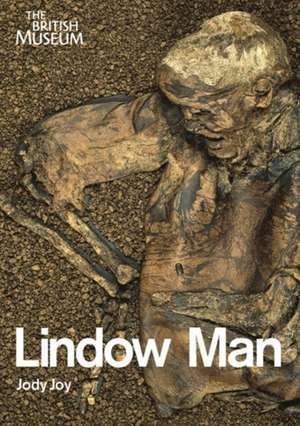
Lindow Man
Autor Jody Joyen Limba Engleză Paperback – mai 2009
Găsim în această lucrare de 56 de pagini, publicată de British Museum Press în seria Objects in Focus, o analiză detaliată a uneia dintre cele mai fascinante descoperiri arheologice din Marea Britanie. Jody Joy reconstituie povestea lui Lindow Man, corpul conservat în turbă a cărui descoperire accidentală în Cheshire a declanșat o investigație medico-legală transformată rapid într-una arheologică. Putem afirma că autorul reușește să sintetizeze complexitatea tehnicilor științifice moderne folosite pentru a elucida un deces survenit în secolul I d.Hr., explorând totodată întrebările rămase fără răspuns despre ritualurile și violența acelei epoci. Considerăm că abordarea lui Joy reflectă expertiza sa vastă în cultura Epocii Fierului, fiind o continuare firească a cercetărilor sale din The Snettisham Hoards și Iron Age Mirrors, unde analizează obiectele ca ferestre către identitatea socială a triburilor britone. Profesorii care folosesc Bog Bodies Uncovered de Miranda Aldhouse-Green vor aprecia aici focalizarea pe un singur studiu de caz reprezentativ, care oferă o perspectivă microscopică asupra contextului cuceririi romane. Față de The Bog People de P V Glob, care oferă un tablou larg al sacrificiilor umane, volumul de față se distinge prin rigoarea tehnică specifică seriei Objects in Focus, documentând fiecare etapă a examinării moderne.
Preț: 35.73 lei
Preț vechi: 43.42 lei
-18%
Carte disponibilă
Livrare economică 13-27 noiembrie
Livrare express 29 octombrie-04 noiembrie pentru 24.09 lei
Specificații
ISBN-10: 0714128171
Pagini: 56
Dimensiuni: 146 x 208 x 6 mm
Greutate: 0.14 kg
Editura: British Museum Press
Locul publicării:United Kingdom
V-ar putea interesa
-
 In Blood and Ashes: Curse Tablets and Binding Spells in Ancient GreeceJessica L. Lamont-28%Preț: 536.16 lei745.84 lei
 -
 -32%Preț: 542.08 lei799.57 lei
 -
 Palmyra: A HistoryMichael SommerPreț: 457.54 lei
 -
 Preț: 456.57 lei
 -
 Preț: 451.24 lei
 -
 Vernacular Architecture in the Pre-Columbian AmericasChristina HalperinPreț: 450.82 lei
 -
 The Nubian Past: An Archaeology of the SudanDavid N. EdwardsPreț: 460.17 lei
 -
 The Archaeology of Celtic Britain and IrelandLloyd Laing-11%Preț: 484.66 lei544.57 lei
 -
 Aspects of Empire in Achaemenid SardisElspeth R M Dusinberre-25%Preț: 806.16 lei1079.10 lei
 -
 -17%Preț: 317.88 lei382.05 lei
 -
 Archaeological Perspectives on the French in the New WorldElizabeth M. Scott-15%Preț: 525.23 lei617.91 lei
 -
 Landscapes of the ItzaLinnea Wren-15%Preț: 652.85 lei768.05 lei
 -
 British Forts and Their CommunitiesChristopher R. Decorse-15%Preț: 510.56 lei600.65 lei
 -
 Studies on the History of Late Antique and Christian NubiaLaurence Kirwan-27%Preț: 1001.46 lei1371.87 lei
 -
 -36%Preț: 748.66 lei1178.66 lei
 -
 Preț: 203.36 lei
 -
 -18%Preț: 1930.68 lei2354.49 lei
 -
 The Late Roman Silver Treasure from Traprain LawAnnemarie Kaufmann-Heinimann-14%Preț: 658.95 lei766.22 lei
 -
 -23%Preț: 727.18 lei944.39 lei
De ce să citești această carte
Recomandăm această carte pasionaților de arheologie și istorie antică dornici să înțeleagă cum știința modernă „interoghează” trecutul. Cititorul câștigă o perspectivă rară asupra modului în care un singur artefact — în acest caz, un corp uman — poate rescrie înțelegerea noastră despre ritualurile britone din timpul expansiunii Imperiului Roman. Este o lectură esențială pentru cei care vizitează colecțiile British Museum.