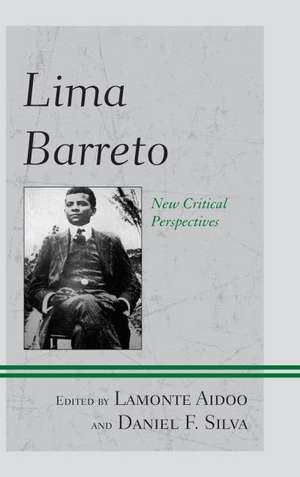
Lima Barreto: New Critical Perspectives
Editat de Lamonte Aidoo, Daniel F. Silva Contribuţii de Earl E. Fitz, Renata R. M. Wasserman, Nelson H. Vieira, Lilia Moritz Schwarcz, Emanuelle K. F. Oliveira, Paulo da-Luz-Moreira, Vivaldo A. Santos, Robert Anderson, Luiz Fernando Valente, Mário Higa, Marc A. Hertzman, Talia Gúzman-Gonzálezen Limba Engleză Hardback – 14 noi 2013
Preț: 658.14 lei
Preț vechi: 937.05 lei
-30%
Puncte Express: 987
Carte tipărită la comandă
Livrare economică 23 noiembrie-07 decembrie
Livrare prin curier în România Termenul estimat este afișat lângă disponibilitate.
Transport gratuit pentru acest produs Plată online sau ramburs, în funcție de opțiunile comenzii.
Retur gratuit în 14 zile Comandă securizată și suport în română.
Specificații
ISBN-13: 9780739176122
ISBN-10: 0739176129
Pagini: 241
Ilustrații: 3 BW Photos
Dimensiuni: 157 x 237 x 23 mm
Greutate: 0.48 kg
Editura: Bloomsbury Publishing
Colecția Lexington Books
Locul publicării:New York, United States
ISBN-10: 0739176129
Pagini: 241
Ilustrații: 3 BW Photos
Dimensiuni: 157 x 237 x 23 mm
Greutate: 0.48 kg
Editura: Bloomsbury Publishing
Colecția Lexington Books
Locul publicării:New York, United States
Cuprins
Introduction
By Lamonte Aidoo and Daniel F. Silva
Chapter 1: Lima Barreto and Gender: An Inter-American Perspective
By Earl E. Fitz
Chapter 2: Race and Sex in Lima Barreto and Charles Chesnutt: a Comparative Politics Between Brazil and the United States
By Renata R. M. Wasserman
Chapter 3: The 'Coloniality of Power' and the Fictional Biography of an Obscure Bureaucrat in Lima Barreto's Vida e Morte de M. J. Gonzaga de Sá
By Nelson H. Vieira
Chapter 4: Lima Barreto and the Mimetic Experience: Agency, Literature, and Madness in the Brazil of the First Republic
By Lilia Moritz Schwarcz
Chapter 5: A Pan-African Activist at the Turn of the 20th Century: Lima Barreto and the Denunciation of Racial Prejudice in Brazil and the United States
By Emanuelle K. F. Oliveira
Chapter 6: Climbing the Social Ladder as a Tragic Farce in Brazil at the Turn of the Century in Machado de Assis' "The Nurse," Lima Barreto's "The Man Who Spoke Javanese," and Monteiro Lobato's "The Funnyman Who Repented"
By Paulo da-Luz-Moreira
Chapter 7: Extraordinary Delusions: the Madness of Capital in Lima Barreto's writings
By Vivaldo A. Santos
Chapter 8: "Fatally Condemned to Wander": Lima Barreto's Nonfiction Journalism and Testimonials
By Robert Anderson
Chapter 9: From Synthesis to Difference: Lima Barreto's Parodic Ufanismo
By Luiz Fernando Valente
Chapter 10: Reading Lima Barreto against Lima Barreto
By Mário Higa
Chapter 11: Freyreans, Marxists, and the "Labyrinth of Nations": Lima Barreto and His Critics
By Marc A. Hertzman
Chapter 12: Men in their Own Wor(l)ds: Lima Barreto and the Narration of Masculinity
By Talia Gúzman-González
By Lamonte Aidoo and Daniel F. Silva
Chapter 1: Lima Barreto and Gender: An Inter-American Perspective
By Earl E. Fitz
Chapter 2: Race and Sex in Lima Barreto and Charles Chesnutt: a Comparative Politics Between Brazil and the United States
By Renata R. M. Wasserman
Chapter 3: The 'Coloniality of Power' and the Fictional Biography of an Obscure Bureaucrat in Lima Barreto's Vida e Morte de M. J. Gonzaga de Sá
By Nelson H. Vieira
Chapter 4: Lima Barreto and the Mimetic Experience: Agency, Literature, and Madness in the Brazil of the First Republic
By Lilia Moritz Schwarcz
Chapter 5: A Pan-African Activist at the Turn of the 20th Century: Lima Barreto and the Denunciation of Racial Prejudice in Brazil and the United States
By Emanuelle K. F. Oliveira
Chapter 6: Climbing the Social Ladder as a Tragic Farce in Brazil at the Turn of the Century in Machado de Assis' "The Nurse," Lima Barreto's "The Man Who Spoke Javanese," and Monteiro Lobato's "The Funnyman Who Repented"
By Paulo da-Luz-Moreira
Chapter 7: Extraordinary Delusions: the Madness of Capital in Lima Barreto's writings
By Vivaldo A. Santos
Chapter 8: "Fatally Condemned to Wander": Lima Barreto's Nonfiction Journalism and Testimonials
By Robert Anderson
Chapter 9: From Synthesis to Difference: Lima Barreto's Parodic Ufanismo
By Luiz Fernando Valente
Chapter 10: Reading Lima Barreto against Lima Barreto
By Mário Higa
Chapter 11: Freyreans, Marxists, and the "Labyrinth of Nations": Lima Barreto and His Critics
By Marc A. Hertzman
Chapter 12: Men in their Own Wor(l)ds: Lima Barreto and the Narration of Masculinity
By Talia Gúzman-González
Recenzii
Comprising 12 essays on Brazilian writer Afonso Henriques de Lima Barreto (1881-1921), this volume opens with an introduction by Aidoo and Silva. In a translated essay on agency, literature, and madness, social anthropologist Lilia Moritz Schwarcz sets the parameters for understanding Lima Barreto's role as both leading author of his day and marginalized, bitter critic of poverty, race, social hierarchy, and politics. Other essays place Lima Barreto, who was troubled by alcoholism and mental illness, in a pan-American context through comparisons with North American literature (essays by Earl Fitz and Renata Wasserman); foreground him as a spokesman against endo-colonialist structures (Nelson Vieira, Vivaldo Santos, Emanuelle K. F. Oliveira); and question his dual position as educated critic and victim of racism (Marc Hertzman, Mário Higa). Luiz Fernando Valente studies Lima Barreto's famous parody of patriotism, and Paulo da-Luz-Moreira considers his humor in the story 'The Man Who Spoke Javanese' against farces by Machado de Assis and Monteiro Lobato. . . .Summing Up: Recommended.
Lima Barreto's fiction, journalism, and diaries, as well as his personal and professional trajectories, remain a powerful challenge to most canonical interpretations of Brazilian race relations and national identity. This collection of critical essays achieves the important task of gathering a number of respected scholars from different regions and disciplines to offer a variety of highly innovative readings of his works, as well as rigorous analyses of life in early 20th-century Brazil. It offers an invaluable contribution to the fields of comparative literature, hemispheric studies, African diaspora, gender and race studies, and Decolonial thinking. It will certainly become an essential resource for both the specialist and those looking for an informed introduction to Brazilian culture.
Bringing together original and intelligent essays across several disciplines, this well-timed anthology is the first book-length English publication to pay homage to one of the major Afro-Brazilian intellectuals of all time: Afonso Henriques de Lima Barreto (1881-1922). As both a victim and an outspoken critic of elite Brazilians' racist backlash in the immediate aftermath of the Abolition of Slavery (1888), Lima Barreto, as demonstrated in these essays, left behind in his relatively short life a remarkable body of testimonies about the contradictions inherent in Brazil's official entrance into modernity. Above all, the essays in this collection ably address the ideological contradictions and cross-social/racial tensions in a society struggling to reconcile modernity with the cultural legacy of slavery and colonialism. As argued by the organizers of this important anthology, Lima Barreto's fierce opposition to the conciliatory ideologies of miscegenation and related cross-racial brotherhood still reverberates through the discourse and activism of contemporary Afro-Brazilians, and confirms the relevance of studying his work today.
Lima Barreto's fiction, journalism, and diaries, as well as his personal and professional trajectories, remain a powerful challenge to most canonical interpretations of Brazilian race relations and national identity. This collection of critical essays achieves the important task of gathering a number of respected scholars from different regions and disciplines to offer a variety of highly innovative readings of his works, as well as rigorous analyses of life in early 20th-century Brazil. It offers an invaluable contribution to the fields of comparative literature, hemispheric studies, African diaspora, gender and race studies, and Decolonial thinking. It will certainly become an essential resource for both the specialist and those looking for an informed introduction to Brazilian culture.
Bringing together original and intelligent essays across several disciplines, this well-timed anthology is the first book-length English publication to pay homage to one of the major Afro-Brazilian intellectuals of all time: Afonso Henriques de Lima Barreto (1881-1922). As both a victim and an outspoken critic of elite Brazilians' racist backlash in the immediate aftermath of the Abolition of Slavery (1888), Lima Barreto, as demonstrated in these essays, left behind in his relatively short life a remarkable body of testimonies about the contradictions inherent in Brazil's official entrance into modernity. Above all, the essays in this collection ably address the ideological contradictions and cross-social/racial tensions in a society struggling to reconcile modernity with the cultural legacy of slavery and colonialism. As argued by the organizers of this important anthology, Lima Barreto's fierce opposition to the conciliatory ideologies of miscegenation and related cross-racial brotherhood still reverberates through the discourse and activism of contemporary Afro-Brazilians, and confirms the relevance of studying his work today.