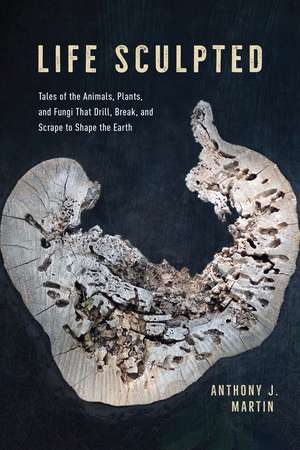
Life Sculpted: Tales of the Animals, Plants, and Fungi That Drill, Break, and Scrape to Shape the Earth
Autor Anthony J. Martinen Limba Engleză Hardback – 2 iun 2023
În această primă ediție a lucrării Life Sculpted, ne-a atras atenția modul în care Anthony J. Martin reușește să transforme un proces geologic aparent arid — bioeroziunea — într-o cronică fascinantă a forței vitale. Subliniem faptul că autorul nu se limitează la o descriere tehnică, ci propune o perspectivă evoluționistă care începe acum miliarde de ani cu primele bacterii și culminează cu megafauna modernă. Notăm cu interes includerea unor exemple spectaculoase, de la crocodilii preistorici de cinci tone până la peștii papagal care „sculptează” recifele de corali.
Această lucrare acoperă aceeași arie tematică precum Current Developments in Bioerosion de Max Wisshak, dar cu o abordare mult mai accesibilă și narativă, potrivită pentru publicul larg, nu doar pentru specialiști. Dacă volumul lui Wisshak este o resursă academică riguroasă, Life Sculpted se apropie mai degrabă de stilul explorator din Zoogeomorphology, extinzând însă discuția spre paleobiologie. Structura cărții este organizată cronologic și tematic, de la „istoria plictisitoare” (însă esențială) a micro-organismelor, până la capitole dedicate „mâncătorilor de oase” din adâncuri și impactului animalelor de talie mare.
În contextul operei sale, Life Sculpted reprezintă o continuare firească a temelor din The Evolution Underground. Dacă în lucrarea anterioară Martin se concentra pe supraviețuirea prin săparea de vizuini, aici el lărgește spectrul analizei către toate modurile în care viața macină, perforează și fragmentează materia dură a planetei. Rezultatul este o sinteză interdisciplinară care ne forțează să recunoaștem că peisajul terestru nu este doar un suport pentru viață, ci un produs direct al activității acesteia.
Preț: 170.93 lei
Carte disponibilă
Livrare economică 31 octombrie-14 noiembrie
Livrare express 17-23 octombrie pentru 74.40 lei
Specificații
ISBN-10: 022681047X
Pagini: 360
Ilustrații: 56 halftones
Dimensiuni: 152 x 229 x 36 mm
Greutate: 0.77 kg
Ediția:1
Editura: University of Chicago Press
Colecția University of Chicago Press
V-ar putea interesa
-
 LIFE UNAUTHORIZED BIOGRAPHY PBRichard ForteyPreț: 108.60 lei
 -
 The EarthRichard ForteyPreț: 108.98 lei
 -
 Otherlands: A World in the MakingThomas Halliday-18%Preț: 66.12 lei80.30 lei
 -
 Earth and Life: A History of Four Billion YearsAnne Nédélec-12%Preț: 275.25 lei311.69 lei
 -
 Life Through the Ages IIMark P WittonPreț: 177.92 lei
 -
 A Little History of the EarthJamie WoodwardPreț: 151.53 lei
 -
 The Whispers of Rock: Stories from the EarthAnjana Khatwa-25%Preț: 91.92 lei123.29 lei
 -
 Ends of the EarthNeil ShubinPreț: 156.21 lei
 -
 Turning to StoneMarcia BjornerudPreț: 117.77 lei
 -
 Evolution Changes Everything!Jorge ChamPreț: 57.20 leiRecomandat
 -
 -21%Preț: 230.48 lei291.20 lei
 -
 Our StoryColin Butfield-21%Preț: 130.21 lei165.17 lei
 -
 -35%Preț: 53.93 lei82.95 lei
 -
 Unearthing the UnderworldKen McNamara-11%Preț: 129.83 lei146.28 lei
 -
 National Trust: Wonder World: EarthBen LerwillPreț: 57.34 lei
 -
 -19%Preț: 63.24 lei77.98 lei
 -
 Super NaturalAlex RileyPreț: 157.68 lei
 -
 Nature's GeniusDavid FarrierPreț: 142.56 lei
 -
 DinosaursRachel IgnotofskyPreț: 154.60 lei
De ce să citești această carte
Recomandăm Life Sculpted oricărui pasionat de științele naturii care dorește să înțeleagă mecanismele invizibile ce modelează relieful. Cititorul va câștiga o perspectivă nouă asupra modului în care interacțiunea dintre biologie și geologie influențează stabilitatea ecosistemelor. Este o lectură esențială pentru a înțelege cum trecutul paleontologic ne poate ajuta să anticipăm reacțiile mediului în fața schimbărilor climatice actuale, totul într-un stil plin de spirit și rigoare științifică.
Despre autor
Anthony J. Martin este profesor la Universitatea Emory, fiind recunoscut la nivel mondial ca un ichnolog de excepție. Cariera sa este marcată de descoperiri de răsunet, precum identificarea primului dinozaur care săpa vizuini și a celor mai vechi urme de acest tip din registrul geologic. Expertiza sa îmbină paleontologia, geologia și biologia, transformându-l într-un comunicator de știință apreciat. A documentat ansambluri impresionante de urme de dinozauri polari în emisfera sudică și a publicat manuale de referință despre dinozauri, consolidându-și reputația de cercetător care știe să aducă istoria profundă a Pământului în atenția publicului contemporan.
Descriere scurtă
Meet the menagerie of lifeforms that dig, crunch, bore, and otherwise reshape our planet.
Did you know elephants dig ballroom-sized caves alongside volcanoes? Or that parrotfish chew coral reefs and poop sandy beaches? Or that our planet once hosted a five-ton dinosaur-crunching alligator cousin? In fact, almost since its fascinating start, life was boring. Billions of years ago bacteria, algae, and fungi began breaking down rocks in oceans, a role they still perform today. About a half-billion years ago, animal ancestors began drilling, scraping, gnawing, or breaking rocky seascapes. In turn, their descendants crunched through the materials of life itself—shells, wood, and bones. Today, such “bioeroders” continue to shape our planet—from the bacteria that devour our teeth to the mighty moon snail, always hunting for food, as evidenced by tiny snail-made boreholes in clams and other moon snails.
There is no better guide to these lifeforms than Anthony J. Martin, a popular science author, paleontologist, and co-discoverer of the first known burrowing dinosaur. Following the crumbs of lichens, sponges, worms, clams, snails, octopi, barnacles, sea urchins, termites, beetles, fishes, dinosaurs, crocodilians, birds, elephants, and (of course) humans, Life Sculpted reveals how bioerosion expanded with the tree of life, becoming an essential part of how ecosystems function while reshaping the face of our planet. With vast knowledge and no small amount of whimsy, Martin uses paleontology, biology, and geology to reveal the awesome power of life’s chewing force. He provokes us to think deeply about the past and present of bioerosion, while also considering how knowledge of this history might aid us in mitigating and adapting to climate change in the future. Yes, Martin concedes, sometimes life can be hard—but life also makes everything less hard every day.
Notă biografică
Cuprins
Chapter 1: A Boring History of Life
Chapter 2: Small but Diminishing
Chapter 3: Rock, Thy Name Is Mud
Chapter 4: Your Beach Is Made of Parrotfish Poop
Chapter 5: Jewelry-Amenable Holes of Death
Chapter 6: Super Colossal Shell-Crushing Fury!
Chapter 7: Woodworking at Home
Chapter 8: Driftwood and Woodgrounds
Chapter 9: Bone Eaters of the Deep
Chapter 10: More Bones to Pick
Chapter 11: The Biggest and Most Boring of Animals
Acknowledgments
Notes
Bibliography
Index