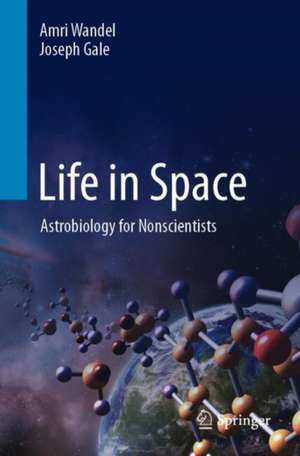
Life in Space
Autor Amri Wandel, Joseph Galeen Limba Engleză Paperback – 3 sep 2025
Considerăm că ediția 2025 a lucrării Life in Space reprezintă o sinteză metodologică rară, fiind rezultatul colaborării directe dintre un astrofizician și un biolog. Structura manualului este concepută pentru a ghida studentul de la fundamentul teoretic — definirea vieții și a necesității apei — către complexitatea explorării spațiale moderne. Materialul este organizat progresiv: primele capitole stabilesc cadrul epistemologic și unitățile de măsură necesare, urmate de o perspectivă istorică asupra astrobiologiei, culminând cu analize aplicate asupra zonei locuibile și a potențialului biologic al planetelor din sistemul nostru solar și dincolo de acesta. Subliniem importanța capitolului dedicat „uneltelor științei”, unde Amri Wandel și Joseph Gale explică riguros diferența dintre ipoteza științifică și relatările jurnalistice, oferind o bază solidă în statistică. Această abordare extinde cadrul propus de An Introduction to Astrobiology de Iain Gilmour cu date noi provenite din misiunile spațiale recente și din curriculumul universitar de peste două decenii al autorilor. Spre deosebire de alte texte introductive, Life in Space nu se limitează la astronomie, ci integrează factori geologici și climatici, precum schimbările climatice actuale, ca variabile esențiale în înțelegerea locuibilității. Prin cele 396 de pagini, volumul publicat de Springer oferă o acoperire comprehensivă, de la procariote la Homo sapiens și până la căutarea vieții pe sateliții Europa, Enceladus sau Titan. Este o resursă care transformă astrobiologia dintr-o curiozitate speculativă într-o disciplină academică riguroasă, accesibilă oricărui student la nivel de licență.
Preț: 378.74 lei
Carte disponibilă
Livrare economică 17 noiembrie-01 decembrie
Livrare express 31 octombrie-06 noiembrie pentru 67.77 lei
Specificații
ISBN-10: 303164638X
Pagini: 396
Ilustrații: X, 290 p. 200 illus. in color.
Dimensiuni: 155 x 235 x 20 mm
Greutate: 0.66 kg
Ediția:2025
Editura: Springer
Locul publicării:Cham, Switzerland
De ce să citești această carte
Recomandăm această carte pentru abordarea sa interdisciplinară autentică, scrisă de experți în astrofizică și biologie. Cititorul câștigă o înțelegere clară a modului în care se caută viața în univers, folosind cele mai noi date din 2025. Este o resursă esențială pentru studenții de la orice facultate de științe care doresc să înțeleagă biosemnăturile, exoplanetele și condițiile geologice care fac viața posibilă, totul într-un format didactic testat la catedră timp de două decenii.
Despre autor
Amri Wandel este un astrofizician de renume, specializat în studiul găurilor negre și al exoplanetelor, activând în cadrul Institutului de Fizică al Universității Ebraice din Ierusalim. Joseph Gale este un biolog cu expertiză în fiziologia plantelor și ecologie, contribuind cu perspectiva biologică necesară studiului vieții în condiții extreme. Împreună, cei doi au dezvoltat unul dintre primele cursuri universitare interdisciplinare de astrobiologie, experiența lor didactică fiind fundamentul acestui manual. Colaborarea lor reflectă perfect natura hibridă a astrobiologiei, combinând rigoarea observației astronomice cu înțelegerea mecanismelor biologice vitale.
Descriere scurtă
Cuprins
Notă biografică
Dr. Joseph Gale carried out research and served for some years as consultant to NASA's CELSS project(Controlled Environment Life Support Systems). From there he became interested in the exobiology program, later astrobiology. Gale has built and taught a program on "The Astrobiology of Planet Earth" an elective for third year science students, which over the last decade attracts some one hundred students each year. He has lectured at numerous national and international conferences. In last two years, he was invited to participate in astrobiology seminars of the University of Stockholm and the International Space University. Gale has published some 100+ papers and coauthored four books, including "Plants in Saline Environments" (Springer-Verlag 1975) and "Astrobiology of Earth" (OUP 2009).