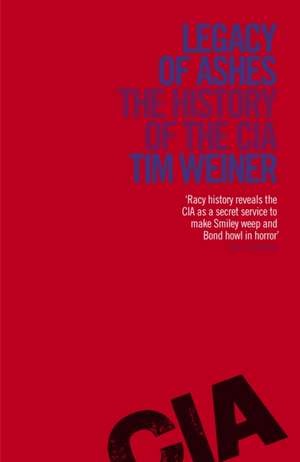
Legacy of Ashes: Cărțile Sidoniei Bogdan
Autor Tim Weineren Limba Engleză Paperback – mar 2012
Găsim în Legacy of Ashes o reconstrucție riguroasă a istoriei Central Intelligence Agency, structurată nu ca o cronică a succeselor de spionaj, ci ca o analiză a eșecurilor instituționale. Metodologia utilizată de Tim Weiner se sprijină exclusiv pe înregistrări oficiale, utilizând peste 50.000 de documente din arhivele proprii ale CIA și sute de interviuri cu veterani ai agenției. Această abordare elimină speculațiile și miturile cinematografice, oferind o perspectivă factuală asupra modului în care deciziile au fost luate la nivel înalt. Suntem de părere că relevanța acestui volum pentru studiul istoriei americane constă în demitizarea capacităților operative ale agenției. Departe de a fi organizația omniscientă descrisă în ficțiune, CIA este prezentată aici ca o instituție marcată de haos administrativ și incompetență periculoasă. Volumul reprezintă o alternativă critică la The Central Intelligence Agency de Scott C. Monje pentru cursurile de istorie politică și servicii de informații, având avantajul unei viziuni mult mai incisive și a unei documentări premiate care pune sub semnul întrebării impactul agenției asupra securității globale. În contextul operei sale, Legacy of Ashes servește drept piatră de temelie pentru cercetările ulterioare ale lui Tim Weiner. Dacă în Enemies autorul explorează istoria FBI, iar în The Mission urmărește evoluția CIA în secolul XXI, lucrarea de față rămâne referința centrală pentru înțelegerea rădăcinilor disfuncționalității serviciilor secrete americane. Tonul este unul clinic, lipsit de senzaționalism, preferând să lase greutatea faptelor și a declarațiilor oficiale să contureze portretul unei instituții care, conform autorului, a ajuns să amenințe însăși securitatea statului pe care trebuia să îl protejeze.
Din seria Cărțile Sidoniei Bogdan
-
 Preț: 127.72 lei
 -
 Preț: 409.55 lei
 -
 Preț: 83.76 lei
 - 18%
 Preț: 75.14 lei
 -
 Preț: 49.00 lei
 - 21%
 Preț: 53.52 lei
 - 20%
 Preț: 81.64 lei
 - 27%
 Preț: 75.31 lei
 - 42%
 Preț: 55.37 lei
 - 18%
 Preț: 110.84 lei
 - 20%
 Preț: 59.88 lei
 -
 Preț: 103.85 lei
 - 27%
 Preț: 95.53 lei
 -
 Preț: 111.98 lei
 - 71%
 Preț: 64.55 lei
 - 11%
 Preț: 121.26 lei
 - 13%
 Preț: 191.72 lei
 -
 Preț: 338.26 lei
 - 37%
 Preț: 434.80 lei
 -
 Preț: 332.72 lei
 -
 Preț: 155.73 lei
 -
 Preț: 136.76 lei
 - 19%
 Preț: 62.32 lei
 -
 Preț: 97.05 lei
 -
 Preț: 120.32 lei
 -
 Preț: 256.40 lei
 - 18%
 Preț: 181.33 lei
 - 25%
 Preț: 101.14 lei
 - 26%
 Preț: 80.80 lei
 - nou
 Preț: 71.54 lei
Preț: 108.04 lei
Preț vechi: 132.69 lei
-19% Recomandat
Carte disponibilă
Livrare economică 21-27 mai
Livrare express 02-08 mai pentru 60.51 lei
Specificații
ISBN-10: 0241956234
Pagini: 832
Ilustrații: 8pp
Dimensiuni: 128 x 198 x 50 mm
Greutate: 0.58 kg
Editura: Penguin Books
Seria Cărțile Sidoniei Bogdan
Locul publicării:London, United Kingdom
V-ar putea interesa
-
 The Devil's ChessboardDavid TalbotPreț: 74.90 lei
 -
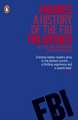
 EnemiesTim WeinerPreț: 103.85 lei
 -
 The Tailor of PanamaJohn Le Carré-26%Preț: 56.17 lei76.00 lei
 -
 The Spy Who Came in from the ColdJohn Le Carré-21%Preț: 48.74 lei61.37 lei
 -
 Operation PaperclipAnnie JacobsenPreț: 139.24 lei
 -
 Breath, Eyes, MemoryEdwidge Danticat-38%Preț: 53.59 lei86.17 lei
 -
 A Spy For All SeasonsDuane R. ClarridgePreț: 166.96 lei
 -
 Our Story Begins: New and Selected StoriesTobias Wolff-28%Preț: 73.64 lei102.44 lei
 -
 -25%Preț: 105.47 lei140.84 lei
 -
 Little WomenLouisa May AlcottPreț: 59.62 lei
De ce să citești această carte
Această carte este esențială pentru cititorii interesați de istoria politică a SUA și de mecanismele puterii executive. Prin parcurgerea celor peste 800 de pagini, veți câștiga o înțelegere profundă a modului în care deciziile de politică externă au fost influențate de informații eronate. Este un motiv concret pentru a înlocui viziunea romantică a spionajului cu o analiză realistă a realităților birocratice și operative din perioada Războiului Rece până în prezent.
Despre autor
Tim Weiner este un jurnalist și istoric american de prestigiu, laureat al Premiului Pulitzer pentru reportajele sale despre programele guvernamentale secrete și al National Book Award pentru volumul de față. În calitate de corespondent pentru The New York Times, a raportat direct din zone de conflict precum Afganistan și Pakistan, experiență care îi conferă o perspectivă practică asupra efectelor politicilor de informații pe teren. În prezent, conduce programe de rezidență pentru scriitori de non-ficțiune și predă studii americane la Universitatea Princeton, fiind recunoscut drept unul dintre cei mai importanți analiști ai comunității de informații din Statele Unite.
Notă biografică
Tim Weiner is a Pulitzer Prize-winning journalist at the New York Times where he has reported from Afghanistan, Pakistan, Sudan, and fifteen other nations. He was based for a decade in Washington, DC, where he covered the CIA and the military - the last topic being the basis for his famous book Blank Check: The Pentagon's Black Budget.
Descriere scurtă
All-powerful, brilliant, decisive, ruthlessly effective ... this is the image of the CIA as portrayed in countless films and novels. It is wrong.
This shocking book, based on thousands of declassified documents and interviews with agents at all levels, shows the reality behind the glamorous myth: a blundering, chaotic and dangerously incompetent organization, so ineffective it was nicknamed 'Can't Identify Anything' by Nato forces. In a story of botched coups, missed targets, lost operatives and fatal errors, Tim Weiner shows how the CIA now poses a threat not only to the security of the US, but the world.
Recenzii
This racy history reveals the CIA as a secret service to make Smiley weep and Bond howl in horror
Combines thrilling storytelling with terrifying revelations
Weiner's riveting history of the CIA contains dozens of jaw-dropping incidents ... astonishing
Timely, immensely readable, and highly critical
Extras
Legacy of Ashes is the record of the first sixty years of the Central Intelligence Agency. It describes how the most powerful country in the history of Western civilization has failed to create a first-rate spy service. That failure constitutes a danger to the national security of the United States. Intelligence is secret action aimed at understanding or changing what goes on abroad. President Dwight D. Eisenhower called it “a distasteful but vital necessity.” A nation that wants to project its power beyond its borders needs to see over the horizon, to know what is coming, to prevent attacks against its people. It must anticipate surprise. Without a strong, smart, sharp intelligence service, presidents and generals alike can become blind and crippled. But throughout its history as a superpower, the United States has not had such a service.
History, Edward Gibbon wrote in The Decline and Fall of the Roman Empire, is “little more than the register of crimes, follies, and misfortunes of mankind.” The annals of the Central Intelligence Agency are filled with folly and misfortune, along with acts of bravery and cunning. They are replete with fleeting successes and long–lasting failures abroad. They are marked by political battles and power struggles at home. The agency’s triumphs have saved some blood and treasure. Its mistakes have squandered both. They have proved fatal for legions of American soldiers and foreign agents; some three thousand Americans who died in New York, Washington, and Pennsylvania on September 11, 2001; and three thousand more who have died since then in Iraq and Afghanistan. The one crime of lasting consequence has been the CIA’s inability to carry out its central mission: informing the president of what is happening in the world.
The United States had no intelligence to speak of when World War II began, and next to none a few weeks after the war ended. A mad rush to demobilize left behind a few hundred men who had a few years’ experience in the world of secrets and the will to go on fighting a new enemy. “All major powers except the United States have had for a long time past permanent worldwide intelligence services, reporting directly to the highest echelons of their Government,” General William J. Donovan, the commander of the wartime Office of Strategic Services, warned President Truman in August 1945. “Prior to the present war, the United States had no foreign secret intelligence service. It never has had and does not now have a coordinated intelligence system.” Tragically, it still does not have one.
The CIA was supposed to become that system. But the blueprint for the agency was a hasty sketch. It was no cure for a chronic American weakness: secrecy and deception were not our strengths. The collapse of the British Empire left the United States as the sole force able to oppose Soviet communism, and America desperately needed to know those enemies, to provide foresight to presidents, and to fight fire with fire when called upon to light the fuse. The mission of the CIA, above all, was to keep the president forewarned against surprise attack, a second Pearl Harbor.
The agency’s ranks were filled with thousands of patriotic Americans in the 1950s. Many were brave and battle–hardened. Some had wisdom. Few really knew the enemy. Where understanding failed, presidents ordered the CIA to change the course of history through covert action. “The conduct of political and psychological warfare in peacetime was a new art,” wrote Gerald Miller, then the CIA’s covert–operations chief for Western Europe. “Some of the techniques were known but doctrine and experience were lacking.” The CIA’s covert operations were by and large blind stabs in the dark. The agency’s only course was to learn by doing—by making mistakes in battle. The CIA then concealed its failures abroad, lying to Presidents Eisenhower and Kennedy. It told those lies to preserve its standing in Washington. The truth, said Don Gregg, a skilled cold-war station chief, was that the agency at the height of its powers had a great reputation and a terrible record.
Like the American public, the agency dissented at its peril during the Vietnam War. Like the American press, it discovered that its reporting was rejected if it did not fit the preconceptions of presidents. The CIA was rebuked and scorned by Presidents Johnson, Nixon, Ford, and Carter. None of them understood how the agency worked. They took office “with the expectation that intelligence could solve every problem, or that it could not do anything right, and then moved to the opposite view,” notes a former deputy director of central intelligence, Richard J. Kerr. “Then they settled down and vacillated from one extreme to the other.”
To survive as an institution in Washington, the agency above all had to have the president’s ear. But it soon learned that it was dangerous to tell him what he did not want to hear. The CIA’s analysts learned to march in lockstep, conforming to conventional wisdom. They misapprehended the intentions and capabilities of our enemies, miscalculated the strength of communism, and misjudged the threat of terrorism.
The supreme goal of the CIA during the cold war was to steal Soviet secrets by recruiting spies, but the CIA never possessed a single one who had deep insight into the workings of the Kremlin. The number of Soviet spies with important information to reveal–all of them volunteers, not recruits—could be counted on the fingers of two hands. And all of them died, captured and executed by Moscow. Almost all had been betrayed by officers of the CIA’s Soviet division who were spying for the other side, under Presidents Reagan and George H. W. Bush. Under Reagan, the CIA set off on misconceived third–world missions, selling arms to Iran’s Revolutionary Guards to finance a war in Central America, breaking the law and squandering what trust remained reposed in it. More grievously, it missed the fatal weakness of its main enemy.
It fell to machines, not men, to understand the other side. As the technology of espionage expanded its horizons, the CIA’s vision grew more and more myopic. Spy satellites enabled it to count Soviet weapons. They did not deliver the crucial information that communism was crumbling. The CIA’s foremost experts never saw the enemy until after the cold war was over. The agency had bled the Soviets by pouring billions of dollars of weapons into Afghanistan to help fight the Red Army’s occupying forces. That was an epic success. But it failed to see that the Islamic warriors it supported would soon take aim at the United States, and when that understanding came, the agency failed to act. That was an epochal failure.
The unity of purpose that held the CIA together during the cold war came undone in the 1990s, under President Clinton. The agency still had people who strove to understand the world, but their ranks were far too thin. There were still talented officers who dedicated themselves to serving the United States abroad, but their numbers were far too few. The FBI had more agents in New York than the CIA had officers abroad. By the end of the century, the agency was no longer a fully functioning and independent intelligence service. It was becoming a second–echelon field office for the Pentagon, weighing tactics for battles that never came, not strategies for the struggle ahead. It was powerless to prevent the second Pearl Harbor.
After the attacks on New York and Washington, the agency sent a small skilled cadre of covert operators into Afghanistan and Pakistan to hunt down the leaders of al Qaeda. It then forfeited its role as a reliable source of secret information when it handed the White House false reports on the existence of weapons of mass destruction in Iraq. It had delivered a ton of reportage based on an ounce of intelligence. President George W. Bush and his administration in turn misused the agency once proudly run by his father, turning it into a paramilitary police force abroad and a paralyzed bureaucracy at headquarters. Bush casually pronounced a political death sentence upon the CIA in 2004 when he said that the agency was “just guessing” about the course of the war in Iraq. No president had ever publicly dismissed the CIA that way.
Its centrality in the American government ended with the dissolution of the office of director of central intelligence in 2005. Now the CIA must be rebuilt if it is to survive. That task will take years. The challenge of understanding the world as it is has overwhelmed three generations of CIA officers. Few among the new generation have mastered the intricacies of foreign lands, much less the political culture of Washington. In turn, almost every president, almost every Congress, and almost every director of central intelligence since the 1960s has proved incapable of grasping the mechanics of the CIA. Most have left the agency in worse shape than they found it. Their failures have handed future generations, in the words of President Eisenhower, “a legacy of ashes.” We are back where we began sixty years ago, in a state of disarray.
Legacy of Ashes sets out to show how it has come to pass that the United States now lacks the intelligence it will need in the years ahead. It is drawn from the words, the ideas, and the deeds set forth in the files of the American national-security establishment. They record what our leaders really said, really wanted, and really did when they projected power abroad. This book is based on my reading of more than fifty thousand documents, primarily from the archives of the CIA, the White House, and the State Department; more than two thousand oral histories of American intelligence officers, soldiers, and diplomats; and more than three hundred interviews conducted since 1987 with CIA officers and veterans, including ten directors of central intelligence. Extensive endnotes amplify the text.
This book is on the record—no anonymous sources, no blind quotations, no hearsay. It is the first history of the CIA compiled entirely from firsthand reporting and primary documents. It is, by its nature, incomplete: no president, no director of central intelligence, and certainly no outsider can know everything about the agency. What I have written here is not the whole truth, but to the best of my ability, it is nothing but the truth.
I hope it may serve as a warning. No republic in history has lasted longer than three hundred years, and this nation may not long endure as a great power unless it finds the eyes to see things as they are in the world. That once was the mission of the Central Intelligence Agency.
From the Hardcover edition.