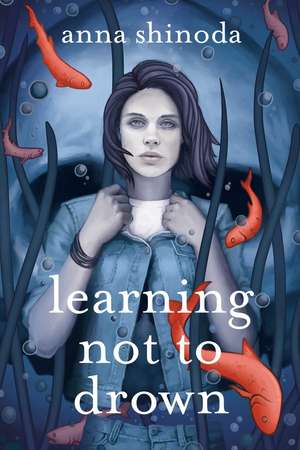
Learning Not to Drown
Autor Anna Shinodaen Limba Engleză Paperback – 16 mai 2019
Limba în care este scris acest roman este engleza, oferind cititorilor adolescenți o oportunitate excelentă de a explora teme sociale complexe printr-un vocabular modern și accesibil. Suntem de părere că „Learning Not to Drown” nu este doar o poveste despre maturizare, ci o analiză profundă a modului în care loialitatea familială poate deveni sufocantă. Clare, personajul principal de 17 ani, trăiește sub umbra fratelui său, Luke, considerat „fiul risipitor” care merită mereu o a doua șansă. Într-o comunitate care nu este la fel de iertătoare ca părinții ei, Clare trebuie să navigheze printre adevărurile dureroase care ies la iveală odată cu arestările repetate ale fratelui său. Structura narativă este construită pe tensiunea dintre imaginea de familie „fericită” și realitatea dependenței de droguri care erodează totul în jur. Merită menționat că stilul Annei Shinoda este unul empatic, dar onest, evitând clișeele salvării miraculoase. Pe același raft cu What They Don't Know de Anita Horrocks, cartea se adresează tinerilor de peste 14 ani care caută povești despre dinamica fragilă a relațiilor dintre frați și greutatea secretelor ascunse sub preș. Credem că forța acestui roman rezidă în întrebarea sa fundamentală: este egoism sau supraviețuire atunci când alegi să te salvezi pe tine însuți în detrimentul unui membru al familiei care refuză să fie ajutat? Ritmul este constant, alimentat de descoperirile treptate ale lui Clare, transformând lectura într-o experiență emoțională intensă despre stabilirea barierelor sănătoase.
Preț: 50.49 lei
Preț vechi: 64.92 lei
-22%
Carte disponibilă
Livrare economică 03-15 iulie
Livrare express 13-19 iunie pentru 37.10 lei
Specificații
ISBN-10: 153443948X
Pagini: 352
Ilustrații: f-c cvr (no spfx); digital
Dimensiuni: 139 x 208 x 25 mm
Greutate: 0.28 kg
Ediția:Reprint
Editura: Simon&Schuster
De ce să citești această carte
Recomandăm această carte părinților care doresc să discute cu adolescenții lor despre limite, dependență și responsabilitate individuală. Este o lectură esențială pentru tinerii care se simt adesea „invizibili” în fața problemelor fraților lor. Cititorul câștigă o perspectivă matură asupra importanței propriei sănătăți mintale, învățând că a iubi pe cineva nu înseamnă neapărat a te lăsa tras în jos de greșelile acestuia.
Despre autor
Anna Shinoda a crescut într-un oraș mic de munte, un loc atât de izolat încât nici măcar nu avea semafoare. Această izolare a împins-o să caute refugiu în lectură și în ramurile înalte ale copacilor, unde plănuia povești departe de „scheletele” din dulapul propriei familii. Learning Not to Drown este romanul său de debut, o lucrare profund personală și informată, care reflectă sensibilitatea sa față de luptele interioare ale adolescenților. În prezent, Anna continuă să scrie și să exploreze teme legate de adevăr și vindecare.
Descriere scurtă
Family secrets cut to the bone in this mesmerizing debut novel about a teen whose drug-addicted brother is the prodigal son one time too many.
There is a pecking order to every family. Seventeen-year-old Clare is the overprotected baby; Peter is the typical, rebellious middle child; and Luke is the can’t-do-wrong favorite. In their eyes, they are a normal, happy family. But sometimes it’s the people who are closest to us who are the hardest to see.
Clare loves her older brother, Luke—it’s not his fault that he’s always in the wrong place at the wrong time. Life as Luke’s sister hasn’t been easy—their community hasn’t been nearly as forgiving of his transgressions as she and her parents are—but he’s done his time and is on his way home again, and she has to believe this time will be different. But when the truths behind his arrests begin to surface, everything Clare’s always known is shaken to its core.
Clare has to decide if sticking up for herself and her future means selfishly turning her back on family…or if it’s the only way to keep herself from drowning along with them.
Notă biografică
Extras
Chapter 1:
Family Skeleton
NOW
Skeletons don’t like to stay in closets.
Most families try to lock them tightly away, buried beneath smiles and posed family pictures. But our Family Skeleton follows me closely with his long, graceful stride.
I guess people in my town think they have a pretty clear picture of Skeleton. Their whispers have haunted me most of the seventeen years of my life, stalking me almost as closely as he does: prison, prison, prison. Shame, shame, shame.
They don’t see him like I do. His eye sockets expand and shrink. His cartoon jaw morphs from smiles to frowns, from serious to surprise. He’s at least six feet tall, and when his bones stretch, he can dunk a basketball without his big toe coming off the ground. He’s quite talented.
When he wants to relax, he lounges in a silk smoking jacket with a Cuban cigar and drinks brandy from a warm snifter. He might have a drinking problem, but I don’t want to be presumptuous.
I think Mom, Dad, Peter, and Luke see Skeleton clearly. After all, they are my family. Although I can’t be sure, since Mom and Dad rarely talk about him, and Peter leaves the room whenever he appears.
Skeleton is the constant reminder of the crimes committed by my brother Luke. I’m used to Skeleton’s taunts, his lanky fingers pointing, the click of his bones when he cartwheels across the room. I’m used to him reminding me he will always be a part of my life story. He will always be there to warn that every action has a reaction, every crime has a consequence.
And the more he hangs around, the more my reputation decays.
Skeleton didn’t always exist—our family photo album shows me what reality was like before he started to appear. But I was too young then to own that memory now, a pre-Skeleton memory. My reality, my memories are like spinning pieces of a jigsaw puzzle that never make a complete picture.
And I can’t help but think, maybe, if Skeleton would go away, we could have perfect again.