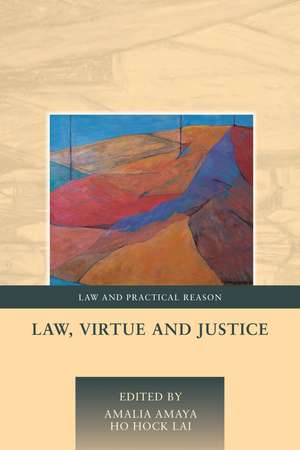
Law, Virtue and Justice: Law and Practical Reason
Editat de Amalia Amaya, Hock Lai Hoen Limba Engleză Hardback – 20 dec 2012
Din seria Law and Practical Reason
- 31%
 Preț: 387.71 lei
 - 39%
 Preț: 648.55 lei
 - 25%
 Preț: 293.64 lei
 - 32%
 Preț: 617.37 lei
 - 33%
 Preț: 615.07 lei
 - 24%
 Preț: 247.77 lei
 - 24%
 Preț: 294.97 lei
 - 24%
 Preț: 234.01 lei
 - 33%
 Preț: 527.26 lei
 - 33%
 Preț: 615.24 lei
 - 26%
 Preț: 206.87 lei
 - 23%
 Preț: 318.61 lei
 - 27%
 Preț: 261.57 lei
 - 27%
 Preț: 234.71 lei
 - 22%
 Preț: 333.41 lei
 - 27%
 Preț: 387.16 lei
 - 21%
 Preț: 342.63 lei
 - 35%
 Preț: 549.68 lei
 - 32%
 Preț: 617.02 lei
 - 32%
 Preț: 583.84 lei
 - 33%
 Preț: 582.04 lei
Preț: 621.54 lei
Preț vechi: 930.66 lei
-33%
Puncte Express: 932
Carte tipărită la comandă
Livrare economică 15-29 octombrie
Livrare prin curier în România Termenul estimat este afișat lângă disponibilitate.
Transport gratuit pentru acest produs Plată online sau ramburs, în funcție de opțiunile comenzii.
Retur gratuit în 14 zile Comandă securizată și suport în română.
Specificații
ISBN-13: 9781849461757
ISBN-10: 1849461759
Pagini: 338
Dimensiuni: 156 x 234 x 15 mm
Greutate: 0.65 kg
Ediția:New.
Editura: Bloomsbury Publishing
Colecția Hart Publishing
Seria Law and Practical Reason
Locul publicării:London, United Kingdom
ISBN-10: 1849461759
Pagini: 338
Dimensiuni: 156 x 234 x 15 mm
Greutate: 0.65 kg
Ediția:New.
Editura: Bloomsbury Publishing
Colecția Hart Publishing
Seria Law and Practical Reason
Locul publicării:London, United Kingdom
V-ar putea interesa
-
 -31%Preț: 573.02 lei833.44 lei
 -
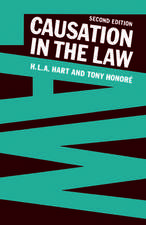 Causation in the LawH. L. A. Hart-31%Preț: 620.66 lei894.92 lei
 -
 A Matter of PrincipleRonald M. Dworkin-28%Preț: 358.13 lei494.88 lei
 -
 Law in Context: Enlarging a DisciplineWilliam Twining-33%Preț: 807.62 lei1197.51 lei
 -
 Law and Interpretation: Essays in Legal PhilosophyAndrei Marmor-28%Preț: 543.46 lei755.53 lei
 -
 The Autonomy of Law: Essays on Legal PositivismRobert P. George-29%Preț: 510.02 lei714.23 lei
 -
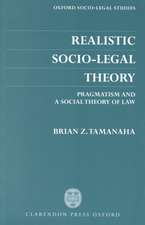 Realistic Socio-Legal Theory: Pragmatism and a Social Theory of LawBrian Z. Tamanaha-29%Preț: 482.61 lei676.43 lei
 -
 A Debate Over Rights: Philosophical EnquiriesMatthew Kramer-29%Preț: 503.88 lei705.21 lei
 -
 Contract TheoryStephen A. Smith-28%Preț: 468.00 lei651.58 lei
 -
 -21%Preț: 347.67 lei440.39 lei
 -
 Hart's Postscript: Essays on the Postscript to `The Concept of Law'Jules L. Coleman-28%Preț: 416.44 lei577.93 lei
 -
 Markets, Morals, and the LawJules L. Coleman-31%Preț: 629.73 lei911.29 lei
 -
 Risks and WrongsJules L. Coleman-28%Preț: 524.15 lei727.94 lei
 -
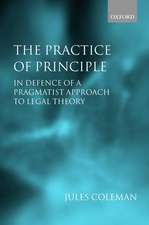 -21%Preț: 411.02 lei523.41 lei
 -
 In Defense of Legal Positivism: Law Without TrimmingsMatthew H. Kramer-21%Preț: 380.39 lei482.52 lei
 -
 Rhetoric and The Rule of Law: A Theory of Legal ReasoningNeil MacCormick-22%Preț: 382.02 lei491.83 lei
 -
 On the Rule of LawBrian Z. TamanahaPreț: 380.86 lei
 -
 Law after ModernitySionaidh Douglas-Scott-32%Preț: 556.86 lei819.80 lei
 -
 Law's EmpireProfessor Ronald Dworkin-21%Preț: 217.47 lei276.30 lei
Cuprins
1. Of Law, Virtue and Justice - An Introduction
Amalia Amaya and Ho Hock Lai
I. Law, Virtue and Legal Reasoning
2. Practical Wisdom in Legal Decision-Making
Claudio Michelon
3. The Role of Virtue in Legal Justification
Amalia Amaya
4. Education and Paternalism: Plato on Virtue and the Law
Sandrine Berges
II. Law, Virtue and Character
5. Neoclassical Public Virtues: Towards an Aretaic Theory of Law-Making (and Law Teaching)
Sherman J Clark
6. Confucian Virtue Jurisprudence
Linghao Wang and Lawrence B Solum
7. The Three Stages of Judges' Self-Development
Mateusz Stêpieñ
III. Virtue Theory and Criminal Law
8. Motivating Intentions, Reciprocal Specification of Ends and the Assessment of Responsibility
Kyron Huigens
9. Liberal Virtue
Ekow N Yankah
10. Virtue, Vice and the Criminal Law - A Response to Huigens and Yankah
RA Duff
IV. Legal Fact-Finding: Aretaic Perspectives
11. Virtues of Truthfulness in Forbearing Wrongs: Client Confidentiality Qualified by Legal Symmetry of Past and Future Harm
Hendrik Kaptein
12. Virtuous Deliberation on the Criminal Verdict
Ho Hock Lai
13. Must Virtue be Particular?
Frederick Schauer
V. Law, Empathy and Justice
14. Empathy, Law and Justice
Michael Slote
15. Empathy in Law (A Response to Slote)
John Deigh
16. On Empathy as a Necessary, but Not Sufficient, Foundation for Justice (A Response to Slote)
Susan J Brison
17. Reply to Deigh and Brison
Michael Slote
Amalia Amaya and Ho Hock Lai
I. Law, Virtue and Legal Reasoning
2. Practical Wisdom in Legal Decision-Making
Claudio Michelon
3. The Role of Virtue in Legal Justification
Amalia Amaya
4. Education and Paternalism: Plato on Virtue and the Law
Sandrine Berges
II. Law, Virtue and Character
5. Neoclassical Public Virtues: Towards an Aretaic Theory of Law-Making (and Law Teaching)
Sherman J Clark
6. Confucian Virtue Jurisprudence
Linghao Wang and Lawrence B Solum
7. The Three Stages of Judges' Self-Development
Mateusz Stêpieñ
III. Virtue Theory and Criminal Law
8. Motivating Intentions, Reciprocal Specification of Ends and the Assessment of Responsibility
Kyron Huigens
9. Liberal Virtue
Ekow N Yankah
10. Virtue, Vice and the Criminal Law - A Response to Huigens and Yankah
RA Duff
IV. Legal Fact-Finding: Aretaic Perspectives
11. Virtues of Truthfulness in Forbearing Wrongs: Client Confidentiality Qualified by Legal Symmetry of Past and Future Harm
Hendrik Kaptein
12. Virtuous Deliberation on the Criminal Verdict
Ho Hock Lai
13. Must Virtue be Particular?
Frederick Schauer
V. Law, Empathy and Justice
14. Empathy, Law and Justice
Michael Slote
15. Empathy in Law (A Response to Slote)
John Deigh
16. On Empathy as a Necessary, but Not Sufficient, Foundation for Justice (A Response to Slote)
Susan J Brison
17. Reply to Deigh and Brison
Michael Slote
Recenzii
[The books is] sure to be a valuable resource for legal scholars and practitioners for years to come.
As a collection, this is a highly informative, always interesting and richly diversified body of research, engaged with vital questions especially of criminal law, but also of many other areas in ethics and law, including client confidentiality, legal moralism and paternalism. It also includes an instructive comparison between western and Confucian theories in this area of jurisprudence. Many concrete issues and controversies are discussed and illustrated with real and imaginary cases, such as euthanasia, prostitution and racial and sex discrimination. Overall, whether one is convinced or not, the project of developing the case for virtue jurisprudence is well served by this book.
... an impressive array of moral and legal philosophers, including those informed by both the (still dominant) Aristotelian approach to the virtues as well as the (less acknowledged, but possibly growing in influence) Confucian approach. Individual chapters are cross-referenced, and there are a number of helpful commentaries on leading contributions. The editors should be praised for both their vision and their efforts in presenting such a harmonious package of papers.
This was a fascinating book to read, and I can hardly do justice to all of its arguments here. For those who work in philosophy of law as well as virtue ethics, this is a worthwhile collection of complex essays. Overall the book makes a valuable contribution to a virtue-oriented approach to legal theory.
As a collection, this is a highly informative, always interesting and richly diversified body of research, engaged with vital questions especially of criminal law, but also of many other areas in ethics and law, including client confidentiality, legal moralism and paternalism. It also includes an instructive comparison between western and Confucian theories in this area of jurisprudence. Many concrete issues and controversies are discussed and illustrated with real and imaginary cases, such as euthanasia, prostitution and racial and sex discrimination. Overall, whether one is convinced or not, the project of developing the case for virtue jurisprudence is well served by this book.
... an impressive array of moral and legal philosophers, including those informed by both the (still dominant) Aristotelian approach to the virtues as well as the (less acknowledged, but possibly growing in influence) Confucian approach. Individual chapters are cross-referenced, and there are a number of helpful commentaries on leading contributions. The editors should be praised for both their vision and their efforts in presenting such a harmonious package of papers.
This was a fascinating book to read, and I can hardly do justice to all of its arguments here. For those who work in philosophy of law as well as virtue ethics, this is a worthwhile collection of complex essays. Overall the book makes a valuable contribution to a virtue-oriented approach to legal theory.