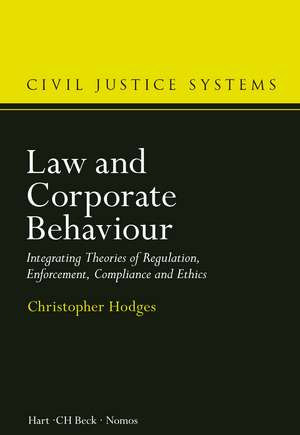
Law and Corporate Behaviour: Integrating Theories of Regulation, Enforcement, Compliance and Ethics: Civil Justice Systems
Autor Professor Christopher Hodgesen Limba Engleză Hardback – 22 oct 2015
This title is included in Bloomsbury Professional's International Arbitration online service.
Din seria Civil Justice Systems
- 33%
 Preț: 625.53 lei
 - 35%
 Preț: 455.91 lei
 - 33%
 Preț: 749.24 lei
 - 24%
 Preț: 249.64 lei
 - 32%
 Preț: 489.60 lei
 - 36%
 Preț: 564.61 lei
 - 39%
 Preț: 632.87 lei
 - 36%
 Preț: 450.35 lei
 - 23%
 Preț: 317.86 lei
 - 23%
 Preț: 317.79 lei
 - 20%
 Preț: 341.92 lei
 - 22%
 Preț: 317.62 lei
 - 35%
 Preț: 485.74 lei
 - 36%
 Preț: 604.72 lei
 - 33%
 Preț: 594.97 lei
Preț: 816.15 lei
Preț vechi: 1308.40 lei
-38%
Puncte Express: 1224
Carte tipărită la comandă
Livrare economică 12-17 iunie
Specificații
ISBN-13: 9781849466530
ISBN-10: 184946653X
Pagini: 832
Dimensiuni: 244 x 169 x 20 mm
Greutate: 1.59 kg
Editura: Bloomsbury Publishing
Colecția Hart/Beck
Seria Civil Justice Systems
Locul publicării:London, United Kingdom
ISBN-10: 184946653X
Pagini: 832
Dimensiuni: 244 x 169 x 20 mm
Greutate: 1.59 kg
Editura: Bloomsbury Publishing
Colecția Hart/Beck
Seria Civil Justice Systems
Locul publicării:London, United Kingdom
Cuprins
Introduction
Part A: Psychology
1. The Findings of Social Psychology
Part B: Deterrence
2. Deterrence Theory
3. Private Enforcement in USA
4. Enforcement of Competition Law
5. Criticisms of Deterrence
6. Empirical Evidence
7. Conclusions
Part C: Regulation
8. Public Regulation
9. The Structure of Regulation and Self-Regulation in the UK
10. Developments in Criminal Enforcement in the United Kingdom
11. Responsive, Meta and Compliance Theories
12. OECD Policy on Regulation and Enforcement
13. The Enforcement Policies of Individual Agencies
14. Consumer Trading and Protection
15. Competition
16. Conclusions on Current Enforcement Policy
Part D: Regulation and Compliance by Business
17. Standards, Accreditation, Self-Regulation and Co-Regulation
18. Compliance within Business Organisations
Part E: Regulatory Architectures
19. Regulating Safety
20. Financial Services
Part F: Conclusions
21. Business Values: Culture, Commitment, Trust and Ethics
22. Conclusions: Ethical Regulation ction
B. Compliance Systems
C. The Deterrence Tradition/Models
1. Deterrence in criminal law
2. Deterrence in economic theory
3. The example of private enforcement in USA
4. The example of competition enforcement by the European Commission
D. Responsive Regulation Models
1. The empirical research and its theories
2. Some examples: Braithwaite, Hawkins, Haines, Hutter
3. Developments in enforcement of criminal law
4. The example of the reform of UK regulatory policy from 2007
E. Behavioural psychology
1. The findings of the psychology research
2. Examples of where elements can be seen in regulatory systems
i. pharmaceutical safety regulation
ii. airline safety
iii. HSE
iv. financial services
3. integrating public and corporate compliance and sanctioning systems
F. Conclusions
1. Discussion of the various theories, and how they can be combined
2. A holistic model:
i. A quality system
ii. Internal and external
iii. Self-regulation
iv. Stakeholders and transparency
v. External checking, audit
vi. whistleblowing
vii. Add CDR to regulation
viii. Toolbox of powers (Denmark)
ix. safeguards
3. An example of how a holistic system of corporate behaviour would work
Part A: Psychology
1. The Findings of Social Psychology
Part B: Deterrence
2. Deterrence Theory
3. Private Enforcement in USA
4. Enforcement of Competition Law
5. Criticisms of Deterrence
6. Empirical Evidence
7. Conclusions
Part C: Regulation
8. Public Regulation
9. The Structure of Regulation and Self-Regulation in the UK
10. Developments in Criminal Enforcement in the United Kingdom
11. Responsive, Meta and Compliance Theories
12. OECD Policy on Regulation and Enforcement
13. The Enforcement Policies of Individual Agencies
14. Consumer Trading and Protection
15. Competition
16. Conclusions on Current Enforcement Policy
Part D: Regulation and Compliance by Business
17. Standards, Accreditation, Self-Regulation and Co-Regulation
18. Compliance within Business Organisations
Part E: Regulatory Architectures
19. Regulating Safety
20. Financial Services
Part F: Conclusions
21. Business Values: Culture, Commitment, Trust and Ethics
22. Conclusions: Ethical Regulation ction
B. Compliance Systems
C. The Deterrence Tradition/Models
1. Deterrence in criminal law
2. Deterrence in economic theory
3. The example of private enforcement in USA
4. The example of competition enforcement by the European Commission
D. Responsive Regulation Models
1. The empirical research and its theories
2. Some examples: Braithwaite, Hawkins, Haines, Hutter
3. Developments in enforcement of criminal law
4. The example of the reform of UK regulatory policy from 2007
E. Behavioural psychology
1. The findings of the psychology research
2. Examples of where elements can be seen in regulatory systems
i. pharmaceutical safety regulation
ii. airline safety
iii. HSE
iv. financial services
3. integrating public and corporate compliance and sanctioning systems
F. Conclusions
1. Discussion of the various theories, and how they can be combined
2. A holistic model:
i. A quality system
ii. Internal and external
iii. Self-regulation
iv. Stakeholders and transparency
v. External checking, audit
vi. whistleblowing
vii. Add CDR to regulation
viii. Toolbox of powers (Denmark)
ix. safeguards
3. An example of how a holistic system of corporate behaviour would work
Recenzii
"a treasure trove of socio-legal facts from many a relevant country, .. a unique traversal and systematisation of the subject matter . numerous suggestions empowering practitioners based on real-life experience to enhance their endeavours with full effect and real impact in their respective companies. In a company acting according to the maxims laid out in this book, [VW's] Dieselgate would not have been possible."
This is a book I will pull off my shelf often to discover all manner of practical things like how British civil aviation regulation works, how British environmental regulation provides for restorative justice, the latest financial regulatory developments at Basel, the Organisation for Economic Co-operation and Development ('OECD') Best Practice Principles on Regulatory Enforcement and Inspections, and much more.
If Hodges is right many authors - including legal economists - should revise their texts on the preventative effect of laws.
This is a book I will pull off my shelf often to discover all manner of practical things like how British civil aviation regulation works, how British environmental regulation provides for restorative justice, the latest financial regulatory developments at Basel, the Organisation for Economic Co-operation and Development ('OECD') Best Practice Principles on Regulatory Enforcement and Inspections, and much more.
If Hodges is right many authors - including legal economists - should revise their texts on the preventative effect of laws.