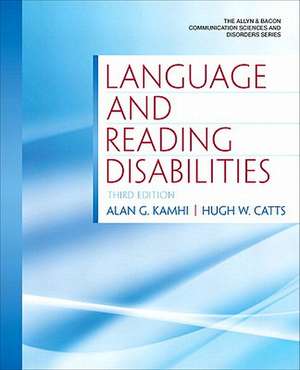
Language and Reading Disabilities: Allyn & Bacon Communication Sciences and Disorders
Autor Alan G. Kamhi, Hugh W. Cattsen Limba Engleză Paperback – 31 mai 2011
Considerăm că a treia ediție a volumului Language and Reading Disabilities reprezintă o resursă fundamentală pentru specialiștii care caută o abordare clinică riguroasă a dificultăților de alfabetizare. Interesul practic al lucrării este vizibil încă din primele capitole, unde exercițiile de analiză a modelelor de comprehensiune și studiile de caz privind conștientizarea fonemică oferă instrumente directe pentru evaluare. Autorii, Alan G. Kamhi și Hugh W. Catts, structurează materialul pornind de la o distincție clară între limbajul vorbit și cel scris, explorând diferențele fizice, situaționale și gramaticale care influențează procesul de învățare.
Evoluția textului este una progresivă: de la perioada de alfabetizare emergentă din prima copilărie până la mecanismele complexe ale recunoașterii automate a cuvintelor. Cititorii familiarizați cu Reading Development and Difficulties de David A. Kilpatrick vor aprecia în acest volum focalizarea mai extinsă pe fundamentele scrierii și pe relația dintre ortografie și alte abilități de literație, dincolo de simpla diagnoză a lecturii. În contextul operei autorilor, lucrarea completează cercetările anterioare ale lui Hugh W. Catts despre factorii neurologici și comportamentali, oferind acum un cadru aplicat pentru intervenție.
Structura cărții, organizată în capitole care tratează separat procesele la nivel de discurs, recunoașterea cuvintelor și fundamentele scrierii, reflectă o acoperire comprehensivă a curriculumului de logopedie și educație specială. Prin integrarea teoriilor despre stadiile dezvoltării (logografic, alfabetic, ortografic) cu soluții clinice pentru dizabilitățile de citire, volumul devine un ghid esențial pentru înțelegerea modului în care deficiențele de limbaj se manifestă în mediul academic.
Preț: 851.00 lei
Preț vechi: 1105.20 lei
-23%
Carte tipărită la comandă
Livrare economică 03-17 decembrie
Specificații
ISBN-10: 0137072775
Pagini: 303
Dimensiuni: 185 x 229 x 18 mm
Greutate: 0.54 kg
Ediția:3
Editura: Pearson
Seria Allyn & Bacon Communication Sciences and Disorders
De ce să citești această carte
Această ediție este esențială pentru logopezi, psihologi școlari și cadre didactice din învățământul special. Cititorul câștigă o înțelegere profundă a legăturii dintre limbajul oral și succesul în lectură, primind metode concrete pentru a identifica și trata dizabilitățile de scriere și citire. Este un instrument de lucru care transformă cercetarea teoretică în strategii de intervenție clinică validate.
Despre autor
Alan G. Kamhi este profesor adjunct în cadrul Departamentului de Tulburări de Comunicare de la Northern Illinois University, fiind o autoritate în domeniul patologiei limbajului. Alături de Hugh W. Catts, a contribuit semnificativ la literatura de specialitate, explorând nu doar aspectele clinice ale dizabilităților de lectură, ci și contextele socioculturale ale alfabetizării, așa cum reiese din lucrarea sa Literacy in African American Communities. Expertiza sa academică se concentrează pe intersecția dintre dezvoltarea cognitivă și procesele de achiziție a limbajului scris, fiind un reper în formarea specialiștilor în științele comunicării.
Cuprins
Acknowledgments
Contributors and Affiliations
CHAPTER 1: Language and Reading: Convergences and Divergences
Alan G. Kamhi and Hugh W. Catts
Defining Language
Phonology
Semantics
Morphology
Syntax
Pragmatics
Defining Reading
Models of Spoken and Written Language Comprehension
Comprehending Spoken and Written Language
Perceptual Analyses
Word Recognition
Discourse-Level Processes
Differences between Spoken and Written Language
Physical Differences
Situational Differences
Functional Differences
Form Differences
Vocabulary Differences
Grammatical Differences
Processing Differences
Basic Factors in Reading and Language Development
Summary
References
CHAPTER 2: Reading Development
Alan G. Kamhi and Hugh W. Catts
Emergent Literacy Period (Birthâ Kindergarten)
Joint Book Reading
Learning about Print
Summary
The Development of Word Recognition Skills
Logographic Stage
Alphabetic Stage
Orthographic Stage and Automatic Word Recognition
Problems with Stage Theories of Word Recognition
The Self-Teaching Hypothesis
Evaluating the Self-Teaching Hypothesis
The Development of Reading Comprehension
Misconceptions about Comprehension Development
Summary
References
CHAPTER 3: Defining and Classifying Reading Disabilities
Hugh W. Catts, Alan G. Kamhi, and Suzanne A. Adlof
Historical Basis of Reading Disabilities
Early Reports
Orton
Johnson and Myklebust
The Modern Era
Terminology
Prevalence
Gender Differences
Defining Reading Disability
Exclusionary Factors
IDA Definition
Dyslexia as a Specific Learning Disability
Problems in Word Recognition and Spelling
Deficits in Phonological Processing
Unexpected Underachievement
Secondary Consequences
Classifying Dyslexia and Other Language-Based Reading Difficulties
Subtypes Based on the Simple View of Reading
Classification Studies
Other Subtyping Methods Based on Word Recognition Skills
Combining Subtypes in Research and Practice
Clinical Implications
References
CHAPTER 4: Causes of Reading Disabilities
Hugh W. Catts, alan G. Kamhi, and Suzanne A. Adlof
Extrinsic Causes of Reading Disabilities
Early Literacy Experience
Reading Instruction
Matthew Effects
Intrinsic Causes of Reading Disabilities
Genetic Basis
Neurological Basis
Visually-Based Deficits
Auditory Processing Deficits
Attention-Based Deficits
Language-Based Deficits
References
CHAPTER 5: Assessment and Instruction for Phonemic Awareness and Word Recognition Skills
Stephanie Al Otaiba, Marcia L.Kosanovich, and Joseph K. Torgeson
Development and Assessment of Phonemic Awareness
The Importance of Phonemic Awareness in Learning to Read
Purposes for Assessment of Phonemic Awareness
Procedures and Measures Used to Assess Phonemic Awareness
Development and Assessment of Word Recognition
Issues in the Assessment of Word Recognition
Commonly Used Measures of Word Recognition Ability
Code-focused Classroom Instruction and More Intensive Small-Group Supplemental Intervention
What Do We Know about Effective Code-focused Classroom Instruction?
What Do We Know about Tier 1 Instructional Strategies that Maximize Reading Outcomes?
What Do We Know about Training Code-focused Skills through Supplemental Interventions?
What Do We Know about Poor Responders?
Issues for Future Research and DevelopmentReferences
CHAPTER 6: Perspectives on Assessing and Improving Reading Comprehension
Alan G. Kamhi
Defining comprehension
Reader Abilities
Text Factors
Task Factors
A Model of Comprehension
Assessing Reading Comprehension
Comprehension Instruction
Strategy Instruction
Content Goals and Disciplinary Literacy
Summary and Conclusions
CHAPTER 7: Assessing and Remediating Text Comprehension Problems
Carol E. Westby
Cognitive and Linguistic Underpinnings for Literacy
Linguistic Skills for Literacy
Cognitive Understanding for Text Comprehension
Assessing Language and Cognitive Skills for Text Comprehension
Assessing Literate Language Style (Text Microstructures)
Assessing Knowledge of Narrative Content Schemata and Text Grammar Schemata (Text Macrostructures)
Assessing Recognition/Comprehension of Content Schemata
Assessing ability to organize schema content and text grammars
Facilitating Text Comprehension
Developing Linguistic Microstructures
Developing Macrostructure Schemas
Summary
References
Childrenâ s Materials
Appendix A: Books to Develop Connectives/Complex Clauses
Appendix B: Cinderella Stories
CHAPTER 8: Spelling Assessment and Intervention: A Multiple Linguistic Approach to Improving Literacy Outcomes
Kenn Apel, Julie J. Masterson, and Danielle Brimo
The Language Basis of Spelling
Phonological Knowledge
Orthographic Pattern Knowledge
Morphologic Knowledge
Semantic Knowledge
Mental Graphemic Representations
Relation between Spelling and Other Literacy Skills
Developmental Spelling Theories
Multi-linguistic Approach to Assessment
Determining Goals
Measuring Progress
Multi-Linguistic Approach to Instruction and Intervention
Prescriptive, Multi-Linguistic Intervention
Improving Orthographic Pattern Knowledge
Other Orthographic Pattern Knowledge Strategies
Improving Morphological Knowledge
Supplementing Language Knowledge Strategies with Word-Specific Learning Tactics
Multi-linguistic Instruction at the Classroom Level
Summary
References
CHAPTER 9: Learning to Write
Cheryl M. Scott
A Framework for Writing
Emergent and Early School Writing: Age 4-8 Years
Learning to Write Genre-Specific Text: Ages 9+
Learning the Macrostructure of Writing: Genre Development
Interpretation of Genre Studies: Effects of Task and Curriculum
Learning the Microstructure of Writing: Sentence Grammar
Learning the Process of Writing
How Well Do Children Write: Incidence of Writing Disorder and National Assessments
Writing, Reading, and Oral Language
Summary
References
CHAPTER 10: Developing Knowledge and Skills for Writing
Carol E. Westby
Introduction
Developing Writing Foundations
Production/Transcription Skills
Cognitive/Linguistic Skills
Exploring the post-modern genre
Expository texts
Syntactic Structures
Summarizing
Developing Writing Processes
Strategies for Generative Ideas and Planning
Strategies for Production
Strategies for Revising
Summary
Childrenâ s Books
Appendix 10.1
References
Index
Textul de pe ultima copertă
- A new chapter on reading comprehension (Chapter 6) addresses definitional issues that affect the way reading is assessed and taught. Additionally, a model of comprehension is presented to help readers develop appropriate measures of understanding.
- A new chapter on spelling (Chapter 8) covers the innovative 4-block model of spelling while also providing numerous suggestions to help readers assess and treat students with spelling difficulties.
- Updated and consolidated information on defining and classifying reading disabilities has been incorporated into a new, stand-alone chapter (Chapter 3).
- Expanded information about RTI and subgroups of poor readers has been added to Chapter 3.
- New topics include comprehension development (Chapter 2), RTI and subgroups of poor readers (Chapter 3), auditory processing deficits and poor comprehenders (Chapter 4), development of literate vocabulary and complex syntactic structures (Chapter 7), and cognitive linguistic skills in writing (Chapter 10).
- An updated Chapter 9 now includes additional instructions about how to write genre-specific texts.