Landscape and Infrastructure: Reimagining the Pastoral Paradigm for the Twenty-First Century
Autor Margaret Birney Vickeryen Limba Engleză Paperback – 25 feb 2021
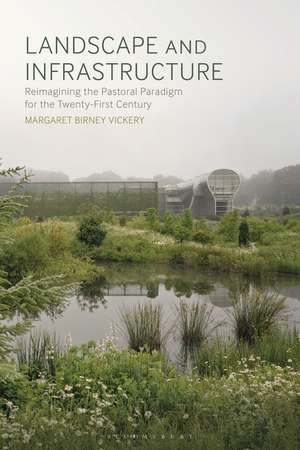
These seemingly disparate subjects are united by a shared concern for the pastoral middle ground; a traditionally productive landscape. By focusing an art-historical lens on pre-industrial productive systems and the effects of the Industrial Revolution on the pastoral landscape tradition, we can gain a better understanding of how to weave new approaches to productive infrastructure systems (such as power generation, water filtration and food production) into our contemporary landscapes. With rising demand for clean energy, clean water, and locally-grown food, this study offers a historical perspective on how such systems can be integrated into our suburban and urban areas. Vestigial elements of the pastoral tradition have long held aesthetic sway in our suburbs, cities and national parks, both in Britain and America. Now, as new energy and water related projects encroach on these spaces, remnants of the pastoral play a crucial role in convincing neighborhood residents, municipal leaders, and energy companies or water authorities of the benefits of a neighboring infrastructure.
This book investigates the history of that tradition and highlights the advantages it brings as we re-imagine infrastructure in the 21st century.
Preț: 178.19 lei
Preț vechi: 220.38 lei
-19%
Puncte Express: 267
Carte disponibilă
Livrare economică 28 octombrie-11 noiembrie
Livrare express 14-20 octombrie pentru 76.12 lei
Livrare prin curier în România Termenul estimat este afișat lângă disponibilitate.
Transport gratuit de la 400.00 lei Plată online sau ramburs, în funcție de opțiunile comenzii.
Retur gratuit în 14 zile Comandă securizată și suport în română.
Specificații
ISBN-13: 9781350216310
ISBN-10: 1350216313
Pagini: 216
Ilustrații: 45 color illus
Dimensiuni: 156 x 232 x 10 mm
Greutate: 0.48 kg
Editura: Bloomsbury Publishing
Colecția Bloomsbury Visual Arts
Locul publicării:London, United Kingdom
ISBN-10: 1350216313
Pagini: 216
Ilustrații: 45 color illus
Dimensiuni: 156 x 232 x 10 mm
Greutate: 0.48 kg
Editura: Bloomsbury Publishing
Colecția Bloomsbury Visual Arts
Locul publicării:London, United Kingdom
Cuprins
Introduction: Infrastructure, Landscape and the Pastoral Paradigm: A Tale of Two Projects
1. Landscape Painting and the Productive Pastoral Tradition
2. The Eighteenth-Century English Landscape: The Classic Pastoral and its Productivity
3. The Industrial Revolution and its Intrusion on the Landscape
4. A Growing Divide: Landscape and Infrastructure in Victorian Britain
5. Progress and Nature in the American Landscape
6. Infrastructure and Landscape in Early-Twentieth-Century England and America
7. Questioning the Infrastructural Paradigm in the late Twentieth Century
8. Twenty-First-Century Power Generation: An Invitation to the Public
9. Clean Water and Recreation: New Approaches to Water Treatment Plants
10. Food, Community, and the Productive Landscape
Conclusion: Reimagining the Pastoral Paradigm for the Twenty-First Century
Bibliography
Index
1. Landscape Painting and the Productive Pastoral Tradition
2. The Eighteenth-Century English Landscape: The Classic Pastoral and its Productivity
3. The Industrial Revolution and its Intrusion on the Landscape
4. A Growing Divide: Landscape and Infrastructure in Victorian Britain
5. Progress and Nature in the American Landscape
6. Infrastructure and Landscape in Early-Twentieth-Century England and America
7. Questioning the Infrastructural Paradigm in the late Twentieth Century
8. Twenty-First-Century Power Generation: An Invitation to the Public
9. Clean Water and Recreation: New Approaches to Water Treatment Plants
10. Food, Community, and the Productive Landscape
Conclusion: Reimagining the Pastoral Paradigm for the Twenty-First Century
Bibliography
Index
Recenzii
In this original and timely book, Vickery establishes the continued and vital importance of art history in contemporary landscape and architectural design. Landscape and Infrastructure traces the roots and uncovers the significance of the productive activities and elements of pastoral traditions in art and designed landscapes, clearly documenting the persistent and sometimes difficult relationship of aesthetics and production in Western art. Art history is rarely as engaging for the general public to read, or as important for designers to understand.