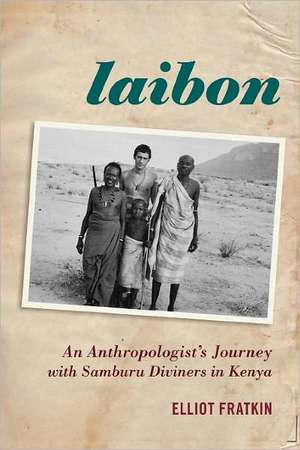
Laibon: An Anthropologist’s Journey with Samburu Diviners in Kenya
Autor Elliot Fratkinen Limba Engleză Paperback – 29 sep 2011
Black-and-white photographs, a guide to the characters, words, and places, and a list of suggested readings supplement the engaging narrative. Laibon is more than a memoir; it delves into nitty-gritty details of fieldwork, speaks to larger questions about ethnographic research, and provides unparalleled insight into the world of the laibon.
Preț: 267.37 lei
Preț vechi: 352.88 lei
-24%
Puncte Express: 401
Carte tipărită la comandă
Livrare economică 05-19 decembrie
Livrare prin curier în România Termenul estimat este afișat lângă disponibilitate.
Transport gratuit de la 400.00 lei Plată online sau ramburs, în funcție de opțiunile comenzii.
Retur gratuit în 14 zile Comandă securizată și suport în română.
Specificații
ISBN-13: 9780759120686
ISBN-10: 0759120684
Pagini: 202
Ilustrații: illustrations
Dimensiuni: 150 x 226 x 12 mm
Greutate: 0.3 kg
Editura: Bloomsbury Publishing
Colecția AltaMira Press
Locul publicării:New York, United States
ISBN-10: 0759120684
Pagini: 202
Ilustrații: illustrations
Dimensiuni: 150 x 226 x 12 mm
Greutate: 0.3 kg
Editura: Bloomsbury Publishing
Colecția AltaMira Press
Locul publicării:New York, United States
Cuprins
Acknowledgments
Preface
Chapter 1. Meeting Lonyoki
Chapter 2. Living with Nomads
Chapter 3. The Dark Valley
Chapter 4. The Long Hunger
Chapter 5. Epilogue: The Gourd is Passed
List of Characters
Glossary
Suggested Readings
Preface
Chapter 1. Meeting Lonyoki
Chapter 2. Living with Nomads
Chapter 3. The Dark Valley
Chapter 4. The Long Hunger
Chapter 5. Epilogue: The Gourd is Passed
List of Characters
Glossary
Suggested Readings
Recenzii
Elliot Fratkin has written an insightful, enjoyable, and very readable book about his fieldwork and life-long friendship with a family of diviners ( laibon ) in northern Kenya. The work is strongly autobiographical, recounting how a young, rebellious American anthropologist in the 1970s found himself conducting dissertation research among Ariaal, a Samburu-related nomadic community of northern Kenya.
This autoethnography is entertaining, provocative, and full of enduring truths about what fieldwork entails and offers. He sees his work as both an ethnography of the laibons... and a memoir-a lifelong search for belonging. The book's chapters are divided into revelatory scenes of Fratkin's experiences living among Ariaal.
In this vivid, engaging account of his early, extended anthropological field work with a Samburu community in rural Kenya, Fratkin demonstrates that however 'exotic' they may seem to tourists, aid workers and even urban Africans, Samburu pastoralists are just people, part of our shared humanity who experience love, loss and life in familiar ways. In so doing, he also validates the power of anthropological methods, revealing the intimate insights into everyday life and specific research topics (in this case, Samburu laibons) provided by deep immersion, linguistic fluency, participant observation, informal conversations and more formal interviews. . . .Laibon is written and structured like a novel - evocative chapter headings, recurring characters and storylines, extended dialogue, themes of love and loss and a narrative arc that traces the discoveries and challenges of arrival, departure, and return. I highly recommend the book to scholars as a significant study of Samburu divination; to teachers as an ideal text for courses in introductory anthropology, field work and African studies; and to undergraduate and graduate students curious about the highs and lows, truths and trials of ethnographic research in rural Africa.
Elliot dares to use his own research to pose the question: Is there any true objectivity in field research and anthropological inquiry? He dares to depict his own attachments and relationships to this very special community, while also staying true to his research. His insights further the reader's understanding and appreciation of the culture and of the research process, thus expanding the boundaries of anthropology. Readers from budding anthropologists to aid workers to volunteers will identify with Elliot's observations, experience, and deep connection to the culture he studied and the people he grew to love.
A vivid, engaging account of Elliot Fratkin's apprenticeship into the mysteries of divination and healing by a prominent Samburu laibon. This book succeeds on many levels-as an unparalleled exploration of the secret meanings and methods of divination by laibons; as a window into the experience of extended field research-the insights and challenges, the emotions and relationships; and as a compelling story about our shared humanity, a reminder that people everywhere experience love, loss and life in ways that will seem achingly familiar.
Fratkin's book, a journal of personal as well as ethnographic exploration, is honest, funny, moving, empathetic, and respectful and, as an account of fieldwork, rings absolutely true. It is a superb introduction to Samburu, especially their prophets, and to the experience of field anthropology. It would make an engaging teaching text for engaged undergraduates and graduate preparation
This autoethnography is entertaining, provocative, and full of enduring truths about what fieldwork entails and offers. He sees his work as both an ethnography of the laibons... and a memoir-a lifelong search for belonging. The book's chapters are divided into revelatory scenes of Fratkin's experiences living among Ariaal.
In this vivid, engaging account of his early, extended anthropological field work with a Samburu community in rural Kenya, Fratkin demonstrates that however 'exotic' they may seem to tourists, aid workers and even urban Africans, Samburu pastoralists are just people, part of our shared humanity who experience love, loss and life in familiar ways. In so doing, he also validates the power of anthropological methods, revealing the intimate insights into everyday life and specific research topics (in this case, Samburu laibons) provided by deep immersion, linguistic fluency, participant observation, informal conversations and more formal interviews. . . .Laibon is written and structured like a novel - evocative chapter headings, recurring characters and storylines, extended dialogue, themes of love and loss and a narrative arc that traces the discoveries and challenges of arrival, departure, and return. I highly recommend the book to scholars as a significant study of Samburu divination; to teachers as an ideal text for courses in introductory anthropology, field work and African studies; and to undergraduate and graduate students curious about the highs and lows, truths and trials of ethnographic research in rural Africa.
Elliot dares to use his own research to pose the question: Is there any true objectivity in field research and anthropological inquiry? He dares to depict his own attachments and relationships to this very special community, while also staying true to his research. His insights further the reader's understanding and appreciation of the culture and of the research process, thus expanding the boundaries of anthropology. Readers from budding anthropologists to aid workers to volunteers will identify with Elliot's observations, experience, and deep connection to the culture he studied and the people he grew to love.
A vivid, engaging account of Elliot Fratkin's apprenticeship into the mysteries of divination and healing by a prominent Samburu laibon. This book succeeds on many levels-as an unparalleled exploration of the secret meanings and methods of divination by laibons; as a window into the experience of extended field research-the insights and challenges, the emotions and relationships; and as a compelling story about our shared humanity, a reminder that people everywhere experience love, loss and life in ways that will seem achingly familiar.
Fratkin's book, a journal of personal as well as ethnographic exploration, is honest, funny, moving, empathetic, and respectful and, as an account of fieldwork, rings absolutely true. It is a superb introduction to Samburu, especially their prophets, and to the experience of field anthropology. It would make an engaging teaching text for engaged undergraduates and graduate preparation