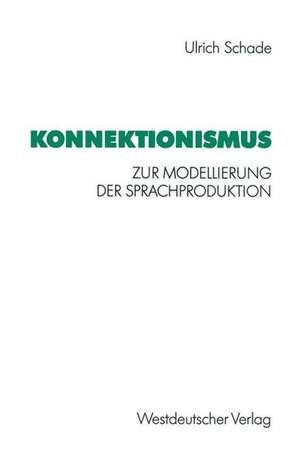
Konnektionismus: Psycholinguistische Studien
Autor Ulrich Schadede Limba Germană Paperback – 1992
Din seria Psycholinguistische Studien
- 5%
 Preț: 459.01 lei
 - 15%
 Preț: 442.42 lei
 -
 Preț: 399.96 lei
 -
 Preț: 419.35 lei
 -
 Preț: 418.07 lei
 - 5%
 Preț: 466.89 lei
 -
 Preț: 423.21 lei
 -
 Preț: 485.03 lei
 -
 Preț: 465.51 lei
 -
 Preț: 488.91 lei
 -
 Preț: 484.66 lei
 -
 Preț: 422.53 lei
 - 20%
 Preț: 337.73 lei
 -
 Preț: 423.39 lei
 -
 Preț: 402.00 lei
 -
 Preț: 424.41 lei
 -
 Preț: 416.18 lei
 -
 Preț: 418.70 lei
 -
 Preț: 423.04 lei
 -
 Preț: 405.14 lei
 -
 Preț: 417.85 lei
 -
 Preț: 416.99 lei
 -
 Preț: 276.22 lei
 -
 Preț: 417.26 lei
 -
 Preț: 400.13 lei
 -
 Preț: 404.05 lei
 -
 Preț: 418.93 lei
 -
 Preț: 424.95 lei
Preț: 418.58 lei
Puncte Express: 628
Carte tipărită la comandă
Livrare economică 07-21 decembrie
Livrare prin curier în România Termenul estimat este afișat lângă disponibilitate.
Transport gratuit pentru acest produs Plată online sau ramburs, în funcție de opțiunile comenzii.
Retur gratuit în 14 zile Comandă securizată și suport în română.
Specificații
ISBN-13: 9783531123011
ISBN-10: 3531123017
Pagini: 204
Ilustrații: 197 S.
Dimensiuni: 155 x 235 x 12 mm
Greutate: 0.32 kg
Ediția:1992
Editura: VS Verlag für Sozialwissenschaften
Colecția Psycholinguistische Studien
Seria Psycholinguistische Studien
Locul publicării:Wiesbaden, Germany
ISBN-10: 3531123017
Pagini: 204
Ilustrații: 197 S.
Dimensiuni: 155 x 235 x 12 mm
Greutate: 0.32 kg
Ediția:1992
Editura: VS Verlag für Sozialwissenschaften
Colecția Psycholinguistische Studien
Seria Psycholinguistische Studien
Locul publicării:Wiesbaden, Germany
V-ar putea interesa
-
 The English LanguageDavid Crystal-31%Preț: 64.74 lei93.24 lei
 -
 Port Out Starboard HomeMichael QuinionPreț: 109.15 lei
 -
 The Cat's Pyjamas: The Penguin Book of ClichésJulia CresswellPreț: 107.38 lei
 -
 Mother TongueBill Bryson-19%Preț: 64.29 lei78.99 lei
 -
 -20%Preț: 74.08 lei92.36 lei
 -
 Beginning LinguisticsLaurie BauerPreț: 253.69 lei
 -
 The Language of PoetryJohn McRaePreț: 239.96 lei
 -
 Routledge Encyclopedia of Narrative TheoryDavid Herman-8%Preț: 564.27 lei613.33 lei
 -
 Preț: 268.81 lei
 -
 Language MattersLaurie BauerPreț: 346.33 lei
 -
 The Last Word: Tales from the Tip of the Mother TongueBen Macintyre-28%Preț: 87.46 lei120.68 lei
 -
 For Wales, See EnglandMartyn FordPreț: 108.86 lei
 -
 Kick the Bucket and Swing the CatAlex GamesPreț: 130.89 lei
 -
 Where Words Come From: A Dictionary of Word OriginsFred Sedgwick-42%Preț: 114.84 lei196.48 lei
Public țintă
ResearchCuprins
1. Die Methode: Konnektionismus.- 1.1 Ursprung und Entwicklung konnektionistischer Modelle.- 1.2 Grundkomponenten konnektionistischer Modelle.- 1.3 Vor- und Nachteile konnektionistischer Systeme.- 2. Der Gegenstandsbereich.- 2.1 Versprecher.- 2.2 Reparaturen.- 3. Ein konnektionistisches Modell der Sprachproduktion.- 3.1 Modell und Simulation.- 3.2 Der statische Anteil des Modells.- 3.3 Der dynamische Anteil des Modells.- 3.4 Das Gesamtmodell im Vergleich.- 4. Ergebnisse der Simulation..- 4.1 Versprecher.- 4.2 Reparaturen.- 5. Fazit.- 6. Literatur.- 7. Anhang: Das Programm.- 7.1 Definition und Hierarchie der Knoten.- 7.2 Das Steuerungsprogramm.- 7.3 Die wichtigsten Methoden.