Cantitate/Preț
Produs

Klaus Munch

Autor Bruno Cora
en Limba Engleză Hardback – 12 iun 2023
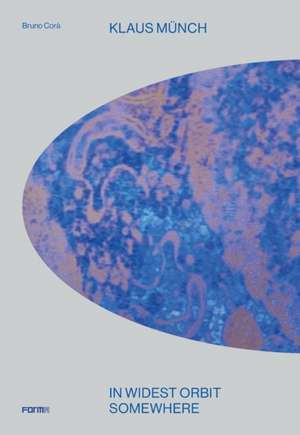
This volume presents the artistic career of German/Italian artist Klaus Münch through a selection of his work. Text in English and Italian.
Citește tot Restrânge

Preț: 23712 lei

Puncte Express: 356

Carte disponibilă

Livrare economică 05-19 decembrie
Livrare express 21-27 noiembrie pentru 5660 lei

Livrare prin curier în România Termenul estimat este afișat lângă disponibilitate.
Transport gratuit de la 40000 lei Plată online sau ramburs, în funcție de opțiunile comenzii.
Retur gratuit în 14 zile Comandă securizată și suport în română.

Specificații

ISBN-13: 9788855211147
ISBN-10: 8855211145
Pagini: 120
Dimensiuni: 286 x 206 x 27 mm
Greutate: 0.82 kg
Editura: Forma Edizioni

Descriere

  • This volume presents the artistic career of German/Italian artist Klaus Münch through a selection of his work

This volume presents the artistic career of Klaus Münch through a selection of his work, ahead of an exhibition opening in Spoleto, Italy in October 2023. Born in Freiburg, Germany, after attending the Academy of Fine Arts in Carrara, where he graduated in sculpture, he studied in Munich, specializing in painting. Since then, he has chosen to live and work in Italy, where he pursues his personal artistic investigation of the world. His work moves in the fertile furrow between sculpture and painting. Starting from the examples of Mario and Marisa Merz, Gilberto Zorio, Giovanni Anselmo and comparing himself with artists of the same age such as Vittorio Messina and Eduard Winklhofer, Münch analyzes the complex relationship between creation and space, between color and shape. Includes essays by Marco Tonelli, Ivo Iori and the curator Bruno Corà himself.


Notă biografică

Bruno Corà is one of the most renowned critics of contemporary art. In 1971, after moving to Rome in the Sixties, he worked with Achille Bonito Oliva in the organization of historical initiatives such as the exhibition Contemporanea. From then, an intense experience of “travel companionship” began between many artists that gained fame in the area of Arte Povera and their behavior. From his critical militancy and creation of exhibitions began his ascent to the direction of public structures such as the Palazzo Fabroni in Pistoia, the Pecci Museum in Prato, and the CAMEC (Centro d’arte moderna e contemporanea) in La Spezia. An intense writing activity (monographs on artists and texts for innumerable exhibitions) led him to be the chair of Contemporary Art History at the University of Cassino. Today he is the president of the Fondazione Burri.