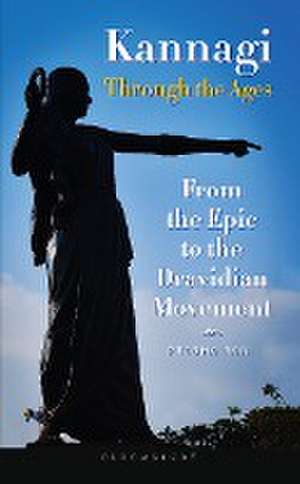
Kannagi Through the Ages: From the Epic to the Dravidian Movement
Autor Prabha Ranien Limba Engleză Hardback – 30 dec 2022
Observăm o lacună persistentă în studiile literare asiatice privind modul în care o figură arhetipală feminină traversează secolele, transformându-se dintr-un personaj de epopeu într-un simbol politic activ. Kannagi Through the Ages de Prabha Rani, publicat sub egida Bloomsbury Academic India, vine să completeze această nișă, oferind o analiză riguroasă a modului în care identitatea culturală Tamil a fost construită în jurul figurii Kannagi. Credem că valoarea acestui volum rezidă în capacitatea de a urmări metamorfoza unei narațiuni clasice în contextul modernității politice.
Reținem din cuprinsul structurat cronologic și tematic o progresie clară: de la fundamentele literare din Silappatikaram, trecând prin reinterpretările folclorice, până la utilizarea imaginii lui Kannagi în cadrul Mișcării Dravidiene de reformă socială. Această abordare demonstrează cum genul și cultura nu sunt categorii statice, ci rezultate ale unor negocieri constante între text și societate. Comparabil cu The Multivalence of an Epic de Parul Pandya Dhar în rigurozitatea cercetării, volumul de față este actualizat pentru a evidenția modul în care simbolistica feminină este instrumentalizată în discursul naționalist contemporan. Spre deosebire de lucrările care se limitează la analiza textuală, Prabha Rani integrează dimensiunea sociopolitică, explicând ascensiunea lui Kannagi ca emblemă a feminității Tamil.
Stilul este academic, dens în referințe, dar accesibil cercetătorilor din domeniul științelor umaniste. Analiza oferă o perspectivă critică asupra modului în care mișcările de reformă socială au modelat 'femeia ideală' prin intermediul iconografiei istorice, făcând din acest studiu o resursă esențială pentru înțelegerea dinamicii culturale din sudul Indiei.
Preț: 549.68 lei
Preț vechi: 815.43 lei
-33%
Carte disponibilă
Livrare economică 26 octombrie-09 noiembrie
Specificații
ISBN-10: 9354355315
Pagini: 252
Dimensiuni: 142 x 222 x 20 mm
Greutate: 0.42 kg
Editura: Bloomsbury Publishing
Colecția Bloomsbury Academic India
Locul publicării:New Delhi, India
De ce să citești această carte
Recomandăm acest volum specialiștilor în studii de gen și literatură comparată care doresc să înțeleagă mecanismele prin care un personaj literar devine simbol politic. Cititorul câștigă o perspectivă aprofundată asupra culturii Tamil, explorând modul în care tradiția și modernitatea se intersectează. Este o lectură fundamentală pentru a descifra cum narațiunile vechi continuă să legitimeze identități colective în prezent.
Descriere
Cuprins
Introduction
1. Women in Tamil Literary Tradition
2. The Epic Silappatikaram
3. Kannagi in Folk Narratives
4. Social Reform Movements and Kannagi
5. Kannagi in the 'Tamil Culture' Frame
6. Kannagi and the Dravidian Movement
Conclusion
Glossary
References
Index
About the author
Recenzii
The retellings of the Silappatikaram and the reclaiming of Kannagi not only inform the Tamil nationalist discourse but also reveal how female icons are deftly appropriated to legitimise the gendered ordering of
society. Through meticulous research and lucid writing, Prabha Rani engages us in the dialectic of the evolving Kannagi motif, integral to the manifold expressions of Tamil nationalist imagination . as being both embedded in and also interrogating and breaking free of patriarchal values. This is an authoritative, refreshingly innovative and non-jargonistic must-read book for all, especially for those interested in Indian history, contemporary Tamil identity articulation, religion in postcolonial India and female icons in Indian epics and myths and their
continuing use in political mobilisation.
The story of Kannagi has captured the imagination of the Tamils over the centuries and has, especially in recent years, come to symbolise womanly fortitude and power. Dr Prabha Rani's richly textured analysis of this figure through an analysis of the epic Silappatikaram, folk narratives and contemporary plays and literary works provides us with a fascinating history of the transmission and transformation of legends, ideas and symbols. This book will be of immense value to scholars and lovers of Tamil literature.