Cantitate/Preț
Produs

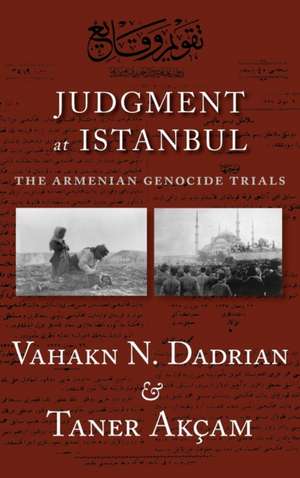
Judgment at Istanbul

Autor Vahakn N. Dadrian, Taner Akçam
en Limba Engleză Hardback – 30 noi 2011

Contextul geopolitic actual, marcat de negocierile prelungite pentru aderarea Turciei la Uniunea Europeană, readuce în prim-plan necesitatea clarificării istorice a evenimentelor din 1915. Descoperim în Judgment at Istanbul o lucrare fundamentală care nu se limitează la narațiuni subiective, ci ancorează dezbaterea în probe juridice incontestabile. Remarcăm efortul monumental al autorilor Vahakn N. Dadrian și Taner Akçam de a traduce și analiza pentru prima dată în limba engleză Takvim-i Vekâyi, registrul oficial al proceselor militare otomane.

Această lucrare se poziționează pe linia practică a volumului A Shameful Act de Taner Akçam, dar cu focus pe dimensiunea juridică și procedurală a tribunalelor militare interne. Spre deosebire de alte studii, aici observăm un fenomen istoric unic: o inițiativă de autocondamnare națională desfășurată sub jurisdicție otomană, nu internațională, precedând cu decenii modelul Nuremberg. Analiza este structurată riguros în două părți: prima explorează cadrul istoric al conflictului turco-armean și ascensiunea kemalismului, în timp ce a doua oferă textele integrale ale rechizitoriilor și verdictelor.

În contextul operei lui Vahakn N. Dadrian, volumul rafinează tezele din The History of the Armenian Genocide, trecând de la analiza sociologică a conflictului la rigoarea probatoriului penal. Cititorul va învăța cum mecanismele statale de atunci au documentat ele însele „falsificarea argumentelor relocării” și cum miniștrii cabinetului de război au fost trași la răspundere conform codului penal domestic. Este o resursă esențială pentru înțelegerea modului în care justiția poate funcționa ca instrument de asumare a trecutului, chiar și în perioade de tranziție politică instabilă.

Citește tot Restrânge

Preț: 80318 lei

Preț vechi: 104310 lei
-23%

Puncte Express: 1205

Carte tipărită la comandă

Livrare economică 03-17 iunie


Specificații

ISBN-13: 9780857452511
ISBN-10: 0857452517
Pagini: 376
Dimensiuni: 152 x 229 x 22 mm
Greutate: 0.67 kg
Ediția:English
Editura: BERGHAHN BOOKS INC

De ce să citești această carte

Recomandăm această carte cercetătorilor în drept internațional și istorie politică deoarece oferă acces direct la documentele proceselor militare otomane. Veți înțelege cum a fost instrumentat juridic genocidul armean chiar de către autoritățile de la Istanbul, obținând o perspectivă factuală, dincolo de interpretările politizate. Este singura sursă care prezintă dovezile interne ale intenției de exterminare, fiind indispensabilă pentru oricine dorește să argumenteze pe baza surselor primare.


Despre autor

Vahakn N. Dadrian (1926–2019) a fost un sociolog și istoric armeano-american, considerat unul dintre pionierii studiilor academice despre genocid. A condus proiecte vaste de cercetare sub egida National Science Foundation și a predat la universități de prestigiu precum SUNY. Alături de el, Taner Akçam, fost deținut politic în Turcia și refugiat în Germania, este primul academician turc care a recunoscut și analizat public istoricitatea genocidului armean. Ambii autori au fost premiați internațional pentru contribuțiile lor la apărarea drepturilor omului și pentru rigurozitatea cercetării istorice în arhivele otomane.


Descriere scurtă

"This book [by Vahakn Dadrian and Taner Akçam, one Armenian, one Turkish, both noted scholars of the Armenian Genocide] stands as a monument of original scholarship on the facts of the Genocide. The wealth of specific citations, the multiplicity of sources surveyed make this volume an invaluable and fundamental source for any future study." · The Armenian Mirror-Spectator Turkey's bid to join the European Union has lent new urgency to the issue of the Armenian Genocide as differing interpretations of the genocide are proving to be a major reason for the delay of the its accession. This book provides vital background information and is a prime source of legal evidence and authentic Turkish eyewitness testimony of the intent and the crime of genocide against the Armenians. After a long and painstaking effort, the authors, one an Armenian, the other a Turk, generally recognized as the foremost experts on the Armenian Genocide, have prepared a new, authoritative translation and detailed analysis of the Takvim-i Vekâyi, the official Ottoman Government record of the Turkish Military Tribunals concerning the crimes committed against the Armenians during World War I. The authors have compiled the documentation of the trial proceedings for the first time in English and situated them within their historical and legal context. These documents show that Wartime Cabinet ministers, Young Turk party leaders, and a number of others inculpated in these crimes were court-martialed by the Turkish Military Tribunals in the years immediately following World War I. Most were found guilty and received sentences ranging from prison with hard labor to death. In remarkable contrast to Nuremberg, the Turkish Military Tribunals were conducted solely on the basis of existing Ottoman domestic penal codes. This substitution of a national for an international criminal court stands in history as a unique initiative of national self-condemnation. This compilation is significantly enhanced by an extensive analysis of the historical background, political nature and legal implications of the criminal prosecution of the twentieth century's first state-sponsored crime of genocide. Vahakn N. Dadrian was director of a large Genocide Study Project with sustained support by the National Science Foundation and the H. F. Guggenheim Foundation. The project's first major achievement was the publication of an extensive volume, The History of the Armenian Genocide: Ethnic Conflict from the Balkans to Anatolia to the Caucasus (Berghahn Books 1995), now in its 8th edition, which has been translated into Arabic, French, Greek, Italian, Russian, Spanish and Turkish. In 2005, he received four separate awards for his lifetime contribution to genocide studies. He taught at the State University of New York (SUNY) system (1970-1991) and has been Director of Genocide Research at the Zoryan Institute since 1999. Taner Akçam was born in the province of Ardahan in the northeast of Turkey. As the editor-in-of a political journal, he was arrested in 1976 and sentenced to 10 years' imprisonment. One year later, he escaped and fled to Germany as a political refugee. He is the first Turkish scholar to have drawn attention to the historicity of the Armenian Genocide and has been persecuted by the Turkish state for it. In April 2006, the Commonwealth of Massachusetts presented him with a distinguished award for his outstanding work in human rights and fighting genocide denial. Currently, he is Associate Professor of History and the Kaloosdian/Mugar Chair in Armenian Genocide Studies at the Center for Holocaust and Genocide Studies, Clark University

Notă biografică

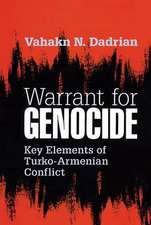
Vahakn N. Dadrian was director of a large Genocide Study Project sponsored by the National Science Foundation and the H. F. Guggenheim Foundation. The project's first major achievement was the publication of an extensive volume, The History of the Armenian Genocide: Ethnic Conflict from the Balkans to Anatolia to the Caucasus (Berghahn Books 1995), now in its 8th edition. This study was preceded by one published in the Yale Journal of International Law (1989), in which the Armenian Genocide was examined as a major problem of international law. His other major work, Warrant for Genocide: Key Elements in the Turko-Armenian Conflict (Transaction 1999). In 2005, he received four separate awards for his lifetime contribution to genocide studies. Vahakn Dadrian, who taught at the State University of New York (SUNY) system (1970-1991), has been Director of Genocide Research at the Zoryan Institute since 1999. Taner Akcam was born in the province of Ardahan in the northeast of Turkey and became interested in Turkish politics at an early age. As the editor-in-chief of a political journal, he was arrested in 1976 and sentenced to 10 years' imprisonment. One year later, he escaped and fled to Germany as a political refugee. His books include Dialogue Across an International Divide: Essays Towards a Turkish-Armenian Dialogue (2001), From Empire to Republic: Turkish Nationalism and the Armenian Genocide (2004). A Shameful Act: The Armenian Genocide and the Question of Turkish Responsibility was published in November 2006 and has since been translated into Dutch, French, Italian, Polish and Spanish. He is the first Turkish scholar to have drawn attention to the historicity of the Armenian Genocide and has been persecuted by the Turkish state for it. In April 2006, the Commonwealth of Massachusetts presented a distinguished award to him for his outstanding work in human rights and fighting genocide denial. Currently, he is Associate Professor of History and the Kaloosdian/Mugar Chair in Armenian Genocide Studies at the Center for Holocaust and Genocide Studies, Clark University.

Cuprins

Ottoman-Turkish Words and Names Preface Vahakn N. Dadrian and Taner Akcam PART I: THE CONDITIONS SURROUNDING THE TRIALS Chapter 1. History of the Turko-Armenian Conflict Vahakn N. Dadrian Chapter 2. Military Defeat and the Victors' Drive for Punitive Justice Vahakn N. Dadrian Chapter 3. The Preparations for Court-Martial Vahakn N. Dadrian Chapter 4. The Initiation of Courts-Martial Vahakn N. Dadrian Chapter 5. Emergent Kemalism and the Courts-Martial Vahakn N. Dadrian Chapter 6. The Series of Major Trials and the Related Verdicts: The Falsification of the Arguments of Relocation,A" Civil WarA" and Intercommunal ClashesA" Vahakn N. Dadrian Chapter 7. Legal Proceedings as a Conceptual Framework Vahakn N. Dadrian Chapter 8. A Summary of the Conditions Surrounding the Trials Vahakn N. Dadrian PART II: THE TRIALS AND BEYOND Chapter 9. The Full Texts in English of the Indictments and Verdicts Chapter 10. The Judicial Liquidation of Some of the Arch Perpetrators by both CUP and the Kemalist Authorities and the Demise of Other Accomplices Vahakn N. Dadrian Chapter 11. Death Sentences Handed Down by the Military Tribunal in Istanbul Taner Akcam Chapter 12. Coverage of the Trials by the Istanbul Turkish Press Taner Akcam Chapter 13. Formation and Operation of the Ottoman Military Tribunals Taner Akcam Appendix Glossary of Terms Bibliography