
Joyce and Company: Continuum Literary Studies
Autor Professor David Pierceen Limba Engleză Hardback – 23 mar 2006
Joyce and Company is a comparative study which encourages a way of thinking about Joyce not as an isolated figure but as someone who is best understood in the company of others whether from the past, the present or, indeed, the imagined future. Throughout, Pierce places Joyce and his time in dialogue with other figures or different historical periods or languages other than English. In this way, Joyce is seen anew in relation to other writers and contexts.
The book is organised in four parts: Joyce and History, Joyce and Language, Joyce and the City, and Joyce and the Contemporary World. Pierce emphasises Joyce's position as both an Irish and a European writer and shows Joyce's continuing relevance to the twenty-first century, not least in his commitment to language, culture and a discourse on freedom.
The book is organised in four parts: Joyce and History, Joyce and Language, Joyce and the City, and Joyce and the Contemporary World. Pierce emphasises Joyce's position as both an Irish and a European writer and shows Joyce's continuing relevance to the twenty-first century, not least in his commitment to language, culture and a discourse on freedom.
Din seria Continuum Literary Studies
- 33%
 Preț: 960.54 lei
 -
 Preț: 277.68 lei
 - 25%
 Preț: 281.33 lei
 - 33%
 Preț: 835.66 lei
 - 25%
 Preț: 280.81 lei
 - 25%
 Preț: 960.54 lei
 - 24%
 Preț: 849.32 lei
 - 25%
 Preț: 960.82 lei
 - 16%
 Preț: 280.41 lei
 - 25%
 Preț: 280.81 lei
 - 33%
 Preț: 963.00 lei
 - 25%
 Preț: 976.57 lei
 - 33%
 Preț: 976.17 lei
 - 24%
 Preț: 847.91 lei
 - 33%
 Preț: 960.43 lei
 - 14%
 Preț: 847.63 lei
 - 25%
 Preț: 960.27 lei
 - 24%
 Preț: 834.95 lei
 - 33%
 Preț: 644.27 lei
 - 15%
 Preț: 279.35 lei
 - 25%
 Preț: 976.96 lei
 - 25%
 Preț: 281.41 lei
 - 14%
 Preț: 717.29 lei
 - 33%
 Preț: 960.89 lei
 - 25%
 Preț: 276.29 lei
 - 14%
 Preț: 847.81 lei
 - 25%
 Preț: 960.08 lei
 - 33%
 Preț: 833.98 lei
 - 25%
 Preț: 960.71 lei
 - 27%
 Preț: 276.58 lei
 - 33%
 Preț: 977.41 lei
 - 25%
 Preț: 277.68 lei
 - 25%
 Preț: 957.28 lei
 - 33%
 Preț: 834.70 lei
 - 33%
 Preț: 960.36 lei
 - 33%
 Preț: 850.13 lei
 - 33%
 Preț: 961.50 lei
 - 25%
 Preț: 279.90 lei
 - 35%
 Preț: 403.83 lei
 - 34%
 Preț: 796.82 lei
 - 33%
 Preț: 959.75 lei
 - 25%
 Preț: 976.70 lei
 - 33%
 Preț: 959.75 lei
 - 25%
 Preț: 960.08 lei
 - 25%
 Preț: 975.81 lei
 - 25%
 Preț: 283.29 lei
Preț: 976.34 lei
Preț vechi: 1135.29 lei
-14%
Puncte Express: 1465
Carte tipărită la comandă
Livrare economică 23 noiembrie-07 decembrie
Livrare prin curier în România Termenul estimat este afișat lângă disponibilitate.
Transport gratuit pentru acest produs Plată online sau ramburs, în funcție de opțiunile comenzii.
Retur gratuit în 14 zile Comandă securizată și suport în română.
Specificații
ISBN-13: 9780826490896
ISBN-10: 0826490891
Pagini: 192
Dimensiuni: 156 x 234 x 15 mm
Greutate: 0.45 kg
Ediția:New.
Editura: Bloomsbury Publishing
Colecția Continuum
Seria Continuum Literary Studies
Locul publicării:London, United Kingdom
ISBN-10: 0826490891
Pagini: 192
Dimensiuni: 156 x 234 x 15 mm
Greutate: 0.45 kg
Ediția:New.
Editura: Bloomsbury Publishing
Colecția Continuum
Seria Continuum Literary Studies
Locul publicării:London, United Kingdom
V-ar putea interesa
-
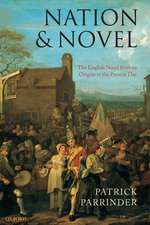 Nation and Novel: The English Novel from its Origins to the Present DayPatrick Parrinder-11%Preț: 310.84 lei351.18 lei
 -
 The History of Science FictionA. Roberts-15%Preț: 667.30 lei785.06 lei
 -
 -48%Preț: 467.92 lei907.79 lei
 -
 Turtle Recall: The Discworld Companion . . . So FarStephen Briggs-25%Preț: 71.47 lei94.97 lei
 -
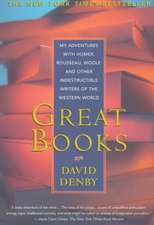 Great BooksDavid DenbyPreț: 171.95 lei
 -
 Concerning E.M. ForsterSir Frank Kermode-17%Preț: 99.74 lei119.91 lei
 -
 -34%Preț: 409.98 lei624.86 lei
 -
 Reading JoyceDavid PiercePreț: 410.08 lei
 -
 -37%Preț: 85.29 lei135.16 lei
 -
 How Fiction WorksJames Wood-31%Preț: 63.34 lei92.43 lei
 -
 Seeker`s Guide to Harry Potter, TheDr TrevarthenPreț: 142.09 lei
Cuprins
Acknowledgements
Abbreviations
1. Introduction
Part I: Joyce and History
2. Joyce, Sterne and the Eighteenth Century
3. Joyce, Erudition and the Late Nineteenth Century
Part II: Joyce and the City
4. Reading Dublin 1904
5. Joyce, Woolf and the Metropolitan Imagination
Part III: Joyce and Language
6. The Issue of Translation
7. Joyce's Use of Language in 'Sirens'
Part IV: Joyce and the Contemporary World
8. On Reading Ulysses after the Fall of the Berlin Wall
9. Joyce and Contemporary Irish Writing
Notes
Select Bibliography
Index
Abbreviations
1. Introduction
Part I: Joyce and History
2. Joyce, Sterne and the Eighteenth Century
3. Joyce, Erudition and the Late Nineteenth Century
Part II: Joyce and the City
4. Reading Dublin 1904
5. Joyce, Woolf and the Metropolitan Imagination
Part III: Joyce and Language
6. The Issue of Translation
7. Joyce's Use of Language in 'Sirens'
Part IV: Joyce and the Contemporary World
8. On Reading Ulysses after the Fall of the Berlin Wall
9. Joyce and Contemporary Irish Writing
Notes
Select Bibliography
Index
Recenzii
'David Pierce might well be the ideal reader of the work of James Joyce. His interpretations are both sensitive and sensible. In this book his interests range from the cultural and intellectual climate that formed the writer Joyce, to the varied ways in which his works have been read by creative writers and ordinary readers.' Prof. Geert Lernout, James Joyce Centre, University of Antwerp, Belgium.
mention- The Chronicle of Higher Education, May 26, 2006
'Pierce's knowledge of Joyce and Joycean scholarship is encyclopedic. Similarly, the connections he makes between Joyce and the company of authors such as Sterne, Woolf and Jamie O'Neill, and between Joyce and issues of language and cultural studies, are accomplished with ease and erudition.' Damien Ward Hey, James Joyce Literary Supplement, Spring 2007
'David Pierce's Joyce and Company is a collection of interlocking essays which also reprints several of the author's previous publications on Joyce. The essays are accomplished, informed and wide-ranging and especially adept at teasing out intertextual connections between Joyce and other writers. The first chapter interweaves Joyce and Laurence Sterne through an exploration of their mutual interest in touch and transgression. Two chapters on Joyce and the city illuminatingly explore the affinities between his work and that of Alexander Döblin and Virginia Woolf. Like Döblin, it is concluded, Joyce is concerned with the symmetries and patterns that define the modern metropolis, while, like Woolf, he focuses on the city's margins and its submerged population of outsider figures. The final chapters of this judicious and balanced study provide space for even more expansive considerations, including the political valence of Joyce's work after the fall of the Berlin wall and its influence on a diverse range of contemporary Irish writers such as Thomas Kinsella, Aidan Matthews and Jamie O'Neill.' - Anne Fogarty, The Year's Work in English Studies 2008
"A great virtue of Joyce and Company is its implicit indication of the variety of communities that have influenced Pierce in his engagement with Joyce's works. And, in fact, the book's greatest merit is the way it suggests what good company Pierce himself is as a fellow reader of Joyce. He gives a sense of how he has come to produce a certain kind of Joyce criticism and of the capacities of that strain of scholarship; he is more interested in informing us than in persuading us...A very worthwhile collection of essays." - Victor Luftig, James Joyce Quarterly
mention- The Chronicle of Higher Education, May 26, 2006
'Pierce's knowledge of Joyce and Joycean scholarship is encyclopedic. Similarly, the connections he makes between Joyce and the company of authors such as Sterne, Woolf and Jamie O'Neill, and between Joyce and issues of language and cultural studies, are accomplished with ease and erudition.' Damien Ward Hey, James Joyce Literary Supplement, Spring 2007
'David Pierce's Joyce and Company is a collection of interlocking essays which also reprints several of the author's previous publications on Joyce. The essays are accomplished, informed and wide-ranging and especially adept at teasing out intertextual connections between Joyce and other writers. The first chapter interweaves Joyce and Laurence Sterne through an exploration of their mutual interest in touch and transgression. Two chapters on Joyce and the city illuminatingly explore the affinities between his work and that of Alexander Döblin and Virginia Woolf. Like Döblin, it is concluded, Joyce is concerned with the symmetries and patterns that define the modern metropolis, while, like Woolf, he focuses on the city's margins and its submerged population of outsider figures. The final chapters of this judicious and balanced study provide space for even more expansive considerations, including the political valence of Joyce's work after the fall of the Berlin wall and its influence on a diverse range of contemporary Irish writers such as Thomas Kinsella, Aidan Matthews and Jamie O'Neill.' - Anne Fogarty, The Year's Work in English Studies 2008
"A great virtue of Joyce and Company is its implicit indication of the variety of communities that have influenced Pierce in his engagement with Joyce's works. And, in fact, the book's greatest merit is the way it suggests what good company Pierce himself is as a fellow reader of Joyce. He gives a sense of how he has come to produce a certain kind of Joyce criticism and of the capacities of that strain of scholarship; he is more interested in informing us than in persuading us...A very worthwhile collection of essays." - Victor Luftig, James Joyce Quarterly
Notă biografică
David Pierce has taught, read, and written about modern literature and Irish writing for more than thirty years. He is on the Board of the International James Joyce Foundation, is reviews editor for estudiosirlandeses.org, an internet journal devoted to Irish Studies, and the author of W.B.Yeats State of the Art (Bristol Classical Press,1989); James Joyce's Ireland (Yale University Press, 1992); Yeats's Worlds: Ireland, England and the Poetic Imagination (Yale University Press, 1995); W.B.Yeats Critical Assessments 4 vols (Helm Information, 2000); Irish Writing in the Twentieth Century: A Reader (Cork University Press, 2001); Light, Freedom and Song: A Cultural History of Modern Irish Writing (Yale University Press, 2005); and Reading Joyce (Longman, 2008). He is co-author with Mary Eagleton of Attitudes to Class in the English Novel (Thames and Hudson, 1979), and co-editor with Peter de Voogd of Laurence Sterne in Modernism and Postmodernism (Rodopi, 1996). Now retired, David lives in York, UK.