John Singer Sargent and His Muse: Painting Love and Loss
Autor Karen Corsano, Daniel Williman Cuvânt înainte de Richard Ormonden Limba Engleză Paperback – 17 mar 2017
Preț: 133.72 lei
Preț vechi: 160.85 lei
-17%
Puncte Express: 201
Carte indisponibilă temporar
Doresc să fiu notificat când acest titlu va fi disponibil:
Se trimite...
Specificații
ISBN-13: 9781442269989
ISBN-10: 1442269987
Pagini: 340
Dimensiuni: 145 x 224 x 19 mm
Greutate: 0.42 kg
Editura: Bloomsbury Publishing
Colecția Rowman & Littlefield
Locul publicării:New York, United States
ISBN-10: 1442269987
Pagini: 340
Dimensiuni: 145 x 224 x 19 mm
Greutate: 0.42 kg
Editura: Bloomsbury Publishing
Colecția Rowman & Littlefield
Locul publicării:New York, United States
Cuprins
Chapter 1: The Painter and the Critic: John Sargent and André Michel
Chapter 2: The Ormonds and the Sargents
Chapter 3: Rose-Marie Ormond
Chapter 4: Robert André-Michel
Chapter 5: Robert's War, 1914
Chapter 6: Rose-Marie's War, 1914-1918
Chapter 7: The Paris Gun
Chapter 8: Sargent's War, 1914-1919
Chapter 9: The End of The Triumph of Religion
Chapter 10: Epilogues
Bibliography
Chapter 2: The Ormonds and the Sargents
Chapter 3: Rose-Marie Ormond
Chapter 4: Robert André-Michel
Chapter 5: Robert's War, 1914
Chapter 6: Rose-Marie's War, 1914-1918
Chapter 7: The Paris Gun
Chapter 8: Sargent's War, 1914-1919
Chapter 9: The End of The Triumph of Religion
Chapter 10: Epilogues
Bibliography
Recenzii
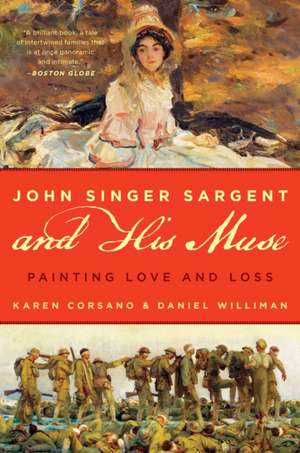
This biography casts new light upon the influences and family history of the famed American portraitist John Singer Sargent (1856-1925). Coauthors Corsano and Williman focus intently on two major figures in the artist's life: Rose-Marie Ormand, Sargent's niece and favored model, and her husband, Robert André-Michel, an art historian and the son of a prominent French art critic. Wed in 1913, young Robert and Rose-Marie were 'raised in the cult of the beautiful,' moving in refined circles of artists, scholars, and connoisseurs. Corsano and Williman use the couple's correspondence records to eloquently chart the tragedy that WWI brings to their lives, and to the entirety of the European Belle Epoque. Robert perishes in the trenches as an infantry sergeant in 1917, and Rose-Marie bravely works as an army nurse until she too is killed, by German bombs, in 1918. The authors' final chapters reconsider Sargent's postwar work (including the mural masterpiece, Triumph of Religion) as memorial to his beloved family and to the era of beauty and refinement cut short by the Great War.
An indelible account of lives maximally charged with talent and romance, and horribly undone by loss. Karen Corsano and Daniel Williman have produced a brilliant book, a tale of intertwined families that is at once panoramic and intimate. Full of apposite images and quotations from primary sources, it sets out to tell the story of John Singer Sargent's most famous commission-the murals for the Boston Public Library-but it ends up telling a story that is so much bigger, and even more moving.
This powerful book describes the tragic result of the rush to Armageddon in August 1914 in a way that is not easily forgotten. The subtitle of this evocative book leaves no doubts about the human cost of the war: Painting Love and Loss.
Karen Corsano and Daniel Williman have written a gem of a book. Their research here reveals important new biographical discoveries that fill out the historical record on renowned artist John Singer Sargent and his body of work. In addition, the authors provide an intimately nuanced and textured account of select moments and events in the city of Paris and elsewhere during the First World War. This deeply archival and beautifully elaborated story of art and war, of human love and loss, will be of value and substantial interest to art historians and the general reader alike.
The authors have brilliantly captured a vibrant, artistic, and intellectual Europe on the brink of catastrophic change. They have combined the meticulous research and narrative pace of biography with the lyricism of a love story, which, were it not poignantly real, might seem to be the stuff of fiction. The adventure of Robert's scholarship and the beauty of Rose-Marie (captured in her uncle's ravishing studies) are silent testaments to the glory of their short lives, the tragedy of the Great War that killed them both, and the pity of promise unfulfilled.
Corsano and Williman have created a tapestry of cultural and family connections, illuminating one particularly vibrant corner of the turn-of-the-century world of Sargent and his cosmopolitan friends-a world that would not survive the onslaught of war. The authors have focused on a fascinating cast of characters with a moving tale to tell.
Dan Williman and Karen Corsano have told the story of Robert and Rose-Marie Michel for the first time, against the richly textured artistic and intellectual milieu in which they grew up and flourished. . . . The research has been exemplary, the authors delving into French, English, and American archives (public and private) in search of their quarry. Particularly revealing for me is the new material on the André Michel family and their network of relations; the story of Robert's career as a scholar; and the detailing of his military service from his reconstituted notebooks. Rose-Marie's wartime work as a nurse is documented and brought to life, including a rare illustration of her among a group of nurses, leading a line of blinded soldiers. Fascinating discoveries like that abound in a narrative that is at once poignant at the human level and revealing on the wider issues of scholarship, art, and war.
John Singer Sargent and His Muse . . . intricately pieces together the stories of Sargent, his niece, and her husband, scholar-turned-soldier Robert André-Michel. . . . Corsano and Williman affectingly describe how Sargent's losses infused, but did not weigh down, his work at the library. It's a wrenching story about a young couple largely lost to history, whose lives and deaths touched the visions of a great American artist.
An indelible account of lives maximally charged with talent and romance, and horribly undone by loss. Karen Corsano and Daniel Williman have produced a brilliant book, a tale of intertwined families that is at once panoramic and intimate. Full of apposite images and quotations from primary sources, it sets out to tell the story of John Singer Sargent's most famous commission-the murals for the Boston Public Library-but it ends up telling a story that is so much bigger, and even more moving.
This powerful book describes the tragic result of the rush to Armageddon in August 1914 in a way that is not easily forgotten. The subtitle of this evocative book leaves no doubts about the human cost of the war: Painting Love and Loss.
Karen Corsano and Daniel Williman have written a gem of a book. Their research here reveals important new biographical discoveries that fill out the historical record on renowned artist John Singer Sargent and his body of work. In addition, the authors provide an intimately nuanced and textured account of select moments and events in the city of Paris and elsewhere during the First World War. This deeply archival and beautifully elaborated story of art and war, of human love and loss, will be of value and substantial interest to art historians and the general reader alike.
The authors have brilliantly captured a vibrant, artistic, and intellectual Europe on the brink of catastrophic change. They have combined the meticulous research and narrative pace of biography with the lyricism of a love story, which, were it not poignantly real, might seem to be the stuff of fiction. The adventure of Robert's scholarship and the beauty of Rose-Marie (captured in her uncle's ravishing studies) are silent testaments to the glory of their short lives, the tragedy of the Great War that killed them both, and the pity of promise unfulfilled.
Corsano and Williman have created a tapestry of cultural and family connections, illuminating one particularly vibrant corner of the turn-of-the-century world of Sargent and his cosmopolitan friends-a world that would not survive the onslaught of war. The authors have focused on a fascinating cast of characters with a moving tale to tell.
Dan Williman and Karen Corsano have told the story of Robert and Rose-Marie Michel for the first time, against the richly textured artistic and intellectual milieu in which they grew up and flourished. . . . The research has been exemplary, the authors delving into French, English, and American archives (public and private) in search of their quarry. Particularly revealing for me is the new material on the André Michel family and their network of relations; the story of Robert's career as a scholar; and the detailing of his military service from his reconstituted notebooks. Rose-Marie's wartime work as a nurse is documented and brought to life, including a rare illustration of her among a group of nurses, leading a line of blinded soldiers. Fascinating discoveries like that abound in a narrative that is at once poignant at the human level and revealing on the wider issues of scholarship, art, and war.
John Singer Sargent and His Muse . . . intricately pieces together the stories of Sargent, his niece, and her husband, scholar-turned-soldier Robert André-Michel. . . . Corsano and Williman affectingly describe how Sargent's losses infused, but did not weigh down, his work at the library. It's a wrenching story about a young couple largely lost to history, whose lives and deaths touched the visions of a great American artist.