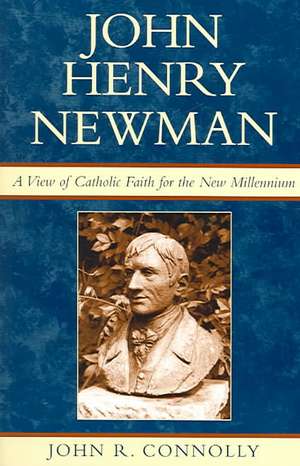
John Henry Newman: A View of Catholic Faith for the New Millennium
Autor John R. Connollyen Limba Engleză Paperback – 25 mar 2005
Preț: 255.02 lei
Preț vechi: 333.90 lei
-24%
Puncte Express: 383
Carte tipărită la comandă
Livrare economică 30 noiembrie-14 decembrie
Livrare prin curier în România Termenul estimat este afișat lângă disponibilitate.
Transport gratuit de la 400.00 lei Plată online sau ramburs, în funcție de opțiunile comenzii.
Retur gratuit în 14 zile Comandă securizată și suport în română.
Specificații
ISBN-13: 9780742532229
ISBN-10: 0742532224
Pagini: 256
Dimensiuni: 161 x 227 x 14 mm
Greutate: 0.28 kg
Ediția:New.
Editura: Bloomsbury Publishing
Colecția Sheed & Ward
Locul publicării:New York, United States
ISBN-10: 0742532224
Pagini: 256
Dimensiuni: 161 x 227 x 14 mm
Greutate: 0.28 kg
Ediția:New.
Editura: Bloomsbury Publishing
Colecția Sheed & Ward
Locul publicării:New York, United States
V-ar putea interesa
-
 Preț: 80.94 lei
 -
 Pope Francis: Life and RevolutionElisabetta PiquéPreț: 72.63 lei
 -
 Oscar RomeroRoberto Morozzo della RoccaPreț: 72.95 lei
 -
 Explorations in the Theology of Benedict XVIJohn C. CavadiniPreț: 230.14 lei
 -
 -22%Preț: 279.96 lei360.46 lei
 -
 The New Map of the Global ChurchPhilip JenkinsPreț: 81.55 lei
 -
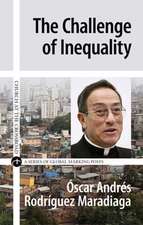 The Challenge of InequalityÓscar Andrés Rodríguez MaradiagaPreț: 78.06 lei
 -
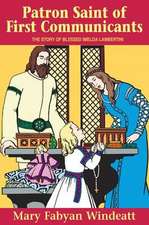 Patron Saint of First CommunicantsWindeattPreț: 89.85 lei
 -
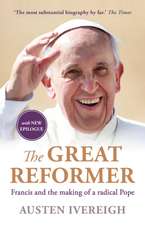 The Great ReformerAusten Ivereigh-18%Preț: 77.56 lei94.62 lei
 -
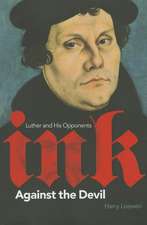 Ink Against the DevilHarry LoewenPreț: 332.67 lei
Cuprins
Part 1 Introduction
Part 2 Biography of John Henry Newman
Chapter 3 An Historical Overview of Newman's Theology of Faith
Chapter 4 Human Faith ad Divine Faith
Chapter 5 Human Certitude in Concrete Matters of Truth
Chapter 6 Newman's Mature Notion of Catholic Faith
Chapter 7 Faith and Reason in Newman's Nature Notion of Catholic Faith
Part 8 Conclusion
Part 2 Biography of John Henry Newman
Chapter 3 An Historical Overview of Newman's Theology of Faith
Chapter 4 Human Faith ad Divine Faith
Chapter 5 Human Certitude in Concrete Matters of Truth
Chapter 6 Newman's Mature Notion of Catholic Faith
Chapter 7 Faith and Reason in Newman's Nature Notion of Catholic Faith
Part 8 Conclusion
Recenzii
For anyone interested in the 'Catholic Faith in the New Millennium,' Newman's Grammar of Assent is a rewarding 'read.' Yet, Newman's Grammar can also be very challenging and confusing even for philosophers and theologians. Connolly's book, which displays enviable familiarity with Newman's writings and his many commentators, both past and recent, is a very helpful and useful guide not only for understanding Newman's thought on faith and reason, but for living the Christian faith in today's world.
John Connolly examines Newman's notion of faith through a historical prism: Newman's Anglican period, his early Catholic period still heavily influenced by the Roman theologians of the day, and his later Roman Catholic period that represents the ripening of his mature thought. Connolly successfully argues that Newman's personalistic notion of faith enabled him to navigate the tricky ocean currents of being both faithful to church magisterium and open to new developments in theology, all the while receiving criticism from others less open to developments than he.
John Connolly provides a helpful overview of Newman's writings on Catholic faith while trying to show its relevance for contemporary Catholics.
An exceptionally useful book for anyone grappling with the notion of faith today.
Enhanced by a detailed introduction, biographical sketch, and bibliography [his book] explores Newman's teaching on the relationship between faith and reason, the personal nature of faith, the function of the magisterium, the importance of dialogue, and the role of the conscience in decision making.
John Connolly has accurately identified the "Newman problem." The complexity and sophistication of Newman's writings often make his thought inaccessible to the uninitiated. Fortunately, Connolly offers in this volume a solution: a primer for the educated lay Catholic, for serious students, and for the next generation of inquirers into the "Newman revival" that is now upon us.
John Connolly examines Newman's notion of faith through a historical prism: Newman's Anglican period, his early Catholic period still heavily influenced by the Roman theologians of the day, and his later Roman Catholic period that represents the ripening of his mature thought. Connolly successfully argues that Newman's personalistic notion of faith enabled him to navigate the tricky ocean currents of being both faithful to church magisterium and open to new developments in theology, all the while receiving criticism from others less open to developments than he.
John Connolly provides a helpful overview of Newman's writings on Catholic faith while trying to show its relevance for contemporary Catholics.
An exceptionally useful book for anyone grappling with the notion of faith today.
Enhanced by a detailed introduction, biographical sketch, and bibliography [his book] explores Newman's teaching on the relationship between faith and reason, the personal nature of faith, the function of the magisterium, the importance of dialogue, and the role of the conscience in decision making.
John Connolly has accurately identified the "Newman problem." The complexity and sophistication of Newman's writings often make his thought inaccessible to the uninitiated. Fortunately, Connolly offers in this volume a solution: a primer for the educated lay Catholic, for serious students, and for the next generation of inquirers into the "Newman revival" that is now upon us.