Cărți de Jean-Paul Sartre

Jean-Paul Charles Aymard Sartre (, US also ; French:[saʁtʁ]; 21 June 1905 – 15 April 1980) was one of the key figures in the philosophy of Existentialism (and phenomenology), a French playwright, novelist, screenwriter, political activist, biographer, and literary critic, as well as a leading figures in 20th-century French philosophy and Marxism. His work has influenced sociology, critical theory, post-colonial theory, and literary studies, and continues to do so. He was awarded the 1964 Nobel Prize in Literature despite attempting to refuse it, saying that he always declined official honors and that "a writer should not allow himself to be turned into an institution."
Sartre held an open relationship with prominent feminist and fellow existentialist philosopher Simone de Beauvoir. Together, Sartre and de Beauvoir challenged the cultural and social assumptions and expectations of their upbringings, which they considered bourgeois, in both lifestyles and thought. The conflict between oppressive, spiritually destructive conformity (mauvaise foi, literally, 'bad faith') and an "authentic" way of "being" became the dominant theme of Sartre's early work, a theme embodied in his principal philosophical work Being and Nothingness (L'Être et le Néant, 1943). Sartre's introduction to his philosophy is his work Existentialism Is a Humanism (L'existentialisme est un humanisme, 1946), originally presented as a lecture.
The Wall
Nausea
Huis clos / Les mouches
Huis clos. Texte et documents
No Exit and Three Other Plays
Mur: Et Dix Autres Nouvelles
Huis Clos and Other Plays
The Reprieve
La Putain respectueuse
Crime Passionnel
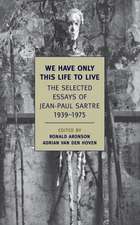
We Have Only This Life to Live
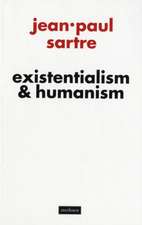
L' existentialisme est un humanisme
La Nausee
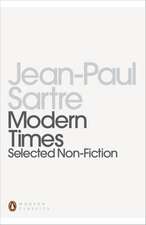
Modern Times
Existentialism and Humanism
Politics and Literature
The Colonizer and the Colonized
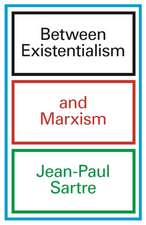
Between Existentialism and Marxism
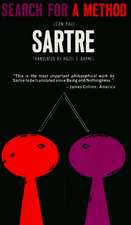
Search for a Method
The Family Idiot: Gustave Flaubert, 1821–1857, An Abridged Edition
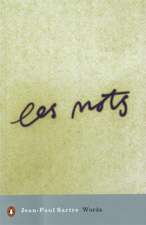
Words

Huis clos: Pièce en un acte
Les mains sales
Fragen der Methode
Der Ekel
Die Kindheit eines Chefs
Truth and Existence
Anti-Semite and Jew
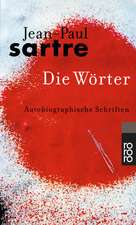
Die Wörter
Sartre über Sartre
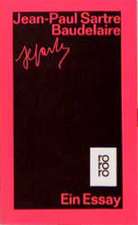
Baudelaire
Die Zeremonie des Abschieds und Gespräche mit Jean-Paul Sartre
Geschlossene Gesellschaft
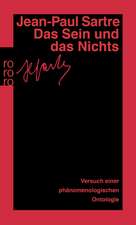
Das Sein und das Nichts
Die Troerinnen des Euripides
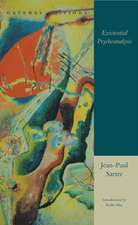
Existential Psychoanalysis
The Last Chance: Roads of Freedom IV
Reflex Sur La Quest Jui
Huis Clos
Critique of Dialectical Reason, Vol. 2
The Transcendence of the Ego
Baudelaire
Sketch for a Theory of the Emotions
The Imagination
The Imaginary: A Phenomenological Psychology of the Imagination
On Revolution
On Poetry
On Merleau-Ponty
On Modern Art
On Camus
Occasional Philosophical Writings
On Novels and Novelists
On American Fiction
Der Teufel und der liebe Gott
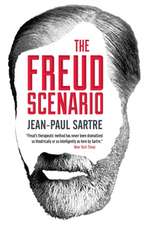
The Freud Scenario
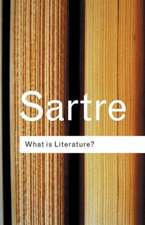
What is Literature?
Existentialism Is a Humanism
War Diaries
The Imaginary: A Phenomenological Psychology of the Imagination
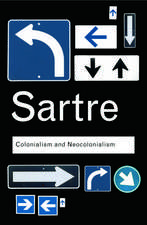
Colonialism and Neocolonialism
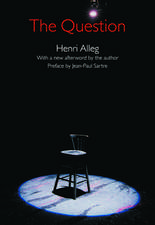
The Question
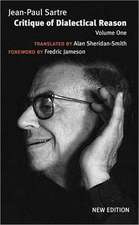
Critique of Dialectical Reason
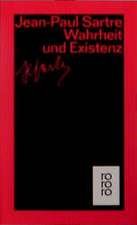
Wahrheit und Existenz
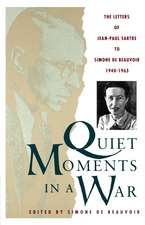
Quiet Moments in a War
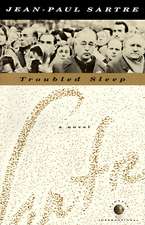
Troubled Sleep
Überlegungen zur Judenfrage
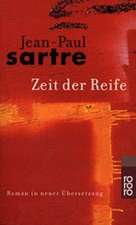
Zeit der Reife
Der Aufschub
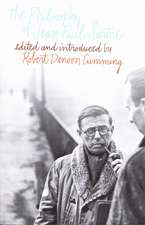
The Philosophy of Jean-Paul Sartre
Im Räderwerk
Tote ohne Begräbnis
Bariona oder Der Sohn des Donners / Die Fliegen
Was ist Literatur?
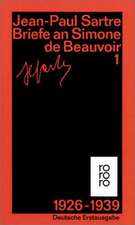
Briefe an Simone de Beauvoir
Die Suche nach dem Absoluten
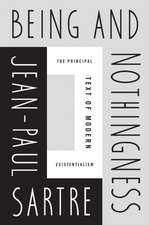
Being and Nothingness
Huis clos - Geschlossene Gesellschaft. Interpretationshilfe Deutsch - Französisch
Fiche de lecture L'Être et le Néant de Jean-Paul Sartre (Analyse philosophique de référence et résumé complet)
Fiche de lecture L'Existentialisme est un humanisme de Jean-Paul Sartre (analyse littéraire de référence et résumé complet)
Freud. Das Drehbuch
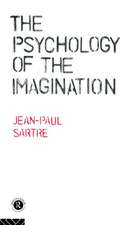
The Psychology of the Imagination
Paris unter der Besatzung
Schwarze und weiße Literatur
Der Pfahl im Fleisch
Der Existentialismus ist ein Humanismus und andere philosophische Essays 1943 - 1948
Gesammelte Werke. Autobiographische Schriften, Briefe, Tagebücher

Der Intellektuelle als Revolutionär
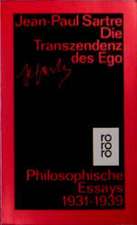
Die Transzendenz des Ego
Gesammelte Werke. 8 Bände. Schriften zur Literatur
Age de Raison
Wir sind alle Mörder
- 1
- 2