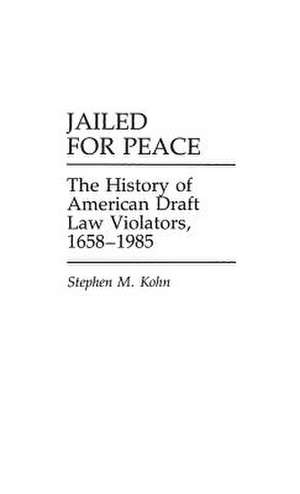
Jailed for Peace
Autor Stephen Kohnen Limba Engleză Hardback – 21 ian 1986
Preț: 383.35 lei
Preț vechi: 539.39 lei
-29%
Puncte Express: 575
Carte tipărită la comandă
Livrare economică 25 decembrie 26 - 08 ianuarie 27
Livrare prin curier în România Termenul estimat este afișat lângă disponibilitate.
Transport gratuit de la 400.00 lei Plată online sau ramburs, în funcție de opțiunile comenzii.
Retur gratuit în 14 zile Comandă securizată și suport în română.
Specificații
ISBN-13: 9780313245862
ISBN-10: 031324586X
Pagini: 184
Dimensiuni: 145 x 222 x 14 mm
Greutate: 0.31 kg
Editura: Bloomsbury Publishing
ISBN-10: 031324586X
Pagini: 184
Dimensiuni: 145 x 222 x 14 mm
Greutate: 0.31 kg
Editura: Bloomsbury Publishing
V-ar putea interesa
-
 Preț: 223.52 lei
-
 Access to History: The USA and Vietnam 1945-75 3rd EditionVivienne Sanders-25%Preț: 185.86 lei249.22 lei
-
 Anti-Intellectualism in American LifeRichard HofstadterPreț: 114.90 lei
-
 Great Issues in American History, Vol. IIRichard HofstadterPreț: 118.36 lei
-
 -23%Preț: 170.72 lei221.83 lei
-
 ResisterBruce DancisPreț: 180.50 lei
-
 The Peace Script: Framing Violence in US Anti-War DissentDominic J. MantheyPreț: 258.35 lei
-
 Waging PeaceMitchell K. HallPreț: 284.75 lei
-
 Veterans and AmericaMichael D Gambone-20%Preț: 198.57 lei246.69 lei
-
 Preț: 140.24 lei
-
 On Civil DisobedienceHannah Arendt-18%Preț: 69.85 lei85.58 lei
-
 About Face: Military Resisters Turn Against WarBuff Whitman-Bradley-32%Preț: 101.68 lei148.74 lei
-
 Preț: 101.12 lei
-
 Wide AwakeJon Grinspan-29%Preț: 138.21 lei194.25 lei
-
 The Bluecoats Vol. 17: The Draft RiotsRaoul Cauvin-18%Preț: 53.36 lei64.76 lei
-
 -19%Preț: 127.52 lei156.61 lei
-
 Is Peace Possible?Kathleen LonsdalePreț: 92.95 lei
-
 Twelve Angry MenReginald RosePreț: 48.64 lei
Descriere
In this first comprehensive treatment of the subject, Stephen Kohn presents an accessible, clearly written survey of draft resistance in America and its implications for constitutional democracy, domestic and foreign policy, social change, and the movement for world peace. The author explores the roots of the pacifist view and the first expressions of resistance that surfaced during the colonial period. He describes the incidence of draft resistance through the time of the Civil War and how it related to abolitionism. Following the modern conscientious objector through two world wars, Kohn comments on the view of pacifists during popular wars as little better than traitors and on their brutal treatment. Examining the growth of the movement during the Cold War, he addresses the major shift in public attitude that expanded the movement's base of popular support and swelled the ranks of resisters. Draft resistance was to have its greatest impact, however, during the Vietnam War and its aftermath, in influencing public feeling about the war, thwarting the Selective Service's induction efforts, and creating a climate of opinion that contributed to the government's decision to abandon the draft early in the 1970s.