Cantitate/Preț
Produs

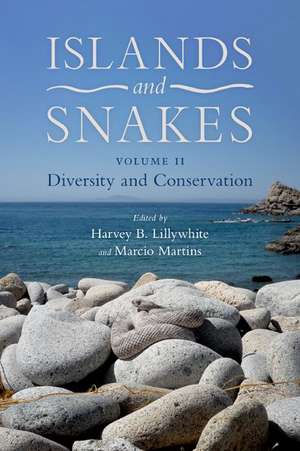
Islands and Snakes: Diversity and Conservation

Editat de Harvey B. Lillywhite, Marcio Martins
en Limba Engleză Hardback – 18 ian 2024

Până recent, literatura academică dedicată herpetologiei insulare a lăsat un gol semnificativ în ceea ce privește sinteza datelor despre populațiile de șerpi din arhipelaguri mai puțin studiate, concentrându-se adesea pe șopârle sau pe regiuni bine documentate precum Caraibele. Suntem de părere că Islands and Snakes reușește să completeze această lacună, oferind un volum de referință ce reunește 15 capitole riguroase despre biogeografia, fiziologia și conservarea șerpilor în medii izolate. Structura lucrării trece dincolo de simpla catalogare a speciilor, explorând răspunsurile evolutive la condițiile insulare și impactul devastator al speciilor invazive asupra sistemelor trofice.

Merită menționat că volumul aduce în prim-plan sisteme insulare vaste, precum Borneo și Noua Guinee, oferind o perspectivă rară asupra dinamicii populațiilor endemice. Cititorii familiarizați cu Island Biogeography de Robert J. Whittaker vor aprecia modul în care acest volum aplică teoriile clasice ale biogeografiei pe un grup taxonomic specific și adesea neînțeles. Dacă lucrarea lui Whittaker stabilește cadrul general al dinamicii speciilor, Islands and Snakes adâncește analiza prin studii de caz despre evoluția fenotipică și modelele de creștere legate de dietă în medii cu resurse limitate.

Poziționarea acestei lucrări în contextul operei editorului Harvey B. Lillywhite este esențială; dacă în How Snakes Work autorul explora mecanismele biologice fundamentale ale acestor reptile, volumul de față extinde acea cunoaștere fiziologică la nivelul ecosistemelor complexe. Putem afirma că rigoarea științifică este susținută de o prezentare grafică de excepție, incluzând hărți detaliate și sinteze de date noi care fac din această apariție de la Oxford University Press un instrument indispensabil pentru cercetarea în biologia conservării.

Citește tot Restrânge

Preț: 57046 lei

Preț vechi: 85135 lei
-33%

Puncte Express: 856

Carte disponibilă

Livrare economică 12-17 iunie


Specificații

ISBN-13: 9780197641521
ISBN-10: 0197641520
Pagini: 352
Dimensiuni: 226 x 163 x 36 mm
Greutate: 0.82 kg
Editura: Oxford University Press
Colecția OUP USA
Locul publicării:New York, United States

De ce să citești această carte

Recomandăm această carte cercetătorilor și studenților de la facultățile de biologie care doresc să înțeleagă mecanismele evolutive în spații izolate. Cititorul câștigă acces la date de ultimă oră despre conservarea speciilor endemice și impactul speciilor invazive. Este o resursă rară ce combină rigoarea academică cu o ilustrare vizuală de înaltă calitate, oferind o bază solidă pentru strategii de protecție a biodiversității în puncte critice ale globului.


Despre autor

Harvey B. Lillywhite este un distins profesor de biologie la Universitatea din Florida, recunoscut la nivel mondial pentru expertiza sa în fiziologia și ecologia reptilelor. Activitatea sa de cercetare s-a concentrat pe modul în care șerpii se adaptează la medii extreme, o temă centrală și în lucrarea sa anterioară, How Snakes Work. Alături de Marcio Martins, specialist în biodiversitatea neotropicală, Lillywhite coordonează acest volum sub egida Oxford University Press, aducând împreună autorități internaționale pentru a documenta sisteme insulare fragile și specii de șerpi anterior puțin cunoscute științei.


Descriere

In this follow-up to Islands and Snakes, this book contains 15 chapters describing diversity and conservation of snakes on islands, with foci on selected island systems not previously summarized. Attendant topics include biogeography, plasticity and evolutionary responses to insular conditions, invasive species, importance and collapse of trophic systems, threats to insular snake populations, and strategies of conservation to save them. Chapters include descriptions of snake faunas on larger islands such as Borneo and New Guinea; reproductive biology of insular snakes; phenotypic evolution; physiology and growth patterns related to diet and environment; patterns of endemism; taxonomy of snake radiations; and history of invasions by snakes on islands. The final chapter presents a discussion of prospects and overview of conservation of snakes on islands. Chapters are contributed by international authorities on respective island-and-snake systems. The latter include some islands or archipelagos that are young, or of high importance, or support snake populations that were previously not well known. The content includes colourful photographs, informative illustrations, and in some cases synthesis of new data relevant to the importance of islands for understanding the ecological underpinnings and genesis of biodiversity. Each chapter is appropriately referenced with citations to scientific literature, and where useful, footnotes, tables and graphic information supporting the narrative of the respective subject matter. The overall presentation is intended to provide readers with an enhanced appreciation for islands and the spectacular snakes that might live there.

Recenzii

I began reading this book with a somewhat cynical eye. Snakes on islands are certainly interesting, especially to an evolutionary ecologist like myself, but can we really argue that they are especially useful model systems to explore general issues in ecology and evolution? After all, snakes are difficult animals to work with, and islands are difficult places to access. Is there some- thing about island life and its novel opportunities and threats that induces spectacular and consistent shifts in snake biology? The clear answer, from this well-produced volume, is a resounding yes.

Notă biografică

Dr. Harvey B. Lillywhite is Emeritus Professor of Biology at the University of Florida. He is past Director of the Seahorse Key Marine Laboratory and has held international visiting positions at six universities, NASA-Ames Research Laboratory, and Scripps Institution of Oceanography. He has published 4 books and numerous articles related to biology of snakes, with emphasis on understanding adaptation of structure and function relating to ecology, behavior and evolution. Dr. Lillywhite has conducted field research in Costa Rica, Australia, India, Fiji, Philippines, Thailand, Taiwan, and other parts of Asia. He was listed in the top 2% of scientists worldwide based on standardized citation indicators.Dr. Marcio Martins is a Full Professor of Ecology at the University of São Paulo, Brazil. He has published 4 books and numerous scientific articles on the natural history, ecology, and conservation of frogs and snakes, including several studies on island snakes from Brazil and Mexico. He has been participating actively in the production of red lists of amphibians and reptiles (both in Brazil and for the IUCN). He was the president of the Brazilian Society of Herpetology (BSH) from 2011 to 2019 and is now a member of the IUCN Viper Specialist Group.