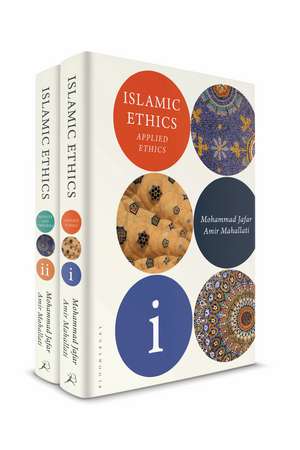
Cuprins
Volume 1: Sources and Theories Part I: Introduction 1. Islamic Ethics in the Global Village, Mohammad Jafar Amir Mahallati (Oberlin College, USA) 2. An Introduction to the Prime Sources of Islamic Ethics: A Brief Literature Review based on a Regional Case Study, Mohammad Barekat (Imam Asr Seminary in Shiraz, Iran) Part II: Pre-Islamic Sources 3. The Zoroastrian Good Ethics: An Iranian Legacy for Islamic Thought, Jamsheed Choksy (Indiana University, USA) 4. From Greek Sources to Islamic Ethics, Taneli Kukkonen (New York University, Abu Dhabi, UAE) 5. From "Priestly Kingdom" to "Kingdom of God" to Umma: Commonalities in Jewish, Christian, and Islamic Thought in the Development of Social Ethics, Rubén Rosario Rodríguez (St. Louis University, USA) Part III: Ethical Theories and Schools A. Theological Ethics 6. Islamic Ethics: A Survey of Major Approaches, Muhtaroglu Nazif, (Mimar Sinan Güzel Sanatlar University, Turkey) 7. The Objectivist Ethics of Justicists: The Mu?tazilis and the Limits of Reason, Hussein Abdulsatar (Notre Dame University, USA) 8. Free will and Moral Responsibility according to Muslim Philosophers, Zahra Khazaei (University of Qom, Iran) B. Philosophical Ethics 9. Ethics in al-Farabi, Catarina Belo (The American University in Cairo, Egypt) 10. Ibn Sina Virtue Ethics, Hossein Atrak (Zanjan University, Iran) 11. Miskawayh, Adab and the Belles-Lettres Tradition, John Radez (Columbia Southern University, USA) 12. Virtue Ethics according to Muslim Philosophers, Zahra Khazaei (University of Qom, Iran) 13. Transcending the Ordinary Self: Mulla Sadra on the Ethics of Human Flourishing, Muhammad Faruque (The University of Cincinnati, USA) C. Qur'anic Ethics 14. Ethics in the Noble Qur'an: Descriptive Ethics and Metaethics, Mohsen Javadi (University of Qom, Iran) 15. Justice in the Qur'an, Ramon Harvey (Ebrahim College/Cambridge Muslim College, UK) 16. The Ethical Boundaries of Gender Relations in Medieval Quranic Exegesis, Hadia Mubarak (Queens University of Charlotte, USA) D. Religious Ethics 17. The Virtue Ethics of al-Raghib al-I?fahani, Yasien Mohamed (University of the Western Cape, South Africa) 18. Divine Command Theory: Al-Ghazali's Version, Arash Naraghi (Moravian College, USA) E. Mystical and Synthetic Ethics 19. The Ethics of Manifestation (akhlaq-i tajalli) in the School of Ibn ?Arabi, Seyyed Shahabeddin Mesbahi (Shiraz Majd Institute, Iran) 20. Islamic Eudaimonism, Mohsen Javadi (University of Qom, Iran) F. Muslim Modernist Ethics 21. Surely in Their Stories is an Instruction for those who Posess Intellect, Rizwan Zamir (Davidson College, USA22. Approaches to Islamic Law and Ethics: Theory and Practice, Rami Koujah, (Princeton University, USA)23. Progressive Islam's Approach to Ethical Theories and Contemporary Ethical Dilemmas, Adis Duderija (Griffith University, Australia)24. Tusi's Nasirean Ethics versus Soroush's Ethics of gods: An Assessement from a Critical Rationalist, Ali Paya, (The Islamic College (affiliated with Middlesex University), UK, and National Research Institute for Science Policy, Iran)25. Virtue Ethics for Global Justice: A View from S.M. Naquib al-Attas, Dinar Kania (Darussalam University, Indonesia) and Malki Ahmad Nasir (Bandung Islamic University, Indonesia)26. Taha Abderrahmane's Trusteeship Ethics: Towards the Renewal of Man, Mohammed Hashas, (Fscire-La Pira Center for Islamic History and Doctrines, Palermo; Luiss University of Rome, Italy) 27. A Constructivist Islamic Metaethics Muhammad Legenhausen (K.R. Institute, Qom, Iran) Part IV: Classical Literature 28. Noble Characters (Makarim al-akhlaq) in the Mirror of Role Ethics translation from Arabic with annotations, Mohammad Sabbaqi, (Independent Scholar, USA) 29. Does Worshiping God Have Ethical Implications? Worship, Piety, and Virtue in an Islamic Context, Rizwan Zamir (Davidson College, USA) Volume 2: Applied Ethics A. Educational and Pedagogy 1. Islamic Learning Etiquettes with and without Adab: Mining al-Kulayni's 'Book of Knowledge, Ali Naji Moughania (Columbia University, USA 2. Practical Wisdom in the Viewpoints of the Two Naraqi Scholars, Roham Sharaf (Zanjan University, Iran) 3. A Manual for Living Together: The "Adab Rule" of Maulana Ashraf 'Ali Thanawi, Rizwan Zamir (Davidson College, USA) 4. Educational and Pedagogical Approaches to the Qur'an, Mohsen Javad, (Qom University, Qom, Iran)5. Moral Education in Islamic Mysticism, Babak Shamshiri (Shiraz University, Shiraz, Iran) and Amin Izadpanah (Shiraz University, Shiraz, Iran) B. Human Rights and Responsibilities: Gender, Refugees, Environment, and Virtual Space6. Mariya the Copt, Temporary Marriage and the Case Against Concubinage, Nebil Husayn, (University of Miami, USA)7. Islamic Ethics for Refugees: A Case for Palestinians, Manar Faraj (Friedrich Schiller University, Germany)8. Human Responsibility for the Environment: Overlapping Consensus between Religious and Secular Ethics, Abu'lqasim Fanaei, S. Behrouzi and S. Meghiee, (Mufid and al-Mustafa Universities, Iran)9. An Introduction to Moral Requirements and Islamic Etiquette for Cyberspace and Social Media, Hamid Rezania Shirazi, (Independent Scholar, Iran) C. Politics, War, Violence and Peace 10. Islamic Ethics of the Conduct of War, Fajri Matahati Muhammadin (Universitas Gadjah Mada, Indonesia)11. Islamic Ethics in the Use of Drones in Armed Conflicts, Mohd Hisham Mohd Kamal, (International Islamic University of Malaysia, Malaysia) 12. The Myth of Muslim Aggression: In Defense of Political Islam, Shabbir Akhtar, (University of Oxford, UK)13. Ethical Meaning of Martyrdom in Islam in Relation to Christianity and Judaism, Habibollah Babaei and Emmet Jones, (Trinity College, Ireland) D. Medical Health, Care Ethics and Economy 14. Medical Ethics in Islam: An Analytical View of the Moral Codes of Ethics in Medical Practice, Muhammad Hadi Tal'ati (Shiraz Majd Institute, Iran) 15. Islamic Ethics in the Face of Infectious Pandemics, with an Emphasis on the COVID-19 Outbreak, Ali Enjoo, Fatemeh Bahmani and Mohammad Hossein B. Jahromi, (Shahid Beheshti University of Medical Sciences, Iran)16. Feminist Care Ethics from an Islamic Stance, Ebrahim Azadegan (Sharif University of Technology, Iran), Zahra Zargar, and Saeedeh Babaii (Institute for Humanities and Cultural Sciences, Iran)17. Ethics of Almsgiving (zakat) in Islam, Ahmad E. Taha (Pepperdine University, USA)18. What Neoliberal Economics Can Learn from Islam, Waleed El-Ansary, (Xavier University, Cincinnati, USA) E. Friendship, Forgiveness, Gratitude, Chivalry, Backbiting, and Shame 19. Friendship in the Ethical Codes of Abu ?ayyan Taw?idi and Raghib al-I?fahani, Morteza Rahiminezhad (Majd Institute of Shiraz, Iran) 20. Forgiveness in the Qur'an and Islamic Tradition, Mohammd Jafar Amir Mahallati (Oberlin College, USA) 21. A Semiology of Thankfulness and its Referents in the Holy Qur'an and Traditions (?adiths), Mohammad Hadi Tal'ati (Shiraz Majd Institute, Iran) 22. Futuwa (Java¯nmardi) in Islamic Ethics, Morteza Rahiminejad (Majd Institute, Shiraz, Iran)23. Types of Moral Religiosity: An Introduction to Ethics of Shame in Islam, Hossein Dabbagh (University of Oxford, UK)24. An Analytical Study of the Nature of Backbiting in Islamic Ethics, Hossein Atrak, (Zanjan University, Iran)F. Arts, Satire, and Joy 25., From Sacred to Secular: Islamic Art and Ethical Considerations, Amir H. Zekrgoo (University of Melbourne, Australia) and Mandana Barkeshli (UCSI University, Malaysia)26. Ethics of Humour and Satire in the Islamic Tradition, Abdulrasoul Hadian Shirazi and Sarah Bordbar (The College of the Quranic Studies, Iran)27. Joy is the Prerequisite for a Good Faith: An Ethical View on Joyfulness and Felicity in the Qur'an and Hadiths, Morteza Rahiminejad, (Shiraz Majd Institute, Iran)