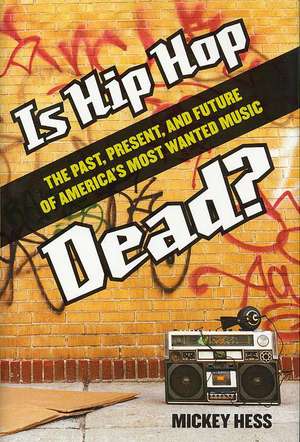
Is Hip Hop Dead?: The Past, Present, and Future of America's Most Wanted Music
Autor Mickey Hessen Limba Engleză Hardback – 30 aug 2007
Apărut într-un moment de efervescență academică dedicată culturii urbane, volumul Is Hip Hop Dead? propune o analiză riguroasă a unui paradox central: de ce un gen muzical care se declară constant „pe moarte” este mai viu ca niciodată? Observăm cum Mickey Hess își construiește argumentația pornind de la un moment de cotitură din 2006, marcat de albumul omonim al lui Nas, pentru a investiga nostalgia după o epocă de aur mitică, neatinsă de interesele comerciale. Textul ne invită să explorăm nu doar versuri, ci mecanismele prin care artiștii își apără autenticitatea în fața presiunilor exercitate de marile case de discuri și de cenzura mediatică.
Simțim în fiecare capitol o abordare experiențială a muzicii; autorul nu tratează subiectul de la o distanță clinică, ci integrează vocea străzii și filosofia succesului imediat care respinge prudența tradițională americană. Complementar lucrării The Values of Independent Hip-Hop in the Post-Golden Era de Christopher Vito, care se concentrează pe ideologiile artiștilor independenți din aceeași perioadă, volumul lui Hess oferă o perspectivă mai largă, integrând dialogul dintre mainstream și underground ca motor al supraviețuirii genului. Recomandăm această lectură pentru modul în care reușește să traducă „războiul cuvintelor” în concepte sociologice clare, fără a pierde din vedere ritmul și energia care definesc hip-hop-ul.
Structura narativă a cărții urmărește evoluția industriei din ultimii 20 de ani, oferind un cadru teoretic solid pentru înțelegerea modului în care rasa, clasa socială și criminalitatea sunt folosite ca instrumente de branding sau ca mărci ale identității reale. Este o incursiune documentată în inima unei culturi care se reinventează prin autocritică și conflict.
Preț: 295.09 lei
Preț vechi: 449.13 lei
-34%
Carte tipărită la comandă
Livrare economică 08-22 iunie
Specificații
ISBN-10: 0275994619
Pagini: 208
Dimensiuni: 156 x 235 x 22 mm
Greutate: 0.45 kg
Editura: Bloomsbury Publishing
Colecția Praeger
Locul publicării:New York, United States
V-ar putea interesa
-
 Dirty Version, TheBuddha MonkPreț: 70.49 lei
 -
 BMFMara ShalhoupPreț: 104.61 lei
 -
 Rap and Religion: Understanding the Gangsta's GodEbony A. Utley-34%Preț: 296.30 lei449.76 lei
 -
 Preț: 175.01 lei
 -
 Divorce Me, Darling! - A Musical PlaySandy WilsonPreț: 102.61 lei
 -
 Beowulf - A Rock MusicalKen PickeringPreț: 101.31 lei
 -
 The World of DJs and the Turntable CultureTodd Souvignier-12%Preț: 135.78 lei154.25 lei
 -
 Enter the Wu-TangMR Alan Charles PagePreț: 98.06 lei
 -
 Black, Blanc, Beur: Rap Music and Hip-Hop Culture in the Francophone WorldAlain-Philippe Durand-20%Preț: 313.15 lei393.24 lei
 -
 Shady Bizzness' Life as Eminem's Bodyguard in an Industry of Paper GangstersByron Bernard WilliamsPreț: 258.96 lei
 -
 Jay Z and the Roc-A-Fella Records DynastyJake BrownPreț: 108.06 lei
 -
 The BeatTips ManualAmir SaidPreț: 277.26 lei
 -
 Preț: 337.71 lei
 -
 Preț: 250.34 lei
 -
 Preț: 92.33 lei
 -
 -18%Preț: 315.46 lei386.89 lei
 -
 -31%Preț: 613.35 lei891.11 lei
 -
 The Top 50 Greatest Hip-Hop Samples in Hip-Hop HistoryRashad Skyla MitchellPreț: 37.90 lei
 -
 My 100 Favorite Hip Hop LyricsE. Z. BlackmanPreț: 42.67 lei
 -
 Rebel for the Hell of It: The Life of Tupac ShakurS.H. Fernando Jr.Preț: 117.47 lei
 -
 The Prosperous Hip Hop ProducerKing, CurtissPreț: 332.98 lei
 -
 The Search Continues ... the JourneyKevin DownswellPreț: 125.63 lei
De ce să citești această carte
Recomandăm această carte oricărui pasionat de muzică și sociologie care dorește să înțeleagă dedesubturile industriei rap. Cititorul câștigă o perspectivă critică asupra conceptului de „autenticitate” și învață cum artiștii navighează între integritatea artistică și succesul comercial. Este un instrument esențial pentru a descifra mesajele ascunse dincolo de beat-uri, oferind argumente solide despre viabilitatea culturală a hip-hop-ului într-o lume dominată de corporații.
Despre autor
Mickey Hess este profesor de limba engleză la Universitatea Rider, unde coordonează cursuri de scriere creativă și cultură hip-hop americană. Recunoscut ca o autoritate în domeniu, el a editat lucrări de referință precum „Icons of Hip Hop” și „Hip Hop in America: A Regional Guide”. Expertiza sa academică, împletită cu o înțelegere profundă a naratologiei urbane, îi permite să analizeze muzica rap nu doar ca fenomen de divertisment, ci ca o formă complexă de literatură contemporană și rezistență culturală.
Descriere
Proclamations of hip hop's death have flooded the airwaves. The issue may have reached its boiling point in Nas's 2006 album Hip Hop is Dead. Nas's album is driven by nostalgia for a mythically pure moment in hip hop's history, when the music was motivated by artistic passion, instead of base commercialism. In the course of this same album, however, Nas himself brags about making money for his particular record label. These and similar contradictions are emblematic of the complex forces underlying the dialogue that keeps hip hop a vital element of our culture. Is Hip Hop Dead? seeks to illuminate the origins of hip hop nostalgia and examine how artists maintain control of their music and culture in the face of corporate record companies, government censorship, and the standardization of the rap image.
Many hip hop artists, both mainstream and underground, use their lyrics to engage in a complex dialogue about rhyme skills versus record sales, and commercialism versus culture. This ongoing dialogue invigorates hip hop and provides a common ground upon which we can reconsider many of the developments in the industry over the past 20 years. Building from black traditions that value knowledge gained from personal experience, rappers emphasize the importance of street knowledge and its role in forging a career in the music business. Lyrics adopt models of the self-made man narrative, yet reject the trajectories of white Americans like Benjamin Franklin who espoused values of prudence, diligence, and delayed gratification. Hip hop's narratives instead promote a more immediately viable gratification through crime and extend this criminal mentality to their work in the music business. Through the lens of hip hop, and the threats to hip hop culture, author Mickey Hess is able to confront a range of important issues, including race, class, criminality, authenticity, the media, and personal identity.
Recenzii
Any college-level library strong in contemporary music culture needs Is Hip Hop Dead?, sure to be a popular library lead.
When rapper Nas released his 2006 album Hip Hop is Dead, he became yet one more voice warning that excessive commercialism had killed off the vitality of the music. Hess (English, Rider U.) explores the relative validity of these fears through analysis of issues of authenticity as expressed in the lyrics of rap artists. Over the course of the discussion, he discusses how the artists represent their career paths and their roles in the music industry, complications of hip hop's basis in autobiography in the lyrical personas of such artists as Digital Underground and MF DOOM, the ways white artists such as an Eminem frame their autobiographies within the model of hip hop authenticity, and the role of parody in confronting racial stereotypes related to social privilege.