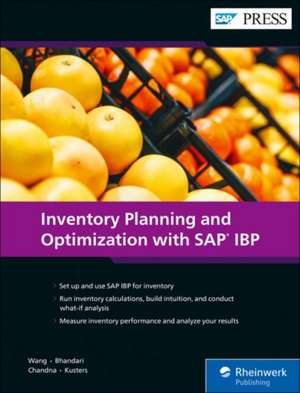
Inventory Planning and Optimization with SAP IBP
Autor Lei Wang, Sanchit Chandna, Jeroen Kusters, Atul Bhandarien Limba Engleză Hardback – 23 mai 2019
Preț: 802.69 lei
Preț vechi: 1003.35 lei
-20%
Puncte Express: 1204
Carte indisponibilă temporar
Doresc să fiu notificat când acest titlu va fi disponibil:
Se trimite...
Specificații
ISBN-13: 9781493217922
ISBN-10: 1493217925
Pagini: 419
Dimensiuni: 184 x 236 x 33 mm
Greutate: 0.93 kg
Ediția:Nouă
Editura: Rheinwerk Publishing Inc.
ISBN-10: 1493217925
Pagini: 419
Dimensiuni: 184 x 236 x 33 mm
Greutate: 0.93 kg
Ediția:Nouă
Editura: Rheinwerk Publishing Inc.
Notă biografică
Lei Wang is the director of product management, supply chain, at SAP and the product owner for the underlying supply chain algorithm library beneath SAP Integrated Business Planning for inventory and demand. He has more than a decade of experience in the research and development of enterprise inventory and service optimization solutions. He has also worked with expert users, planners, supply chain analysts, and consultants on various SAP Integrated Business Planning for inventory implementations. Lei Wang has a Ph.D. in industrial and systems engineering from the University of Minnesota.
Cuprins
... Preface ... 15
... Who This Book Is For ... 15
... How This Book Is Organized ... 15
... Acknowledgements ... 18
... Conclusion ... 19
1 ... Introduction to Inventory Planning and Optimization ... 21
1.1 ... What Is Inventory? ... 22
1.2 ... Where Is Inventory Held? ... 28
1.3 ... Building an Inventory Management Approach ... 29
1.4 ... Objectives of Inventory Planning and Optimization ... 34
1.5 ... Role of Technology in Inventory Planning and Optimization ... 36
1.6 ... Introducing SAP Integrated Business Planning ... 40
1.7 ... Summary ... 56
2 ... Understanding Inventory Variables ... 57
2.1 ... Primary Factors that Drive Inventory ... 57
2.2 ... Breakdown of Variability Drivers ... 75
2.3 ... Additional Factors that Influence Inventory ... 92
2.4 ... Summary ... 104
3 ... Configuring SAP IBP for Inventory ... 105
3.1 ... Architecture ... 105
3.2 ... Building Blocks ... 106
3.3 ... Planning Area Setup Using Predelivered Content ... 134
3.4 ... Versions ... 139
3.5 ... Scenarios ... 142
3.6 ... Planning Operators ... 143
3.7 ... Reason Codes ... 146
3.8 ... Data Integration ... 148
3.9 ... Planning Views ... 148
3.10 ... Dashboard and Analytics ... 153
3.11 ... Summary ... 156
4 ... Modeling a Supply Network ... 157
4.1 ... Introduction to Supply Networks ... 157
4.2 ... Supply Network Complexity ... 159
4.3 ... Elements of a Supply Network ... 164
4.4 ... Visualizing Supply Networks in SAP IBP ... 181
4.5 ... Summary ... 184
5 ... Optimizing Inventory in SAP IBP ... 185
5.1 ... What Is Network Inventory Optimization in SAP IBP? ... 185
5.2 ... Building Blocks for Inventory Calculation ... 187
5.3 ... Network Multiechelon Inventory Calculation ... 201
5.4 ... Summary ... 230
6 ... Structuring Inventory ... 231
6.1 ... Types of Inventory ... 231
6.2 ... Further Decomposition of Safety Stock ... 237
6.3 ... Calculating Inventory Components ... 241
6.4 ... Summary ... 251
7 ... Designing Your Inventory Planning Process ... 253
7.1 ... Centralized and Decentralized Inventory Planning Teams ... 253
7.2 ... Frequency of the Inventory Planning Cycle ... 255
7.3 ... From Reactive to Proactive Planner Tasks ... 257
7.4 ... Inventory Planning in Sales and Operations Planning ... 258
7.5 ... Sequence of Planning Tasks ... 260
7.6 ... Segmentation ... 270
7.7 ... Role of the Inventory Planner ... 272
7.8 ... Summary ... 273
8 ... Measuring Inventory Performance ... 275
8.1 ... Example Supply Chain for Inventory Planning ... 275
8.2 ... Key Performance Indicators for Inventory Optimization ... 279
8.3 ... Validate Input Quality ... 281
8.4 ... Review Inventory Plan ... 287
8.5 ... Assess Inventory Drivers ... 289
8.6 ... Finalize Inventory Plan ... 294
8.7 ... Create Custom Inventory Alerts ... 299
8.8 ... Summary ... 310
9 ... Building Intuition and Conducting What-If Analysis ... 311
9.1 ... What-If Analysis with Versions and Scenarios ... 312
9.2 ... Perform What-If Analysis ... 313
9.3 ... Simulating Situations ... 319
9.4 ... Intuition Building ... 332
9.5 ... Strategic What-If Analysis ... 334
9.6 ... Tactical What-If Analysis ... 337
9.7 ... Summary ... 338
10 ... Integrating SAP IBP for Inventory ... 339
10.1 ... Data Integration Technologies ... 339
10.2 ... Manual Data Integration Using the Web UI ... 342
10.3 ... Integration using SAP Cloud Platform Integration for Data Services ... 350
10.4 ... With SAP IBP Applications in the Unified Planning Area ... 361
10.5 ... With SAP ERP and SAP S/4HANA ... 362
10.6 ... With SAP APO ... 365
10.7 ... With Non-SAP Systems ... 366
10.8 ... Exporting Data Using OData Services ... 367
10.9 ... Summary ... 367
11 ... Planning Your Implementation ... 369
11.1 ... Cloud Software Considerations ... 369
11.2 ... Manual versus Automated Workflow ... 374
11.3 ... Agile versus Waterfall Implementation Methodology ... 382
11.4 ... Roles and Responsibilities ... 389
11.5 ... Summary ... 391
12 ... Case Studies ... 393
12.1 ... Case Study 1: Manufacturing Industry ... 393
12.2 ... Case Study 2: Consumer Goods ... 396
12.3 ... Case Study 3: High-Tech Company ... 399
12.4 ... Case Study 4: Consumer Products ... 402
12.5 ... Summary ... 406
A ... The Authors ... 407
... Index ... 409
... Who This Book Is For ... 15
... How This Book Is Organized ... 15
... Acknowledgements ... 18
... Conclusion ... 19
1 ... Introduction to Inventory Planning and Optimization ... 21
1.1 ... What Is Inventory? ... 22
1.2 ... Where Is Inventory Held? ... 28
1.3 ... Building an Inventory Management Approach ... 29
1.4 ... Objectives of Inventory Planning and Optimization ... 34
1.5 ... Role of Technology in Inventory Planning and Optimization ... 36
1.6 ... Introducing SAP Integrated Business Planning ... 40
1.7 ... Summary ... 56
2 ... Understanding Inventory Variables ... 57
2.1 ... Primary Factors that Drive Inventory ... 57
2.2 ... Breakdown of Variability Drivers ... 75
2.3 ... Additional Factors that Influence Inventory ... 92
2.4 ... Summary ... 104
3 ... Configuring SAP IBP for Inventory ... 105
3.1 ... Architecture ... 105
3.2 ... Building Blocks ... 106
3.3 ... Planning Area Setup Using Predelivered Content ... 134
3.4 ... Versions ... 139
3.5 ... Scenarios ... 142
3.6 ... Planning Operators ... 143
3.7 ... Reason Codes ... 146
3.8 ... Data Integration ... 148
3.9 ... Planning Views ... 148
3.10 ... Dashboard and Analytics ... 153
3.11 ... Summary ... 156
4 ... Modeling a Supply Network ... 157
4.1 ... Introduction to Supply Networks ... 157
4.2 ... Supply Network Complexity ... 159
4.3 ... Elements of a Supply Network ... 164
4.4 ... Visualizing Supply Networks in SAP IBP ... 181
4.5 ... Summary ... 184
5 ... Optimizing Inventory in SAP IBP ... 185
5.1 ... What Is Network Inventory Optimization in SAP IBP? ... 185
5.2 ... Building Blocks for Inventory Calculation ... 187
5.3 ... Network Multiechelon Inventory Calculation ... 201
5.4 ... Summary ... 230
6 ... Structuring Inventory ... 231
6.1 ... Types of Inventory ... 231
6.2 ... Further Decomposition of Safety Stock ... 237
6.3 ... Calculating Inventory Components ... 241
6.4 ... Summary ... 251
7 ... Designing Your Inventory Planning Process ... 253
7.1 ... Centralized and Decentralized Inventory Planning Teams ... 253
7.2 ... Frequency of the Inventory Planning Cycle ... 255
7.3 ... From Reactive to Proactive Planner Tasks ... 257
7.4 ... Inventory Planning in Sales and Operations Planning ... 258
7.5 ... Sequence of Planning Tasks ... 260
7.6 ... Segmentation ... 270
7.7 ... Role of the Inventory Planner ... 272
7.8 ... Summary ... 273
8 ... Measuring Inventory Performance ... 275
8.1 ... Example Supply Chain for Inventory Planning ... 275
8.2 ... Key Performance Indicators for Inventory Optimization ... 279
8.3 ... Validate Input Quality ... 281
8.4 ... Review Inventory Plan ... 287
8.5 ... Assess Inventory Drivers ... 289
8.6 ... Finalize Inventory Plan ... 294
8.7 ... Create Custom Inventory Alerts ... 299
8.8 ... Summary ... 310
9 ... Building Intuition and Conducting What-If Analysis ... 311
9.1 ... What-If Analysis with Versions and Scenarios ... 312
9.2 ... Perform What-If Analysis ... 313
9.3 ... Simulating Situations ... 319
9.4 ... Intuition Building ... 332
9.5 ... Strategic What-If Analysis ... 334
9.6 ... Tactical What-If Analysis ... 337
9.7 ... Summary ... 338
10 ... Integrating SAP IBP for Inventory ... 339
10.1 ... Data Integration Technologies ... 339
10.2 ... Manual Data Integration Using the Web UI ... 342
10.3 ... Integration using SAP Cloud Platform Integration for Data Services ... 350
10.4 ... With SAP IBP Applications in the Unified Planning Area ... 361
10.5 ... With SAP ERP and SAP S/4HANA ... 362
10.6 ... With SAP APO ... 365
10.7 ... With Non-SAP Systems ... 366
10.8 ... Exporting Data Using OData Services ... 367
10.9 ... Summary ... 367
11 ... Planning Your Implementation ... 369
11.1 ... Cloud Software Considerations ... 369
11.2 ... Manual versus Automated Workflow ... 374
11.3 ... Agile versus Waterfall Implementation Methodology ... 382
11.4 ... Roles and Responsibilities ... 389
11.5 ... Summary ... 391
12 ... Case Studies ... 393
12.1 ... Case Study 1: Manufacturing Industry ... 393
12.2 ... Case Study 2: Consumer Goods ... 396
12.3 ... Case Study 3: High-Tech Company ... 399
12.4 ... Case Study 4: Consumer Products ... 402
12.5 ... Summary ... 406
A ... The Authors ... 407
... Index ... 409