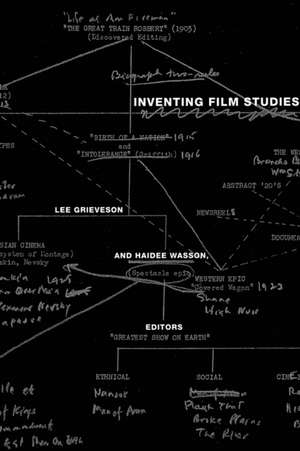
Inventing Film Studies
Editat de Lee Grieveson, Haidee Wassonen Limba Engleză Paperback – 24 noi 2008
În peisajul academic contemporan, Inventing Film Studies se distinge ca un demers arheologic fascinant asupra modului în care am învățat să privim și să teoretizăm imaginea în mișcare. Ne-a atras atenția modul în care editorii Lee Grieveson și Haidee Wasson reușesc să demonteze mitul conform căruia studiile de film au apărut brusc în anii '60 ca reacție la mișcările studențești. În schimb, suntem invitați să explorăm o textură mult mai densă și mai veche, unde agențiile guvernamentale, muzeele și inovațiile tehnologice au modelat disciplina încă de la începutul secolului XX. Experiența lecturii este una multisenzorială, completată de cele 31 de ilustrații care ancorează dezbaterea teoretică în realitatea materială a epocii. Ca și Film, In Theory, acest volum pune în valoare istoria instituțională a criticii și educației cinematografice, dar cu un accent pe forțele globale și politice care au transformat filmul într-un instrument de construcție națională. În timp ce alte lucrări se concentrează strict pe estetică, aici simțim greutatea arhivelor și a deciziilor luate în consiliile de administrație ale marilor institute de film. Merită menționat că abordarea lui Lee Grieveson continuă preocupările sale din Empire and Film, unde analiza formele de producție și distribuție în contexte coloniale. Aici, el extinde această viziune asupra modului în care universitățile și organizațiile profesionale au legitimat cinema-ul ca obiect de studiu riguros. Ritmul textului este dens, intelectual, dar extrem de revelator pentru oricine dorește să înțeleagă nu doar ce vedem pe ecran, ci și mecanismele invizibile care au decis că filmul merită păstrat, studiat și predat.
Preț: 294.90 lei
Carte tipărită la comandă
Livrare economică 07-21 decembrie
Specificații
ISBN-10: 082234307X
Pagini: 480
Ilustrații: 31 illustrations
Dimensiuni: 156 x 231 x 37 mm
Greutate: 0.67 kg
Editura: Duke University Press
V-ar putea interesa
-
 Preț: 291.67 lei
 -
 Preț: 257.19 lei
 -
 Cinema and the Wealth of NationsLee GrievesonPreț: 379.56 lei
 -
 Preț: 228.95 lei
 -
 Skin ShowsJack HalberstamPreț: 164.82 lei
 -
 The Third EyeFatimah Tobing RonyPreț: 264.49 lei
 -
 Bold! Daring! Shocking! True!Eric SchaeferPreț: 211.69 lei
 -
 Preț: 261.23 lei
 -
 Virtual VoyagesJeffrey RuoffPreț: 252.97 lei
 -
 Cinema at the End of EmpirePriya JaikumarPreț: 253.89 lei
 -
 The Urban GenerationZhen ZhangPreț: 303.64 lei
 -
 Useful CinemaCharles R AclandPreț: 304.48 lei
 -
 Culture WarsDavid HamiltonPreț: 137.03 lei
 -
 Nosferatu. La Bestia de Murnau.Biel PolPreț: 57.43 lei
 -
 L'Art ContemporainRobert MoranPreț: 63.69 lei
 -
 The Development of Japanese CinemaTafero, Arthur H.Preț: 67.70 lei
 -
 The Best of Knight at the Movies 2004-2014MR Richard Knight JrPreț: 103.82 lei
 -
 Kitsch & BeautySelected Conference PresentorsPreț: 338.66 lei
 -
 The Many Lives and Deaths of James BondNader ElhefnawyPreț: 83.94 lei
 -
 Adventures in the Scream TradeLisa MortonPreț: 70.43 lei
 -
 The Great Animated MoviesMark McPhersonPreț: 95.76 lei
 -
 The Film Noir JigsawAlain SilverPreț: 106.69 lei
 -
 -15%Preț: 193.25 lei228.19 lei
De ce să citești această carte
Această carte este esențială pentru studenții și cercetătorii care doresc să înțeleagă rădăcinile profunde ale disciplinei lor. Cititorul câștigă o perspectivă istorică rară asupra modului în care instituții precum MoMA sau BFI au dictat canonul cinematografic. Este o recomandare solidă pentru cei care au apreciat The SAGE Handbook of Film Studies și caută o analiză mai aplicată pe evoluția organizațională și politică a domeniului.
Despre autor
Lee Grieveson este lector în cadrul programului de Studii de Film la King's College, University of London. Recunoscut pentru rigoarea cercetării sale, a fost distins cu prestigiosul premiu Katherine Singer Kovacs de către Society for Cinema and Media Studies. Opera sa este marcată de un interes profund pentru relația dintre cinema, politică și economie, teme explorate pe larg în volumele Empire and Film și Film and the End of Empire. Expertiza sa în reconstrucția istorică a modului în care filmul a servit puterii imperiale îi conferă autoritatea de a edita acest volum despre instituționalizarea cunoașterii cinematografice.
Descriere scurtă
""
"Contributors" Charles R. Acland, Mark Lynn Anderson, Mark Betz, ZoE Druick, Lee Grieveson, Stephen Groening, Haden Guest, Amelie Hastie, Lynne Joyrich, Laura Mulvey, Dana Polan,
D. N. Rodowick, Philip Rosen, Alison Trope, Haidee Wasson, Patricia White, Sharon Willis,
Peter Wollen, Michael Zryd