Cantitate/Preț
Produs

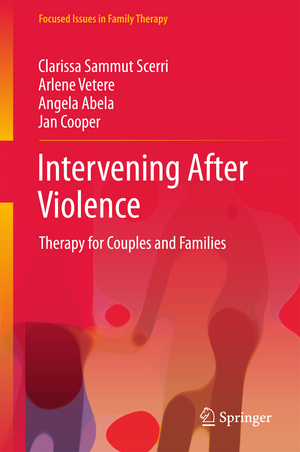
Intervening After Violence: Focused Issues in Family Therapy

Autor Clarissa Sammut Scerri, Arlene Vetere, Angela Abela, Jan Cooper
en Limba Engleză Hardback – 8 aug 2017
This practical text offers professional guidance on stopping domestic violence in couples and families and promoting healing and safety in its aftermath. Rich in theoretical diversity (attachment, trauma, feminist, narrative) and inclusive of family structures and forms of violence, the coverage takes an approach to understanding both complex circumstances and intervening with families. The tasks of healing, from reestablishing trust to fostering positive coping, are clearly linked to effects of abuse such as unresolved loss, blunted trauma responses, poor emotion regulation, and damaged relational esteem. And because sustained safety is crucial to well-being, the authors extend their concepts of safety to include professionals’ own experience, security, and self-care.
Among the topics covered:

· Living with violence in the family: retrospective recall of women’s childhood experiences.
· How to help stop the violence: using a safety methodology across the life span.
·  Helping couples separate safely: working towards safe separations. ·  Healing and repair in relationships: working therapeutically with couples.
·  Working systemically with parents, children, and adult survivors when the abuse stops. ·  Supervision and consultation with practitioners who intervene with families and trauma.
Intervening After Violence: Therapy for Couples and Families is an essential resource for social workers and mental health professionals engaged in clinical practice seeking strategies for working therapeutically and systematically with couples and families coping with physical and emotional violence.
Citește tot Restrânge

Din seria Focused Issues in Family Therapy

Preț: 81204 lei

Preț vechi: 85478 lei
-5%

Puncte Express: 1218

Carte tipărită la comandă

Livrare economică 30 decembrie 26 - 13 ianuarie 27

Livrare prin curier în România Termenul estimat este afișat lângă disponibilitate.
Transport gratuit pentru acest produs Plată online sau ramburs, în funcție de opțiunile comenzii.
Retur gratuit în 14 zile Comandă securizată și suport în română.

Specificații

ISBN-13: 9783319577883
ISBN-10: 3319577883
Pagini: 192
Ilustrații: X, 179 p. 1 illus. in color.
Dimensiuni: 160 x 241 x 17 mm
Greutate: 0.45 kg
Ediția:1st edition 2017
Editura: Springer
Colecția Focused Issues in Family Therapy
Seria Focused Issues in Family Therapy

Locul publicării:Cham, Switzerland

Cuprins

When the Violence Stops: Different Relationships and Different Forms of Violence in the Family.- Living with Violence in the Family: Retrospective Recall of Women’s Childhood Experiences.- How to Help Stop the Violence: Using a Safety Methodology Across the Life Span.- Helping Couples Separate Safely: Working Towards Safe Separations.- Healing and Repair in Relationships: Working Therapeutically with Couples.- Working Systemically with Parents, Children, and Adult Survivors When the Abuse Stops.- Working in the Territory: Therapists’ Experiences of Working with Violent Behaviour in Couples and Families.- Supervision and Consultation with Practitioners Who Intervene with Families and Trauma.- Prevention and Early Intervention with Violence and Abuse in Families.


Recenzii

“This book discusses intervention processes for domestic violence, including helping couples separate safely and/or repair the relationship and exploring positive coping and self‐care. … The book addresses the very important topic of domestic violence, which is prevalent all over the world. … This book will be a wonderful resource for practitioners who work with couples and families.” (Gary B. Kaniuk, Doody's Book Reviews, October, 2017)

Notă biografică

Clarissa Sammut Scerri ist Dozentin und derzeitige Leiterin der Abteilung für Familienstudien an der Universität von Malta. Sie ist eingetragene Beratungspsychologin, Familientherapeutin und systemische Supervisorin. Ihre Doktorarbeit mit dem Titel "Living with contradictions of love and abuse: a grounded theory of women's understanding of their experiences of domestic violence ("Leben mit den Widersprüchen von Liebe und Missbrauch: eine fundierte Theorie des Verständnisses von Frauen über ihre Erfahrungen mit häuslicher Gewalt") sollte die Komplexität des Lebens in einer Familie, in der Gewalt herrscht, beleuchten und das Verständnis dafür fördern. Sie hat ihre Forschungsergebnisse auf verschiedenen lokalen und internationalen Konferenzen vorgestellt. Einer ihrer Vorträge: "Ethical dilemmas of a clinician/researcher interviewing women about their childhood experiences of witnessing domestic violence" (Ethische Dilemmata einer Klinikerin/Forscherin, die Frauen über ihreKindheitserfahrungen mit häuslicher Gewalt befragt) wurde vom WAVE-Netzwerk (Women Against Violence) in die engere Auswahl für den Corinna Seith Award aufgenommen. Dr. Sammut Scerri ergänzt ihre Lehr- und Forschungstätigkeit durch klinische Praxis und Supervision in der Praxis, u. a. für ein Team von Sozialarbeitern, die mit Männern arbeiten, die in ihren intimen Beziehungen gewalttätig sind. Sie hat die Kapitel eins und zwei in diesem Buch geschrieben. Arlene Vetere, FBPsS, FAcSS, ist Professorin für Familientherapie und systemische Praxis an der VID Specialized University, Oslo, Norwegen; Gastprofessorin für klinische Psychologie an der Universita degli Studi, Bergamo, Italien; und außerordentliche Professorin für Familienstudien an der Universität Malta. Arlene lebt im Vereinigten Königreich, wo sie als klinische Psychologin, systemische Psychotherapeutin und systemische Supervisorin zugelassen ist. Vor zwanzig Jahren gründete sie zusammen mit Jan Cooper Reading SaferFamilies", einen Dienst zur Intervention bei Gewalt in der Familie. Sie haben zahlreiche Publikationen über ihren Ansatz für Sicherheit und sichere therapeutische Praxis mit Einzelpersonen, Paaren und Familien veröffentlicht. Zusammen mit Rudi Dallos hat Arlene außerdem einen narrativen Bindungsansatz für die systemische Praxis entwickelt, der in zahlreichen Publikationen veröffentlicht wurde. Arlene hat gemeinsam mit Jan Cooper die Kapitel drei und vier in diesem Buch verfasst und die Kapitel fünf und sieben geschrieben. Angela Abela ist Professorin und Gründungsvorsitzende des Fachbereichs für Familienstudien an der Universität von Malta. Als klinische Psychologin, Familientherapeutin und systemische Supervisorin arbeitet sie mit Paaren, Kindern und deren Familien und betreut Teams von Fachleuten, die mit gefährdeten Familien arbeiten. Sie leitet das Nationale Zentrum für Familienforschung der Stiftung des maltesischen Präsidenten für das Wohlergehen der Gesellschaftund ist als Beraterin für die maltesische Regierung und die ständigen Ausschüsse für Sozial- und Familienfragen im Parlament tätig. Als Expertin für den Europarat arbeitete sie an der Politik zur Unterstützung positiver Elternschaft und ist federführende Autorin der strategischen Politik für positive Elternschaft für Malta, die 2016 eingeführt wurde. Sie hat zahlreiche Publikationen veröffentlicht und ist Mitherausgeberin von Clinical Child Psychology and Psychiatry, internationale beratende Herausgeberin von Contemporary Family Therapy und Mitglied des Redaktionsausschusses von Children Australia. Angela hat die Kapitel sechs, acht und neun in diesem Buch geschrieben. Jan Cooper ist eine ehemalige psychiatrische Sozialarbeiterin und systemische Psychotherapeutin, die derzeit eine nicht-klinische Zulassung beim United Kingdom Council for Psychotherapy im Vereinigten Königreich besitzt. Vor zwanzig Jahren gründete sie zusammen mit Arlene Vetere "Reading Safer Families", einen speziellen Dienst zur Intervention bei Ge

Textul de pe ultima copertă

 
This practical text offers professional guidance on stopping domestic violence in couples and families and promoting healing and safety in its aftermath. Rich in theoretical diversity (attachment, trauma, feminist, narrative) and inclusive of family structures and forms of violence, the coverage takes an approach to understanding both complex circumstances and intervening with families. The tasks of healing, from reestablishing trust to fostering positive coping, are clearly linked to effects of abuse such as unresolved loss, blunted trauma responses, poor emotion regulation, and damaged relational esteem. And because sustained safety is crucial to well-being, the authors extend their concepts of safety to include professionals’ own experience, security, and self-care.
Among the topics covered:

· Living with violence in the family: retrospective recall of women’s childhood experiences.

·  How to help stop the violence: using a safet
y methodology across the life span. ·  Helping couples separate safely: working towards safe separations.
·  Healing and repair in relationships: working therapeutically with couples.
·  Working systemically with parents, children, and adult survivors when the abuse stops.
·  Supervision and consultation with practitioners who intervene with families and trauma.
Intervening After Violence: Therapy for Couples and Families is an essential resource for social workers and mental health professionals engaged in clinical practice seeking strategies for working therapeutically and systematically with couples and families coping with physical and emotional violence.

Caracteristici

Offers a systemic, pan-theoretical approach to repairing relationships after violence
Examines prevention and early intervention strategies for intergenerational violence
Explores the psychological and social on therapists who work with violence in couples and families
Includes supplementary material: sn.pub/extras