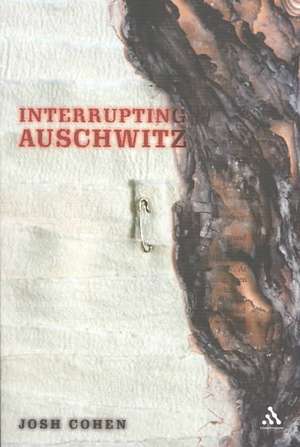
Interrupting Auschwitz: Art, Religion, Philosophy
Autor Josh Cohenen Limba Engleză Paperback – 31 dec 2002
Preț: 202.54 lei
Puncte Express: 304
Carte indisponibilă temporar
Doresc să fiu notificat când acest titlu va fi disponibil:
Se trimite...
Specificații
ISBN-13: 9780826455529
ISBN-10: 0826455522
Pagini: 186
Dimensiuni: 164 x 233 x 15 mm
Greutate: 0.3 kg
Editura: Bloomsbury Publishing
Colecția Continuum
Locul publicării:London, United Kingdom
ISBN-10: 0826455522
Pagini: 186
Dimensiuni: 164 x 233 x 15 mm
Greutate: 0.3 kg
Editura: Bloomsbury Publishing
Colecția Continuum
Locul publicării:London, United Kingdom
V-ar putea interesa
-
 NightElie Wiesel-21%Preț: 55.17 lei69.63 lei
 -
 -28%Preț: 398.11 lei556.33 lei
 -
 Writing the Holocaust: Identity, Testimony, RepresentationZoë Vania Waxman-22%Preț: 370.15 lei471.93 lei
 -
 Hitler - Films from GermanyK. MachtansPreț: 393.95 lei
 -
 Preț: 372.34 lei
 -
 Hitler, the Germans, and the Final SolutionIan KershawPreț: 149.46 lei
 -
 Who Will Write Our History?Samuel D. KassowPreț: 227.76 lei
 -
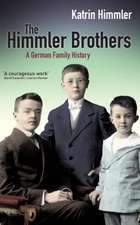 The Himmler BrothersKatrin Himmler-57%Preț: 42.78 lei98.87 lei
 -
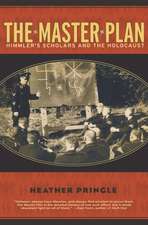 The Master Plan: Himmler's Scholars and the HolocaustHeather PringlePreț: 159.17 lei
 -
 -27%Preț: 1701.20 lei2330.41 lei
 -
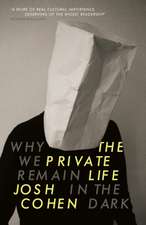 The Private LifeJosh CohenPreț: 95.00 lei
 -
 Preț: 107.34 lei
 -
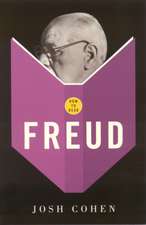 How To Read FreudJosh CohenPreț: 76.58 lei
Cuprins
Chapter
1:
The
Interrupted
Absolute:
Art,
Religion
and
the
'New
Categorical
Imperative'
Chapter 2: 'The Ever-Broken Promise of Happiness': Interrupting Art, or Adorno
Chapter 3: 'Absolute Insomnia': Interrupting Religion, or Levinas
Chapter 4: 'To Preserve the Question': Interrupting the Book, or Jabès
Conclusion: Sharing the Imperative
Chapter 2: 'The Ever-Broken Promise of Happiness': Interrupting Art, or Adorno
Chapter 3: 'Absolute Insomnia': Interrupting Religion, or Levinas
Chapter 4: 'To Preserve the Question': Interrupting the Book, or Jabès
Conclusion: Sharing the Imperative
Recenzii
"This
is
a
singular
book
of
enormous
importance.
Interrupting
Auschwitz
forges
another
way
of
thinking
that
is
neither
simple
invention
nor
mere
speculation.
While
there
are
many
books
that
take
the
theme
of
Auschwitz,
Cohen's
work
transcends
any
easy
identification
with
holocaust
studies.
He
knows
the
difficulties
and
therefore
follows
exacting
and
complex
thought
with
great
rigour,
insisting
that
Auschwitz
is
a
key
problem
for
how
we
think."--Andrew
Benjamin,
Monash
University
Descriere
Descriere de la o altă ediție sau format:
Hitler, wrote Theodor Adorno, imposed "a new categorical imperative on humankind...to arrange thoughts and actions so that Auschwitz will not repeat itself." Interrupting Auschwitz argues that what gives this imperative its philosophical force and ethical urgency is the very impossibility of fulfilling it. But rather than being cause for despair, this failure offers a renewed conception of the tasks of thought and action. Precisely because the imperative cannot be fulfilled, it places thought in a state of perpetual incompletion, whereby our responsibility is never at an end and redemption is always interrupted.Josh Cohen argues that both Adorno's own writings on art after Auschwitz and Emmanuel Levinas' interpretations of Judaism reveal both thinkers as impelled by this logic of interruption, by a passionate refusal to bring thought to a point of completion. The analysis of their motifs of art and religion are brought together in a final chapter on the poet-philosopher Edmond JabFs.PHILOSOPHY
Hitler, wrote Theodor Adorno, imposed "a new categorical imperative on humankind...to arrange thoughts and actions so that Auschwitz will not repeat itself." Interrupting Auschwitz argues that what gives this imperative its philosophical force and ethical urgency is the very impossibility of fulfilling it. But rather than being cause for despair, this failure offers a renewed conception of the tasks of thought and action. Precisely because the imperative cannot be fulfilled, it places thought in a state of perpetual incompletion, whereby our responsibility is never at an end and redemption is always interrupted.Josh Cohen argues that both Adorno's own writings on art after Auschwitz and Emmanuel Levinas' interpretations of Judaism reveal both thinkers as impelled by this logic of interruption, by a passionate refusal to bring thought to a point of completion. The analysis of their motifs of art and religion are brought together in a final chapter on the poet-philosopher Edmond JabFs.PHILOSOPHY