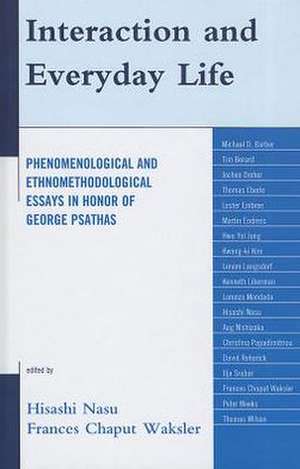
Interaction and Everyday Life: Phenomenological and Ethnomethodological Essays in Honor of George Psathas
Editat de Hisashi Nasu, Frances Chaput Waksler Contribuţii de Christina Papadimitriou, David Rehorick, Michael Barber, Hwa Yol Jung, Lester Embree, Ilja Srubar, Martin Endreß, Thomas S Eberle, Jochen Dreher, Kwang-ki Kim, Thomas Wilson, Lenore Langsdorf, Kenneth Liberman, Tim Berard, Lorenza Mondada, Aug Nishizaka, Peter Weeksen Limba Engleză Hardback – 17 aug 2012
A phenomenological sociology movement in the US is examined as an intellectual movement in itself and as it is influenced by a leader's participation as both scholar and teacher. Phenomenological sociology's efficacy and potential are discussed in terms of a broad range of theoretical and empirical issues: methodology, similarities and differences between phenomenological sociology and ethnomethodology, embodied sociality, power, trust, friendship, face-to-face interaction, and interactions between children and adults. Theoretical articles addressing fundamental features of ethnomethodology, its development, and its relation to process-relational philosophy are balanced by empirical articles founded on authors' original ethnomethodological research-activities of direction-giving and direction-following, accounts for organizational deviance, garden lessons, doing being friends, and the crafting of musical time. Through these chapters readers can come to understand the theoretical development of phenomenological sociology and ethnomethodology, appreciate their achievements and their promise, and find inspiration to pursue their own work in these areas.
Preț: 745.33 lei
Preț vechi: 1150.68 lei
-35%
Puncte Express: 1118
Carte tipărită la comandă
Livrare economică 05-19 decembrie
Livrare prin curier în România Termenul estimat este afișat lângă disponibilitate.
Transport gratuit pentru acest produs Plată online sau ramburs, în funcție de opțiunile comenzii.
Retur gratuit în 14 zile Comandă securizată și suport în română.
Specificații
ISBN-13: 9780739176443
ISBN-10: 0739176447
Pagini: 374
Ilustrații: 6 BW Illustrations, 19 BW Photos, 1 Table
Dimensiuni: 160 x 235 x 29 mm
Greutate: 0.74 kg
Ediția:New.
Editura: Bloomsbury Publishing
Colecția Lexington Books
Locul publicării:New York, United States
ISBN-10: 0739176447
Pagini: 374
Ilustrații: 6 BW Illustrations, 19 BW Photos, 1 Table
Dimensiuni: 160 x 235 x 29 mm
Greutate: 0.74 kg
Ediția:New.
Editura: Bloomsbury Publishing
Colecția Lexington Books
Locul publicării:New York, United States
Cuprins
Preface
Part I. Phenomenological Sociology as an Intellectual Movement
Chapter 1: Phenomenological Sociology in the United States: The Developmental Process of an Intellectual Movement
Hisashi Nasu
Chapter 2: Experiencing a Phenomenological Teacher: A Reflection
Christina Papadimitriou
Chapter 3: Revisiting Psathas: A Personal and Hermeneutic Reappraisal
David Rehorick
Part II. Phenomenological Considerations
Chapter 4: In the Beginning was Embodied Sociality: A Tribute to George Psathas' Phenomenological Sociology
Hwa Yol Jung
Chapter 5.:Why Ethnomethodology Needs the Transcendental Ego
Michael Barber
Chapter 6: A Problem in Alfred Schutz's Methodology of the Cultural Sciences
Lester Embree
Chapter 7: Where is Power?: An Investigation into the Formation of Political Semantics
Ilja Srubar
Chapter 8: Trust and the Dialectic of the Familiar and Unfamiliar within the Life-World
Martin Endress
Chapter 9: Phenomenology and Sociology: Divergent Interpretations of a Complex Relationship
Thomas Eberle
Chapter 10: Investigating Friendship: A Prospective Dispute between Protosociology and Phenomenological Sociology
Jochen Dreher
Chapter 11: Face-to-Face Interaction, Kirogi Papa (Wild Goose Dad), and the Stranger: A Social-Phenomenological Study of Changing Intimacy in the Family
Kwang-ki Kim
Chapter 12: Children as Interactional Partners for Adults
Frances Chaput Waksler
Part III. Ethnomethodological Explorations
Chapter 13: Classical Ethnomethodology, The Radical Program, and Conversation Analysis
Thomas Wilson
Chapter 14: To the Activities Themselves: A Philosophical Interpretation of the Complexities of Experience
Lenore Langsdorf
Chapter 15: The Intelligibility of Directions: The Psathas Corpus
Kenneth Liberman
Chapter 16: Collective Action, Collective Reaction: Inspecting Bad Apples in Accounts for Organizational Deviance and Discrimination
Tim Berard
Chapter 17: Garden Lessons: Embodied Action and Joint Attention in Extended Sequences
Lorenza Mondada
Chapter 18: Doing "Being Friends" in Japanese Telephone Conversations
Aug Nishizaka
Chapter 19. From Phenomenology to Ethnomethodology: The Crafting of Musical Time
Peter Weeks
Appendix: George Psathas' Books, Edited Volumes, Articles, and Book Reviews
Part I. Phenomenological Sociology as an Intellectual Movement
Chapter 1: Phenomenological Sociology in the United States: The Developmental Process of an Intellectual Movement
Hisashi Nasu
Chapter 2: Experiencing a Phenomenological Teacher: A Reflection
Christina Papadimitriou
Chapter 3: Revisiting Psathas: A Personal and Hermeneutic Reappraisal
David Rehorick
Part II. Phenomenological Considerations
Chapter 4: In the Beginning was Embodied Sociality: A Tribute to George Psathas' Phenomenological Sociology
Hwa Yol Jung
Chapter 5.:Why Ethnomethodology Needs the Transcendental Ego
Michael Barber
Chapter 6: A Problem in Alfred Schutz's Methodology of the Cultural Sciences
Lester Embree
Chapter 7: Where is Power?: An Investigation into the Formation of Political Semantics
Ilja Srubar
Chapter 8: Trust and the Dialectic of the Familiar and Unfamiliar within the Life-World
Martin Endress
Chapter 9: Phenomenology and Sociology: Divergent Interpretations of a Complex Relationship
Thomas Eberle
Chapter 10: Investigating Friendship: A Prospective Dispute between Protosociology and Phenomenological Sociology
Jochen Dreher
Chapter 11: Face-to-Face Interaction, Kirogi Papa (Wild Goose Dad), and the Stranger: A Social-Phenomenological Study of Changing Intimacy in the Family
Kwang-ki Kim
Chapter 12: Children as Interactional Partners for Adults
Frances Chaput Waksler
Part III. Ethnomethodological Explorations
Chapter 13: Classical Ethnomethodology, The Radical Program, and Conversation Analysis
Thomas Wilson
Chapter 14: To the Activities Themselves: A Philosophical Interpretation of the Complexities of Experience
Lenore Langsdorf
Chapter 15: The Intelligibility of Directions: The Psathas Corpus
Kenneth Liberman
Chapter 16: Collective Action, Collective Reaction: Inspecting Bad Apples in Accounts for Organizational Deviance and Discrimination
Tim Berard
Chapter 17: Garden Lessons: Embodied Action and Joint Attention in Extended Sequences
Lorenza Mondada
Chapter 18: Doing "Being Friends" in Japanese Telephone Conversations
Aug Nishizaka
Chapter 19. From Phenomenology to Ethnomethodology: The Crafting of Musical Time
Peter Weeks
Appendix: George Psathas' Books, Edited Volumes, Articles, and Book Reviews
Recenzii
The sheer range of material that this book covers makes it a very interesting read.
There is much of interest in this collection, for students of phenomenology, students of EM, or those who seek to combine the two.
This book of essays in honor of George Psathas, beyond recognizing and celebrating the teaching and research of this worthy scholar, provides a wide-ranging set of inquiries that span the substantive domains of phenomenological sociology, ethnomethodology, and conversation analysis. Anyone interested in one or more of these domains will not want to miss the inquiries that are assembled in this tome. They are thoughtful, readable, contemporary, and, thereby, give access to current thinking in the areas that Professor Psathas brought forward for sociological appreciation and to which he mightily contributed.
In this book the reader will find the widest range of expressions and positions on phenomenological sociology. Numerous valuable contributions contained in this volume are focused on exploring the interface between phenomenology and ethnomethodology; however, its main accomplishment is to illustrate that phenomenological sociology is made by people (men of flesh and blood who live, act and think in the life-world) and that, if it has a meaning and significance for us today, it's because throughout his life and work George Psathas has started and led the way of this intellectual movement.
There is much of interest in this collection, for students of phenomenology, students of EM, or those who seek to combine the two.
This book of essays in honor of George Psathas, beyond recognizing and celebrating the teaching and research of this worthy scholar, provides a wide-ranging set of inquiries that span the substantive domains of phenomenological sociology, ethnomethodology, and conversation analysis. Anyone interested in one or more of these domains will not want to miss the inquiries that are assembled in this tome. They are thoughtful, readable, contemporary, and, thereby, give access to current thinking in the areas that Professor Psathas brought forward for sociological appreciation and to which he mightily contributed.
In this book the reader will find the widest range of expressions and positions on phenomenological sociology. Numerous valuable contributions contained in this volume are focused on exploring the interface between phenomenology and ethnomethodology; however, its main accomplishment is to illustrate that phenomenological sociology is made by people (men of flesh and blood who live, act and think in the life-world) and that, if it has a meaning and significance for us today, it's because throughout his life and work George Psathas has started and led the way of this intellectual movement.