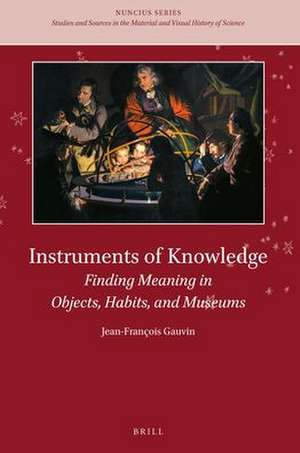
Instruments of Knowledge: Instruments of Knowledge, cartea 12
Autor Jean-François Gauvinen Limba Engleză Hardback – 26 iun 2023
Preț: 949.27 lei
Preț vechi: 1232.82 lei
-23%
Puncte Express: 1424
Carte tipărită la comandă
Livrare economică 02-16 decembrie
Livrare prin curier în România Termenul estimat este afișat lângă disponibilitate.
Transport gratuit pentru acest produs Plată online sau ramburs, în funcție de opțiunile comenzii.
Retur gratuit în 14 zile Comandă securizată și suport în română.
Specificații
ISBN-13: 9789004504608
ISBN-10: 9004504605
Pagini: 302
Dimensiuni: 155 x 234 x 18 mm
Greutate: 0.59 kg
Editura: Koninklijke Brill Bv
Colecția Instruments of Knowledge
Seriile Instruments of Knowledge, Brill
ISBN-10: 9004504605
Pagini: 302
Dimensiuni: 155 x 234 x 18 mm
Greutate: 0.59 kg
Editura: Koninklijke Brill Bv
Colecția Instruments of Knowledge
Seriile Instruments of Knowledge, Brill
Notă biografică
Jean-François Gauvin, Ph.D. (2008) is an associate professor of history and museum studies at Université Laval in Québec city. He has published numerous articles on scientific instruments and two frequently cited edited volumes on globes and abbé Jean-Antoine Nollet.
Cuprins
Acknowledgments
List of Illustrations
Introduction
1 A Short Case Study: The Early Académie royale des sciences in Paris
2 Reading This Book
Introduction
1 Quid organum erat? The Idea of Instrument in Early Modern Europe
1 Organum scientiae: Definitions and Examples
2 Organ-ization of Knowledge
2 Organ Making and Natural Philosophical Knowledge in Marin Mersenne’s Harmonie Universelle
1 Mersenne’s Seven Books on Instruments in the Harmonie universelle
2 The Organ and Mersenne’s Epistemology of Natural Philosophical Knowledge
3 Musical Instruments and the ‘parfait musicien’
Introduction
3 Habitus in corpore, habitus in anima: Making and Thinking in Early Modern Europe
1 Defining habitus in Early Modern Europe
2 Habitus and Descartes’s Logic of Practice
3 Habitus and the Concept of Knowledge Production
4 Blaise Pascal, coutume, and the Arithmetical Machine
4 From idiotae to artistes: Artisans, Instruments, and the Nature of Craftsmanship in Early Modern Europe
1 Descartes, Artisans, and âmes réglées
2 Who Assists Whom: The Structural Dynamic of Artisan and Savant Interactions
3 From artiste to Toyware Manufacturing
Introduction
5 Repair, Restoration, Exhibition: Instruments and the Epistemic Value of Brokenness
1 Restorer v. Conservator: How to ‘Repair’ Damaged Instruments?
2 Reconstruction and Restoration: Abbé Nollet’s Scientific Instruments
3 Identity, Integrity, Authenticity: Between the Unit of the Total and the Unit of the Whole
4 Reuse and Recycle: Exhibiting the DIY of Scientists and Craftsmen
6 Instrument Trajectories: Ways of Knowing the World
1 Collecting Instruments
2 Knowing Through Playing
3 Digitizing Collections
Epilogue
Bibliography
Index
List of Illustrations
Introduction
1 A Short Case Study: The Early Académie royale des sciences in Paris
2 Reading This Book
Part 1: Organum
Introduction
1 Quid organum erat? The Idea of Instrument in Early Modern Europe
1 Organum scientiae: Definitions and Examples
2 Organ-ization of Knowledge
2 Organ Making and Natural Philosophical Knowledge in Marin Mersenne’s Harmonie Universelle
1 Mersenne’s Seven Books on Instruments in the Harmonie universelle
2 The Organ and Mersenne’s Epistemology of Natural Philosophical Knowledge
3 Musical Instruments and the ‘parfait musicien’
Part 2: Habitus
Introduction
3 Habitus in corpore, habitus in anima: Making and Thinking in Early Modern Europe
1 Defining habitus in Early Modern Europe
2 Habitus and Descartes’s Logic of Practice
3 Habitus and the Concept of Knowledge Production
4 Blaise Pascal, coutume, and the Arithmetical Machine
4 From idiotae to artistes: Artisans, Instruments, and the Nature of Craftsmanship in Early Modern Europe
1 Descartes, Artisans, and âmes réglées
2 Who Assists Whom: The Structural Dynamic of Artisan and Savant Interactions
3 From artiste to Toyware Manufacturing
Part 3: Museum
Introduction
5 Repair, Restoration, Exhibition: Instruments and the Epistemic Value of Brokenness
1 Restorer v. Conservator: How to ‘Repair’ Damaged Instruments?
2 Reconstruction and Restoration: Abbé Nollet’s Scientific Instruments
3 Identity, Integrity, Authenticity: Between the Unit of the Total and the Unit of the Whole
4 Reuse and Recycle: Exhibiting the DIY of Scientists and Craftsmen
6 Instrument Trajectories: Ways of Knowing the World
1 Collecting Instruments
2 Knowing Through Playing
3 Digitizing Collections
Epilogue
Bibliography
Index