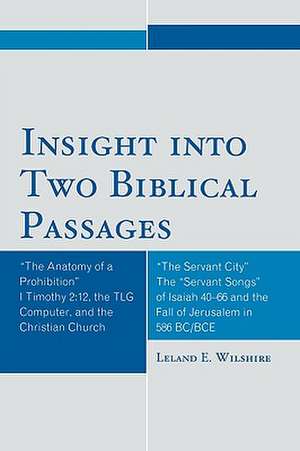
Insight into Two Biblical Passages: Anatomy of a Prohibition I Timothy 2:12, the TLG Computer, and the Christian Church
Autor Leland E. Wilshireen Limba Engleză Paperback – 10 iun 2010
Preț: 254.41 lei
Preț vechi: 349.34 lei
-27%
Puncte Express: 382
Carte tipărită la comandă
Livrare economică 01-15 decembrie
Livrare prin curier în România Termenul estimat este afișat lângă disponibilitate.
Transport gratuit de la 400.00 lei Plată online sau ramburs, în funcție de opțiunile comenzii.
Retur gratuit în 14 zile Comandă securizată și suport în română.
Specificații
ISBN-13: 9780761852070
ISBN-10: 0761852077
Pagini: 146
Dimensiuni: 154 x 232 x 10 mm
Greutate: 0.25 kg
Editura: Bloomsbury Publishing
Colecția University Press of America
Locul publicării:New York, United States
ISBN-10: 0761852077
Pagini: 146
Dimensiuni: 154 x 232 x 10 mm
Greutate: 0.25 kg
Editura: Bloomsbury Publishing
Colecția University Press of America
Locul publicării:New York, United States
V-ar putea interesa
-
 Handbook of Religion and HealthHarold Koenig-26%Preț: 2197.54 lei2971.84 lei
 -
 Turning Images in Philosophy, Science, and Religion: A New Book of NatureCharles Taliaferro-28%Preț: 514.07 lei716.59 lei
 -
 The Predicament of Belief: Science, Philosophy, and FaithPhilip Clayton-13%Preț: 257.63 lei295.89 lei
 -
 -20%Preț: 354.42 lei444.71 lei
 -
 Toward a True Kinship of FaithsDalai LamaPreț: 103.44 lei
 -
 Bad Religion: The Psychology of Religious MisbehaviorMichael L. Klassen-28%Preț: 258.65 lei357.25 lei
 -
 -28%Preț: 259.71 lei359.73 lei
 -
 We Don't Do GodGeorge CareyPreț: 64.94 lei
Cuprins
Part 1 The Anatomy of Prohibition: I Timothy 2.12, the TLG Computer, and the Christian Church
Chapter 2 Foreword
Chapter 3 Preface
Part 4 Part I
Chapter 5 1. The I Timothy 2.12 Passage and Its Difficulties
Chapter 6 2. Phillology, Lexicons, and the Computer Databank: A New Opening in Understanding the I Tim. 2.12 Prohibition
Chapter 7 3. A 1984 Attempt by George W. Knight III, by the use of Lexicons, to deal with the word authentein
Chapter 8 4. The Use of the Computer Data and Other Citations in a Background Study of the Word AUTHENTEO in I Tim. 2.12
Chapter 9 5. A New Interpretation of the I Tim. 2.12 Prohibition in Light of the New Computer Databank Understanding
Chapter 10 6. Three Sample Alternative Approaches: that of Paul W. Barnett, Catherine C. Kroeger, and the Editors of Women in the Church
Part 11 Part II
Chapter 12 Introduction: The Anatomy of Prohibition: The New Interpretation and its Contemporary Applications
Chapter 13 1. Exegesis
Chapter 14 2. Gender
Chapter 15 3. Hermeneutics
Chapter 16 4. Tradition
Chapter 17 5. Theology
Chapter 18 6. Authority
Chapter 19 7. Ecclesiology
Chapter 20 8. Relevance
Part 21 Supplement: The Anatomy of Prohibition: A History of Traditional Translations, Mistranslations, and Interpretations
Chapter 22 1. The Use of I Tim. 2.12 Prohibition in the Traditional Interpretations of the Greek Early Church
Chapter 23 2. The Use of the Prohibition in the Traditional Translations and Interpretations of the Latin Early Church
Chapter 24 3. Traditional Translations and Interpretations of the Prohibition during the Middle Ages
Chapter 25 4. Reformulations of the Prohibition during the Era of the Renaissance and Reformation
Chapter 26 5. Differing English Translations of the I Tim. 2.12 Prohibition in Modern History and their Use in the Current Understandings of Women in Ecclesiastical Leadership
Chapter 27 Notes
Chapter 28 Working Bibliography
Part 29 The Servant City: The "Servant Songs" of Isaiah 40-66 and the Fall of Jerusalem in 586 BC/BCE
Chapter 30 Foreword
Chapter 31 Preface
Chapter 32 1. Background: Three Interpretations of the Fall of Jerusalem 586 BC/BCE
Chapter 33 2. The "Suffering Servant" Metaphor in the "Servant Songs" of Isaiah 40-66 Relating to the Destruction of the City of Jerusalem
Chapter 34 3. The Voice of the Isaianic "Servant Songs" within the Ancient Near Eastern Literary Tradition of Destroyed Cultic Centers
Chapter 35 4. The Meaning and Future of the "Suffering Servant" Metaphor in "Isaiah" (Isaiah 40-66) Concerning the Destruction of Jerusalem
Chapter 36 Notes
Chapter 37 Working Bibliography
Chapter 2 Foreword
Chapter 3 Preface
Part 4 Part I
Chapter 5 1. The I Timothy 2.12 Passage and Its Difficulties
Chapter 6 2. Phillology, Lexicons, and the Computer Databank: A New Opening in Understanding the I Tim. 2.12 Prohibition
Chapter 7 3. A 1984 Attempt by George W. Knight III, by the use of Lexicons, to deal with the word authentein
Chapter 8 4. The Use of the Computer Data and Other Citations in a Background Study of the Word AUTHENTEO in I Tim. 2.12
Chapter 9 5. A New Interpretation of the I Tim. 2.12 Prohibition in Light of the New Computer Databank Understanding
Chapter 10 6. Three Sample Alternative Approaches: that of Paul W. Barnett, Catherine C. Kroeger, and the Editors of Women in the Church
Part 11 Part II
Chapter 12 Introduction: The Anatomy of Prohibition: The New Interpretation and its Contemporary Applications
Chapter 13 1. Exegesis
Chapter 14 2. Gender
Chapter 15 3. Hermeneutics
Chapter 16 4. Tradition
Chapter 17 5. Theology
Chapter 18 6. Authority
Chapter 19 7. Ecclesiology
Chapter 20 8. Relevance
Part 21 Supplement: The Anatomy of Prohibition: A History of Traditional Translations, Mistranslations, and Interpretations
Chapter 22 1. The Use of I Tim. 2.12 Prohibition in the Traditional Interpretations of the Greek Early Church
Chapter 23 2. The Use of the Prohibition in the Traditional Translations and Interpretations of the Latin Early Church
Chapter 24 3. Traditional Translations and Interpretations of the Prohibition during the Middle Ages
Chapter 25 4. Reformulations of the Prohibition during the Era of the Renaissance and Reformation
Chapter 26 5. Differing English Translations of the I Tim. 2.12 Prohibition in Modern History and their Use in the Current Understandings of Women in Ecclesiastical Leadership
Chapter 27 Notes
Chapter 28 Working Bibliography
Part 29 The Servant City: The "Servant Songs" of Isaiah 40-66 and the Fall of Jerusalem in 586 BC/BCE
Chapter 30 Foreword
Chapter 31 Preface
Chapter 32 1. Background: Three Interpretations of the Fall of Jerusalem 586 BC/BCE
Chapter 33 2. The "Suffering Servant" Metaphor in the "Servant Songs" of Isaiah 40-66 Relating to the Destruction of the City of Jerusalem
Chapter 34 3. The Voice of the Isaianic "Servant Songs" within the Ancient Near Eastern Literary Tradition of Destroyed Cultic Centers
Chapter 35 4. The Meaning and Future of the "Suffering Servant" Metaphor in "Isaiah" (Isaiah 40-66) Concerning the Destruction of Jerusalem
Chapter 36 Notes
Chapter 37 Working Bibliography