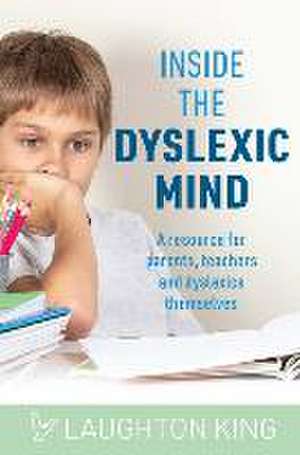
Inside the Dyslexic Mind
Autor Laughton Kingen Limba Engleză Paperback – 11 iul 2023
Preț: 140.06 lei
Puncte Express: 210
Carte disponibilă
Livrare economică 17-31 octombrie
Livrare express 06-10 octombrie pentru 43.70 lei
Livrare prin curier în România Termenul estimat este afișat lângă disponibilitate.
Transport gratuit de la 400.00 lei Plată online sau ramburs, în funcție de opțiunile comenzii.
Retur gratuit în 14 zile Comandă securizată și suport în română.
Specificații
ISBN-13: 9781922539427
ISBN-10: 1922539422
Pagini: 256
Dimensiuni: 150 x 226 x 18 mm
Greutate: 0.45 kg
Editura: EXISLE PUB
ISBN-10: 1922539422
Pagini: 256
Dimensiuni: 150 x 226 x 18 mm
Greutate: 0.45 kg
Editura: EXISLE PUB
Notă biografică
Laughton King is a retired psychologist whose understanding of what
is commonly called 'dyslexia' comes from his 70-plus years as a 'dyslexic'
person, and from 35 years as a psychologist working with children experiencing
learning difficulties. Laughton's difficulties with reading meant that he did
not rely on the insights and conclusions of others. Instead, through observation
of his own and others' learning processes, he came to his own conclusions.
is commonly called 'dyslexia' comes from his 70-plus years as a 'dyslexic'
person, and from 35 years as a psychologist working with children experiencing
learning difficulties. Laughton's difficulties with reading meant that he did
not rely on the insights and conclusions of others. Instead, through observation
of his own and others' learning processes, he came to his own conclusions.
Cuprins
ContentsPreface
Chapter One: Introduction
The inside story: a portrait of a dyslexic Demystifying and legitimizing
A life ‘out of step’ . . .
Understanding our ‘target group’
Towards understanding the bigger picture Learning or knowledge?
The social environment — and being politically incorrect
Chapter Two: The nature of dyslexia
What is it like to be dyslexic?
Hiding in plain sight: case presentations
Chapter Three: Defining dyslexia
Defining dyslexia
Dyslexic . . . or not? Do I need to get my child tested? Observable characteristics of dyslexia
Naming and labelling
Chapter Four: Where does dyslexia originate? Where does dyslexia come from?
The diesel/petrol analogy
So, what is a ‘diesel’?
What is a self-proclaimed ‘diesel thinker’?
Chapter Five: A confusing issue
Why is it so hard to get useful information about dyslexia?
Is dyslexia a product of our educational style?
Chapter Six: Labels, definitions and myths Labels
Definitions
Common myths about dyslexia
ADD and ADHD
Chapter Seven: Benefits of dyslexia
Are there any benefits from being dyslexic?
Some advantages
Chapter Eight: Verbal language
The language of the dyslexic person
Mastery
Style
Pictorial thinking
Speech impediments
Vocabulary
Chapter Nine: Family and home
Frustration
Depression
Parenting the dyslexic child
Pictorial thinking — how it plays out in our parenting Concepts of time
Consistency, predictability and emotional security Empowerment and disempowerment Empowering the child
Chapter Ten: Classroom issues
Indicators of pictorial thinking
Which helping programme shall I use? Disengagement
Teaching truths
Responses to avoid
Teacher style in the classroom
Learning style
Chapter Eleven: Other members of the
‘dys’ community
Dyscalculia
Dyspraxia and dysgraphia
The Last Word
The Last, Last Word
Appendix: Interventions
References and further reading
Index
Chapter One: Introduction
The inside story: a portrait of a dyslexic Demystifying and legitimizing
A life ‘out of step’ . . .
Understanding our ‘target group’
Towards understanding the bigger picture Learning or knowledge?
The social environment — and being politically incorrect
Chapter Two: The nature of dyslexia
What is it like to be dyslexic?
Hiding in plain sight: case presentations
Chapter Three: Defining dyslexia
Defining dyslexia
Dyslexic . . . or not? Do I need to get my child tested? Observable characteristics of dyslexia
Naming and labelling
Chapter Four: Where does dyslexia originate? Where does dyslexia come from?
The diesel/petrol analogy
So, what is a ‘diesel’?
What is a self-proclaimed ‘diesel thinker’?
Chapter Five: A confusing issue
Why is it so hard to get useful information about dyslexia?
Is dyslexia a product of our educational style?
Chapter Six: Labels, definitions and myths Labels
Definitions
Common myths about dyslexia
ADD and ADHD
Chapter Seven: Benefits of dyslexia
Are there any benefits from being dyslexic?
Some advantages
Chapter Eight: Verbal language
The language of the dyslexic person
Mastery
Style
Pictorial thinking
Speech impediments
Vocabulary
Chapter Nine: Family and home
Frustration
Depression
Parenting the dyslexic child
Pictorial thinking — how it plays out in our parenting Concepts of time
Consistency, predictability and emotional security Empowerment and disempowerment Empowering the child
Chapter Ten: Classroom issues
Indicators of pictorial thinking
Which helping programme shall I use? Disengagement
Teaching truths
Responses to avoid
Teacher style in the classroom
Learning style
Chapter Eleven: Other members of the
‘dys’ community
Dyscalculia
Dyspraxia and dysgraphia
The Last Word
The Last, Last Word
Appendix: Interventions
References and further reading
Index