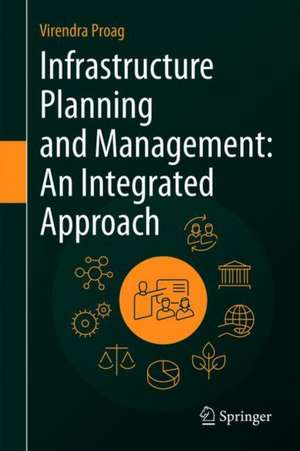
Infrastructure Planning and Management: An Integrated Approach
Autor Virendra Proagen Limba Engleză Hardback – 6 noi 2020
Recomandăm această lucrare ca o referință fundamentală pentru nivelul de master și doctorat, fiind în egală măsură un instrument valoros pentru profesioniștii din planificarea dezvoltării regionale. Infrastructure Planning and Management: An Integrated Approach se distinge prin modul în care tratează serviciile de utilități — apă, energie, transporturi — nu ca silozuri tehnice separate, ci ca un ecosistem interconectat. Considerăm că forța acestui volum rezidă în capacitatea autorului Virendra Proag de a integra obiectivele de dezvoltare durabilă cu modelarea matematică și analiza impactului de mediu.
Structura cărții este riguros organizată în patru secțiuni ce ghidează cititorul de la fundamentele teoretice și organizarea spațială, către aspectele economice și sociale ale bunurilor publice. Subliniem relevanța părților dedicate rezilienței și managementului dezastrelor, teme critice în contextul climatic actual. Această ediție din 2021 aduce în prim-plan necesitatea utilizării optime a resurselor și a energiei, oferind criterii de evaluare multi-obiectiv pentru procesul decizional. Ca alternativă la Infrastructure Planning, Engineering and Economics de Alvin Goodman pentru cursurile de managementul resurselor, lucrarea de față are avantajul unei perspective sistemice mai accentuate asupra interdependențelor dintre componentele de infrastructură, punând un accent deosebit pe modelarea acestor legături complexe.
Spre deosebire de manualele care se concentrează strict pe inginerie, această publicație de la Springer analizează de ce proiecte bine articulate tehnic pot eșua în etapa de operare din cauza neglijării factorului uman. Este o resursă care facilitează comunicarea interdisciplinară între ingineri, economiști și planificatori urbani.
Preț: 708.17 lei
Preț vechi: 833.14 lei
-15%
Carte disponibilă
Livrare economică 22 iunie-06 iulie
Specificații
ISBN-10: 3030485587
Pagini: 683
Ilustrații: XXXII, 683 p. 111 illus., 31 illus. in color. With online files/update.
Dimensiuni: 155 x 235 mm
Greutate: 1.32 kg
Ediția:1st ed. 2021
Editura: Springer International Publishing
Colecția Springer
Locul publicării:Cham, Switzerland
De ce să citești această carte
Această carte este esențială pentru cei care doresc să înțeleagă infrastructura dincolo de beton și cabluri. Cititorul câștigă o metodologie clară pentru gestionarea sistemelor complexe și interdependente. Este un curs complet de planificare strategică ce pune accent pe sustenabilitate și reziliență, oferind instrumente practice pentru optimizarea resurselor și navigarea provocărilor aduse de schimbările climatice în proiectele de anvergură.
Despre autor
Virendra Proag este un expert recunoscut în domeniul ingineriei și planificării, cu o orientare marcată către integrarea sustenabilității în proiectele de infrastructură. Expertiza sa acoperă managementul resurselor și modelarea sistemelor complexe, fiind un promotor al abordărilor multidisciplinare în dezvoltarea regională. Prin activitatea sa publicată la edituri prestigioase precum Springer, autorul contribuie la fundamentarea teoretică a modului în care infrastructura critică poate fi adaptată pentru a răspunde provocărilor secolului XXI, îmbinând rigoarea tehnică cu viziunea strategică asupra creșterii economice.
Descriere scurtă
This book is intended for graduates and practising professionals who are involved in the general development planning of their country/region. It enables better understanding, collaboration and communication with other professionals in relation to their own or different disciplines.