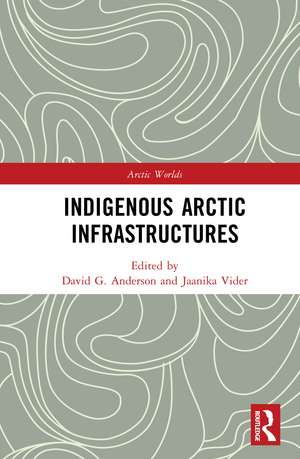
Indigenous Arctic Infrastructures: Arctic Worlds
Editat de David G. Anderson, Jaanika Videren Limba Engleză Hardback – 6 noi 2026







Preț: 1125.63 lei
Preț vechi: 1484.37 lei
-24% Precomandă
Puncte Express: 1688
Carte nepublicată încă
Livrare prin curier în România Precomanda se expediază când titlul devine disponibil.
Transport gratuit pentru acest produs Plată online sau ramburs, în funcție de opțiunile comenzii.
Retur gratuit în 14 zile Comandă securizată și suport în română.
Doresc să fiu notificat când acest titlu va fi disponibil:
Se trimite...
Specificații
ISBN-13: 9781041339090
ISBN-10: 1041339097
Pagini: 200
Ilustrații: 50
Dimensiuni: 156 x 234 mm
Ediția:1
Editura: Taylor & Francis
Colecția Routledge
Seria Arctic Worlds
Locul publicării:Oxford, United Kingdom
ISBN-10: 1041339097
Pagini: 200
Ilustrații: 50
Dimensiuni: 156 x 234 mm
Ediția:1
Editura: Taylor & Francis
Colecția Routledge
Seria Arctic Worlds
Locul publicării:Oxford, United Kingdom
Public țintă
Academic and PostgraduateCuprins
1. Introduction: Indigenous Arctic Infrastructures 2. The Agency of Sámi dwellings: Reclaiming the Goahte as an epistemology and resilient heritage 3. Rethinking museum structure and terminology in Swedish Sábme 4. Unwriting by return: reassembling Jáhkoš-Lásse’s collection in Guovdageaidnu 5. Ancestral spirits and iron pans: How Nawken navigate contested landscapes through spoken stories and objects of ‘Gypsy-ness’ 6. Indigenous Infrastructures and Modes of Emplacement 7. Life Happens on the Trails. Maintaining Dene Trails in the Canadian Subarctic 8. At home at the Manisha Nui Gathering 9. Portent Inscriptions: Infrastructures of Hope and Fear Index.
Notă biografică
David G. Anderson is Professor and Chair in the Anthropology of the North at the University of Aberdeen, UK.
Jaanika Vider is a Lecturer in Anthropology at Tallinn University, Estonia.
Jaanika Vider is a Lecturer in Anthropology at Tallinn University, Estonia.
Descriere
This book focuses on the concept of unwritten Indigenous Arctic infrastructures. It takes inspiration from activists in the field of Indigenous studies, who argue that ‘critical’ Indigenous infrastructures are often not railways, pipelines or data cables, but instead sacred places and sustainable craftsmanship.