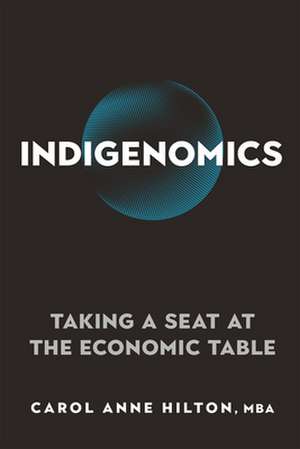
Indigenomics
Autor Carol Anne Hiltonen Limba Engleză Paperback – 16 mar 2021
Observăm în literatura economică contemporană o lacună semnificativă în ceea ce privește integrarea sistemelor de valori indigene în modelele de dezvoltare globală, spațiu pe care Indigenomics îl ocupă cu o rigoare necesară. Găsim în această lucrare nu doar o critică a marginalizării economice, ci un cadru operațional pentru ceea ce Carol Anne Hilton numește economia indigenă modernă. Spre deosebire de abordările pur antropologice, volumul de față acționează ca un manual pentru viitoarea generație de economiști, propunând o structură bazată pe responsabilitate multigenerațională și administrarea etică a resurselor. Suntem de părere că lucrarea extinde cadrul teoretic propus de Indigenous Economics de Ronald L. Trosper prin adăugarea unei dimensiuni pragmatice, axate pe mediul de afaceri și pe demontarea narativului dependenței financiare. Dacă în lucrarea sa anterioară, The Rise of Indigenous Economic Power, autoarea se concentra pe deconstrucția barierelor sistemice impuse de politicile coloniale, în Indigenomics accentul cade pe construcția unui model de succes. Structura cărții este pedagogică, pornind de la „Problema Indiană” și eșecul pieței sub incidența Legii Indiene, progresând spre definirea bogăției prin prisma ceremoniei și terminând cu zece principii fundamentale care redefinesc succesul economic. Analiza este ancorată în realitatea juridică și economică a Canadei, dar oferă lecții universale despre autodeterminare. Prin includerea vocilor liderilor de afaceri indigeni și a studiilor de caz despre sistemul potlatch, Carol Anne Hilton demonstrează cum viziunile ancestrale pot spori eficiența economiei moderne, transformând reconcilierea dintr-un concept social într-un imperativ economic.
Preț: 127.81 lei
Carte disponibilă
Livrare economică 07-21 noiembrie
Specificații
ISBN-10: 0865719403
Pagini: 272
Dimensiuni: 151 x 225 x 18 mm
Greutate: 0.43 kg
Editura: New Society Publishers
De ce să citești această carte
Recomandăm această carte liderilor de afaceri, decidenților politici și studenților la economie care doresc să înțeleagă potențialul de 100 de miliarde de dolari al economiei indigene. Cititorul câștigă o perspectivă nouă asupra sustenabilității și a valorii economice bazate pe relații, nu doar pe profit. Este un instrument esențial pentru oricine dorește să participe la o economie globală mai echitabilă și mai rezilientă, fundamentată pe date concrete și principii etice milenare.
Descriere scurtă
Essential core material for the next class of economists.
- Winona LaDuke, Executive Director, Honor the Earth
One of the most important books of our economic era.
- Mark Anielski, economist and author, An Economy of Well-Being
It is time. It is time to increase the visibility of the emerging modern Indigenous economy and the role and responsibility of the people involved. This is Indigenomics.
Indigenomics lays out the tenets of the emerging Indigenous economy, built around relationships, multigenerational stewardship of resources, and care for all. Highlights include:
- The ongoing power shift and rise of the modern Indigenous economy
- Voices of Indigenous business leaders
- Ongoing legal challenges to Canada's relationship with Indigenous Peoples
- Exposure of the false media narrative of Indigenous dependency
- A new narrative, rooted in the reality on the ground, that Indigenous Peoples are economic powerhouses
- Diverse examples from across the emerging Indigenous economy.
This is vital reading for business leaders and entrepreneurs, Indigenous organizations and Nations, governments and policymakers, and economists.
How and why Indigenous worldviews are important to enhancing the modern economy.
- Dr. Jacqueline Quinless, Adjunct Professor of Sociology, University of Victoria
Indigenomics is the concept the world has been waiting for.
- Amanda Ellis, Director, Global Partnerships, Julie Ann Wrigley Global Futures Laboratory, ASU
Carol Anne Hilton is the founder of the Indigenomics Institute and the Global Center of Indigenomics and is a national and global Indigenous business leader advising Indigenous Nations, governments, and businesses. She is a Hesquiaht woman of Nuu chah nulth descent and comes from the thousands of years old tradition of the potlatch system of giving and distribution of wealth. She holds an MBA from Hertfordshire University and lives in Victoria, BC.
Cuprins
Foreword
Introduction
The Indigenomics Manifestation
1. Through the Lens of Worldview
The Indian Problem
Indigenous Economic Displacement and Marginalization
Indigenous Worldview and Responsibility
2. The Nature of Wealth
Timeline of Money
Ceremony as an Expression of Wealth
The Economic Distortion: Through the Lens of Wealth and Poverty
3. The Landscape of Indigenous Worldview
Principle 1: Everything Is Connected
Principle 2: Story
Principle 3: Animate Life Force
Principle 4: Transformation
Principle 5: The Teachings
Principle 6: Creation Story
Principle 7: Protocol
Principle 8: To Witness
Principle 9: To Make Visible
Principle 10: Renewal
4. "But I Was Never Taught This in School"
A History of the Development of British Columbia
5. The Indigenous Economy
Characteristics of an Indigenous Economy
6. Indian Act Economics
The Indian Act and the Aboriginal Question
The Indian Act Economics Effect: The Conditions for an Indigenous Economic Market Failure
Perception of the Indian Act
7. The Indigenomics Power Center
The Indigenomics Push/Pull Dynamic
7 Rs of the Indigenomics Power Center
8. The Dependancy Illusion
The Great Debunk: Addressing the Illusion
9. The Power Play
And Then Indigenous People Went to Court!
The Legal Spectrum
The Push/Pull Dynamic: An Inception into a New Economic Reality
10. The Power Shift: A Seat at the Economic Table
The Effect of the Emerging Indigenous Power Shift
The Risk of Doing Nothing
The Collective Response to Now
11. The Emerging Modern Indigenous Economy
Setting a Target for Indigenous Economic Growth
Understanding the Growth of the Indigenous Economy
The State of Indigenous Economic Research
Building a Collective Economic Response: The Emerging $100 Billion Indigenous Economy
12. Indigenomics and the Unfolding Media Narrative
Indigenous Business Media Themes
Media Theme 1: Growing Indigenous Business Success
Media Theme 2: Conflict and Risk in Industry Project Development
Media Theme 3: Tone of Media Headings
Media Theme 4: Aboriginal Legal Challenges and New Requirements
Media Theme 5: Indigenous Business Innovation and Leadership
Media Theme 6: Indigenous Worldview
Media Theme 7: Aboriginal Relations/Reconciliation
Media Theme 8: Growing Indigenous Economic Influence
Media Theme 9: Shifting Aboriginal Business Environment
Media Theme 10: Indigenous Ownership
Media Visual Portrayals of Conflict and the Assertion of Aboriginal Rights
13. Building a Toolbox for Economic Reconciliation
Reconciliation and the Pathway to an Inclusive Economy
The Characteristics of an Inclusive Economy
The Indigenomics Toolbox
14. The Global Indigenous Power Shift
Ecuador: The Power Moment
Bolivia: The Law of the Rights of Mother Earth Power Moment
Clayoquot Sound: The War in the Woods Power Moment
New Zealand: The Rights of a River Power Moment
Maori Economy Measured at $50 billion Annually: Power Moment
United Nations Calls for Revolutionary Thinking: Power Moment
15. Indigenomics and the Great Convergence
Economic Distortion: Addressing Dysfunctionality in the New Economy
Regeneration: The Great Convergence
Economic Design for an Inclusive Economy
The Great Economic Convergence and the Transformation of Meaning
An Economy of Meaning
Addressing the Economic Disconnect
16. A Seat at the Economic Table
Appendix A: The Universal Declaration of the Rights of Mother Earth
Appendix B: Truth and Reconcilation Commision Call to Action #92
Notes
Index
About the Author
About New Society Publishers