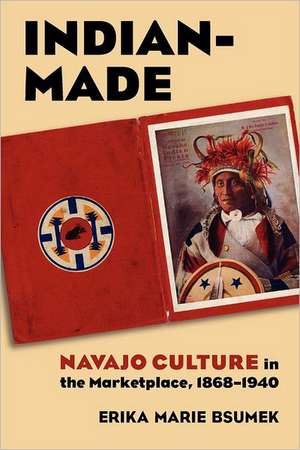
Indian-Made: Navajo Culture in the Marketplace, 1868-1940: Culture America (Paperback)
Autor Erika Marie Bsumeken Limba Engleză Paperback – 30 sep 2008
Vezi toate premiile Carte premiată
Adresat în egală măsură studenților la antropologie, cercetătorilor în istorie economică și practicienilor din domeniul managementului cultural, volumul Indian-Made oferă o perspectivă critică asupra modului în care identitatea indigenă a fost transformată în marfă. Erika Marie Bsumek demonstrează că succesul comercial al artizanatului Navajo nu a fost doar rezultatul cererii și ofertei, ci o construcție culturală complexă, alimentată de turismul din Sud-Vestul american.
Reținem din această analiză riguroasă modul în care brandul „Indian made” a fost modelat de actori externi — de la comercianți la personalul din industria turistică — pentru a satisface dorința consumatorilor anglo-americani de a poseda obiecte aparținând unei culturi percepute drept „primitive” și aflate în pragul dispariției. Structura narativă urmărește evoluția atelierelor de argintărie și a producției de covoare pe parcursul a șapte decenii, evidențiind controversele juridice și etice legate de utilizarea uneltelor moderne în procesul de creație.
Considerăm această lucrare o alternativă necesară la Culture in the Marketplace de Molly H Mullin pentru cursurile de studii etnice sau istoria artei. În timp ce ambele examinează piața de artă indigenă din anii '20 și '30, Erika Marie Bsumek extinde cadrul temporal începând cu 1868 și pune un accent mai puternic pe intersecția dintre politicile federale, relațiile rasiale și consumismul de masă. Stilul este academic, dar accesibil, oferind o documentare detaliată a modului în care artizanii Navajo au navigat și influențat inventarul pieței moderne, în ciuda stereotipurilor impuse de intermediari.

Preț: 266.36 lei
Carte tipărită la comandă
Livrare economică 29 iunie-13 iulie
Specificații
ISBN-10: 0700618902
Pagini: 292
Dimensiuni: 152 x 229 x 18 mm
Greutate: 0.45 kg
Editura: University Press of Kansas
Seria Culture America (Paperback)
V-ar putea interesa
-
 -8%Preț: 229.05 lei249.22 lei
 -
 Honoring the MedicineKenneth S CohenPreț: 106.14 lei
 -
 Preț: 295.46 lei
 -
 1835 Cherokee ValuationsMarjorie J. LowePreț: 143.77 lei
 -
 Indian School DaysBasil H. JohnstonPreț: 119.01 lei
 -
 Warrior Nations: The United States and Indian PeoplesRoger L. NicholsPreț: 170.20 lei
 -
 Preț: 161.25 lei
 -
 Preț: 497.77 lei
 -
 The Gaddi Beyond PastoralismAnja Wagner-23%Preț: 718.71 lei933.39 lei
 -
 Preț: 76.22 lei
 -
 Potlatch: Native Ceremony and Myth on the Northwest CoastMary Giraudo BeckPreț: 138.06 lei
 -
 In the Light of JusticeWalter Echo-HawkPreț: 139.98 lei
 -
 -18%Preț: 1108.96 lei1352.39 lei
 -
 Indigenous Peoples and DemographyPer AxelssonPreț: 254.50 lei
 -
 Preț: 430.80 lei
 -
 Chickasaw Chief George ColbertRickey Butch WalkerPreț: 196.28 lei
 -
 Finding Our Indian BloodVance HawkinsPreț: 130.04 lei
 -
 Appalachian Indian Trails of the ChickamaugaRickey Butch WalkerPreț: 131.08 lei
De ce să citești această carte
Cititorul câștigă o înțelegere profundă a modului în care turismul și capitalismul pot redefini cultura materială a unui popor indigen. Este o lectură esențială pentru cei interesați de sociologia consumului și de istoria americană, oferind un studiu de caz premiat despre cum o identitate culturală este negociată la granița dintre tradiție și modernitate economică.
Descriere scurtă
Descriere
Premii
- New Mexico Book Awards Winner, 2009