
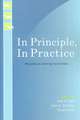
In Principle, In Practice: Museums as Learning Institutions: Learning Innovations Series
Editat de John H. Falk, Lynn D. Dierking, Susan Foutz Contribuţii de Sue Allen, David Anderson, Tamsin Astor-Jack, Lynn Baum, Jane Blankman-Hetrick, David E. Chesebrough, Kirsten M. Ellenbogen, Cecilia Garibay, Des Griffin, Janette Griffin, Joshua Gutwill, Jeff Hayward, Joe E. Heimlich, Gretchen M. Jennings, David J. Johnson, Julie I. Johnson, Christine Klein, Emlyn Koster, Jessica J. Luke, Laura M.W. Martin, Mary Ellen Munley, Jeff Patchen, Erminia Pedretti, Deborah L. Perry, Ann Grimes Rand, Christine A. Reich, Léonie Rennie, Randy C. Roberts, Shawl Rowe, Jerry Schubel, Beverly Sheppard, Barbara Soren, Michael Spock, Martin Storksdieck, Dave Ucko, Robert "Mac" West, Kimberlee Kiehl Whaleyen Limba Engleză Hardback – 4 mai 2007
| Toate formatele și edițiile | Preț | Express |
|---|---|---|
| Paperback (1) | 318.07 lei 6-8 săpt. | |
| Bloomsbury Publishing – 3 mai 2007 | 318.07 lei 6-8 săpt. | |
| Hardback (1) | 672.73 lei 6-8 săpt. | |
| Bloomsbury Publishing – 4 mai 2007 | 672.73 lei 6-8 săpt. |
Preț: 672.73 lei
Preț vechi: 966.72 lei
-30%
Puncte Express: 1009
Preț estimativ în valută:
119.06€ • 139.14$ • 103.37£
119.06€ • 139.14$ • 103.37£
Carte tipărită la comandă
Livrare economică 19 februarie-05 martie
Preluare comenzi: 021 569.72.76
Specificații
ISBN-13: 9780759109766
ISBN-10: 0759109761
Pagini: 338
Dimensiuni: 161 x 238 x 26 mm
Greutate: 0.65 kg
Ediția:New.
Editura: Bloomsbury Publishing
Colecția AltaMira Press
Seria Learning Innovations Series
Locul publicării:New York, United States
ISBN-10: 0759109761
Pagini: 338
Dimensiuni: 161 x 238 x 26 mm
Greutate: 0.65 kg
Ediția:New.
Editura: Bloomsbury Publishing
Colecția AltaMira Press
Seria Learning Innovations Series
Locul publicării:New York, United States
V-ar putea interesa
-
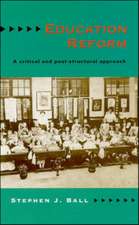 EDUCATION REFORMStephen Ball-30%Preț: 199.67 lei285.43 lei
 -
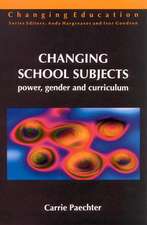 Changing School SubjectsCarrie F PaechterPreț: 342.17 lei
 -
 Teachers Matter: Connecting Work, Lives and EffectivenessChristopher Day-29%Preț: 164.84 lei233.70 lei
 -
 Urban Youth and SchoolingLouise Archer-31%Preț: 172.34 lei247.99 lei
 -
 Assessment for Learning without LimitsAlison Peacock-31%Preț: 154.68 lei222.95 lei
 -
 Essential Primary EnglishJane Medwell-30%Preț: 152.17 lei216.52 lei
 -
 Introduction to Childhood StudiesMary Jane Kehily-30%Preț: 163.94 lei233.20 lei
 -
 -22%Preț: 300.16 lei385.92 lei
 -
 Media EducationDavid BuckinghamPreț: 213.70 lei
 -
 -33%Preț: 247.27 lei367.89 lei
 -
 Preț: 347.30 lei
 -
 Preț: 374.08 lei
 -
 Preț: 335.59 lei
 -
 Teaching for CharacterAndrew Hammond-23%Preț: 74.64 lei97.41 lei
Cuprins
1 Foreword
2 Preface
3 Part I: How People Learn in Museums
4 1. Towards an Improved Understanding of Learning from Museums: Filmmaking as Metaphor
5 2. Family Learning in Museums: Perspectives on a Decade of Research
6 3. Students, Teachers and Museums: Toward an Intertwined Learning Circle
7 4. Exhibit Design in Science Museums: Dealing with a Constructivist Dilemma
8 5. Research on Learning from Museums
9 Part II: Engaging Audiences in Meaningful Learning
10 6. Envisioning the Customized Museum: An Agenda to Guide Reflective Practice and Research
11 7. Museums and Cultural Understanding
12 8. Raising the Relevancy Bar at Aquariums and Science Centers
13 9. Challenging Convention and Communicating Controversy: Learning Through Issues-Based Museum Exhibitions
14 Part III: Fostering a Learning-Centered Culture in our Institutions
15 10. New Ways of Doing Business
16 11. Optimizing Learning Opportunities in Museums: The Role of Organizational Culture
17 12. Fostering Effective Free-Choice Learning Institutions: Integrating Theory, Research, Practice and Policymaking
18 13. Meaningful Collaboration
19 Part IV: Investigating Museum Learning in the Next Ten Years
20 14. Understanding the Long-Term Impacts of Museum Experiences
21 15. Investigating Socially Mediated Learning
22 16. Research in Museums: Coping With Complexity
23 17. An Emerging Research Framework for Studying Free-Choice Learning and Schools
2 Preface
3 Part I: How People Learn in Museums
4 1. Towards an Improved Understanding of Learning from Museums: Filmmaking as Metaphor
5 2. Family Learning in Museums: Perspectives on a Decade of Research
6 3. Students, Teachers and Museums: Toward an Intertwined Learning Circle
7 4. Exhibit Design in Science Museums: Dealing with a Constructivist Dilemma
8 5. Research on Learning from Museums
9 Part II: Engaging Audiences in Meaningful Learning
10 6. Envisioning the Customized Museum: An Agenda to Guide Reflective Practice and Research
11 7. Museums and Cultural Understanding
12 8. Raising the Relevancy Bar at Aquariums and Science Centers
13 9. Challenging Convention and Communicating Controversy: Learning Through Issues-Based Museum Exhibitions
14 Part III: Fostering a Learning-Centered Culture in our Institutions
15 10. New Ways of Doing Business
16 11. Optimizing Learning Opportunities in Museums: The Role of Organizational Culture
17 12. Fostering Effective Free-Choice Learning Institutions: Integrating Theory, Research, Practice and Policymaking
18 13. Meaningful Collaboration
19 Part IV: Investigating Museum Learning in the Next Ten Years
20 14. Understanding the Long-Term Impacts of Museum Experiences
21 15. Investigating Socially Mediated Learning
22 16. Research in Museums: Coping With Complexity
23 17. An Emerging Research Framework for Studying Free-Choice Learning and Schools
Recenzii
This anthology is the first in a series of Learning Innovations. Summing Up: Recommended. Upper-division undergraduates through professionals.
This will be a useful book for people in the field, especially those new to the profession who want to understand where the field stands today on how people learn in a museum setting. Those with more of a research bent will find a number of the articles enlightening. Practitioners will find structures that help them improve their practice. And those who wish to think deeply about the meaning and purpose of museums will be inspired.
In Principle, In Practice should quickly become one of the primary sources of information and guidance for any museum seeking to optimize its role as a learning institution. This compilation of knowledge gained from years of studying learning in museums, combined with practical advice for fostering learning through museum experiences, will be a valuable tool for museum professionals for years to come.
This book is a provocative inquiry into what learning means in a museum environment, and academics and practitioners alike will find lasting value in this broad, deep, and rich exploration of the museum experience. Because learning lies at the heart of a museum's public value, In Principle, In Practice is essential reading for all those who care about the meaning and value of museums as social institutions.
In Principle, In Practice offers a vital progress report on museum-based learning research to the international community of museum professionals. The essays, taken together, show that the learning research field is in media res, but has made enormous strides over the past decade.
The contents of the book are worthy...
This collection of articles is packed with useful information, examples of exciting museum practice and some research reports that are, at times, pretty heavy going....It is a worthy addition to the Top Ten Museum Education Books started by Christine Castle on the Ham-Ed blog.
The articles share visitor and learning research results, innovative learning and community collaboration case studies, ideas for more meaningfully engaging larger audiences, and visions of what can be studied and designed for future museum experiences....In Principle, In Practice provides an important resource for museum education professionals.
This holistic approach provides a more balanced approach to education that encompasses not only learning, but critical evauation of the methodology of teaching and the contructions of knowledge. Museum educators, especiallt curators, would benefit from more critical analysis of the methods they use to construct knowledge and communicate information to visitors. This in itself might deliver more appropriate learning outcomes for visitors in the next decade..."
This will be a useful book for people in the field, especially those new to the profession who want to understand where the field stands today on how people learn in a museum setting. Those with more of a research bent will find a number of the articles enlightening. Practitioners will find structures that help them improve their practice. And those who wish to think deeply about the meaning and purpose of museums will be inspired.
In Principle, In Practice should quickly become one of the primary sources of information and guidance for any museum seeking to optimize its role as a learning institution. This compilation of knowledge gained from years of studying learning in museums, combined with practical advice for fostering learning through museum experiences, will be a valuable tool for museum professionals for years to come.
This book is a provocative inquiry into what learning means in a museum environment, and academics and practitioners alike will find lasting value in this broad, deep, and rich exploration of the museum experience. Because learning lies at the heart of a museum's public value, In Principle, In Practice is essential reading for all those who care about the meaning and value of museums as social institutions.
In Principle, In Practice offers a vital progress report on museum-based learning research to the international community of museum professionals. The essays, taken together, show that the learning research field is in media res, but has made enormous strides over the past decade.
The contents of the book are worthy...
This collection of articles is packed with useful information, examples of exciting museum practice and some research reports that are, at times, pretty heavy going....It is a worthy addition to the Top Ten Museum Education Books started by Christine Castle on the Ham-Ed blog.
The articles share visitor and learning research results, innovative learning and community collaboration case studies, ideas for more meaningfully engaging larger audiences, and visions of what can be studied and designed for future museum experiences....In Principle, In Practice provides an important resource for museum education professionals.
This holistic approach provides a more balanced approach to education that encompasses not only learning, but critical evauation of the methodology of teaching and the contructions of knowledge. Museum educators, especiallt curators, would benefit from more critical analysis of the methods they use to construct knowledge and communicate information to visitors. This in itself might deliver more appropriate learning outcomes for visitors in the next decade..."